


Your phone's memory chip is starting to build houses and power cities

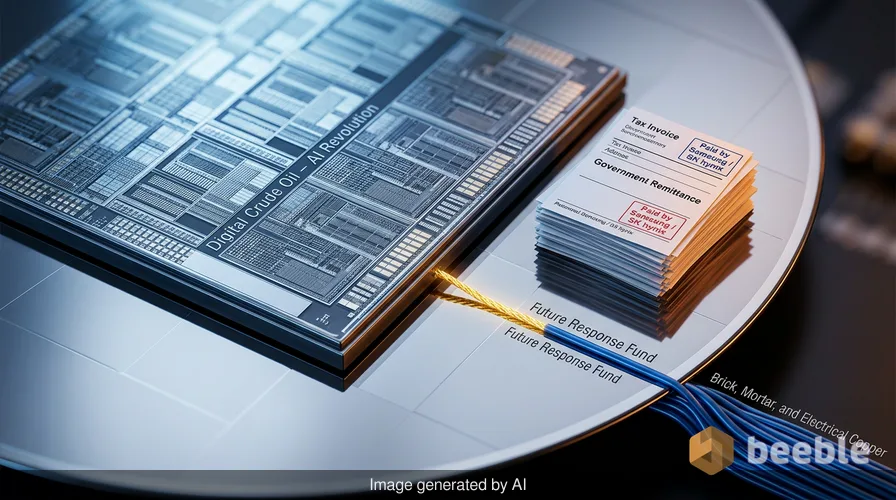
A single high-bandwidth memory chip begins as a slice of refined sand before it is layered with complex circuits. This chip eventually sits inside a server rack, processing the trillions of calculations required for a modern AI model to function. The sale of this chip generates a profit for companies like Samsung and SK hynix. That profit generates a tax bill. Today, the South Korean government is taking that tax revenue and turning it back into the physical world of brick, mortar, and electrical copper.
Looking at the big picture, this is a cycle where digital demand funds physical survival. South Korea is currently the world’s primary source for the specialized memory chips that act as the digital crude oil of the AI revolution. Because demand for these components is at an all-time high, the government is seeing a massive surge in tax receipts. Instead of letting this windfall sit in a general ledger, the administration is creating a dedicated "future response fund" to address the country’s most pressing social and industrial needs.
The mechanics of the future response fund
Presidential chief of staff Kang Hoon-sik recently outlined the strategy for this new fund. The core idea is simple. The government identifies the extra tax income that specifically comes from the record-breaking profits of the semiconductor industry. This money is then cordoned off for large-scale public projects. In everyday life, this means the success of a tech giant has a direct path to the quality of public services.
Historically, sudden economic booms lead to temporary spending sprees that leave little long-term impact. Kang warned that this revenue must not be squandered. He described the current moment as a decisive period for the country. The fund does not have a finalized price tag yet, but the government plans to set its size during a fiscal strategy meeting this month. This fund is a practical tool to ensure the wealth generated by the AI race creates a resilient foundation for the next generation.
Building a backbone of power and water
For the average user, a chip plant is an abstract concept. Under the hood, however, these facilities are some of the most resource-heavy buildings on earth. A modern semiconductor factory requires a constant, massive supply of clean water and stable electricity. If the power flickers for even a fraction of a second, an entire batch of chips worth millions of dollars is ruined.
Part of the new tax windfall is going directly into these utilities. This is a foundational investment. By using chip taxes to build better power grids and water filtration systems, the government ensures that the factories can continue to run. This creates a feedback loop. Stable utilities lead to more chips, which leads to more tax revenue, which then funds further infrastructure. This is part of a broader 800 trillion won plan to establish a massive chipmaking hub in the southwest of the country. This hub is a joint effort between the government and private companies to keep South Korea at the center of the global supply chain.
Why your rent and the chip market are connected
South Korea faces a systemic challenge with its younger population. High housing costs and a lack of stable career paths for young graduates are persistent issues. Practically speaking, a booming stock market does nothing for a person who cannot afford an apartment. The government intends to use the AI chip windfall to change this reality.
Part of the fund is earmarked for housing support and start-up grants for young people. This is an attempt to translate corporate success into tangible social benefits. When Samsung or SK hynix sells a batch of HBM3e chips to a client in Silicon Valley, a portion of that money eventually helps a young person in Seoul secure a deposit on a home or launch a small business. This approach treats the technology boom as a public resource rather than just a private victory.
The stock market as a national engine
On the market side, the numbers are unprecedented. Samsung shares rose more than 170% in the first half of the year. SK hynix saw its value increase by more than 300%. Both companies have passed the $1 trillion market value mark. This growth is not based on speculation but on the physical reality of supply and demand. Every major tech company in the world is currently desperate for the memory chips these two firms produce.
SK hynix is also preparing for a listing on the Nasdaq, aiming to raise 45 trillion won. This influx of capital and the resulting tax revenue provide the government with a unique opportunity. Usually, a government must raise taxes or take on debt to fund large social programs. Here, the global hunger for AI is providing the capital instead. This is a volatile position to be in, as tech cycles are notoriously cyclical, but for now, the flow of money is robust.
Managing the human cost of the boom
Behind the jargon of market caps and tax receipts are the people who actually build the hardware. The chip boom has changed the relationship between these companies and their employees. In May, Samsung workers reached a bonus deal that prevented a major strike. The workers are aware of the record profits and are demanding a fair share of the wealth they produce.
This labor dynamic is another reason why the government’s plan for the tax windfall is important. If the wealth from the AI revolution only stays at the very top, it creates social friction. By using the money for jobs and rural support, the government is trying to prevent the tech boom from deepening inequality. Presidential policy chief Kim Yong-beom even mentioned using the funds for basic income schemes in fishing and farming villages. This acknowledges that the digital economy depends on a stable physical society.
A blueprint for the global silicon race
From a consumer standpoint, South Korea’s strategy is a signal to the rest of the world. Other nations are currently spending billions to attract chip manufacturers through programs like the U.S. CHIPS Act. South Korea is taking the opposite approach by taxing its successful manufacturers to build a better country. This model suggests that the AI revolution is more than just a software update. It is a massive transfer of wealth that can be used to fix old problems.
Ultimately, the success of this plan depends on transparency and execution. The government must ensure the money reaches the projects it promised. If successful, this fund is a way to turn the ephemeral gains of a tech boom into a permanent improvement in the quality of life. The chips in our devices are no longer just tools for communication. They are now the financial engines for housing, energy, and the next generation of workers.
As you use your phone or interact with an AI tool today, consider the invisible industrial backbone that makes it possible. Every interaction contributes to a global economy that is now funding the infrastructure of the real world. You might never visit a chip factory, but the taxes from the silicon inside your pocket are likely building a bridge, a power plant, or a home somewhere else. Observing these connections helps us understand that technology is never just about the screen. It is always about the materials and the money that flow behind it.
Sources:
- Office of the President, Republic of Korea - Press Briefing by Kang Hoon-sik
- Dong-A Ilbo - Interview with Presidential Chief of Staff regarding Future Response Fund
- Samsung Electronics - Preliminary Earnings Guidance Q2 2026
- SK hynix - Nasdaq Listing Prospectus and Investor Relations Report
- Ministry of Economy and Finance - Semiconductor Mega Cluster Roadmap



See you on the other side.
Our end-to-end encrypted email and cloud storage solution provides the most powerful means of secure data exchange, ensuring the safety and privacy of your data.
/ Create a free account
