


Your Spare Bedroom is the Newest Frontier in the AI Energy Wars

While the tech industry continues to promise a future where artificial intelligence solves everything from climate change to the common cold, the reality on the ground is much more grounded in physics and finance. For the last few years, we have been told that AI is a weightless, ethereal force living in the cloud. However, the sheer amount of electricity and water required to keep those digital brains running has hit a very physical wall. Massive data centers are facing unprecedented pushback from local governments, and the aging electrical grid is struggling to keep up with the demand of millions of high-end chips humming at once.
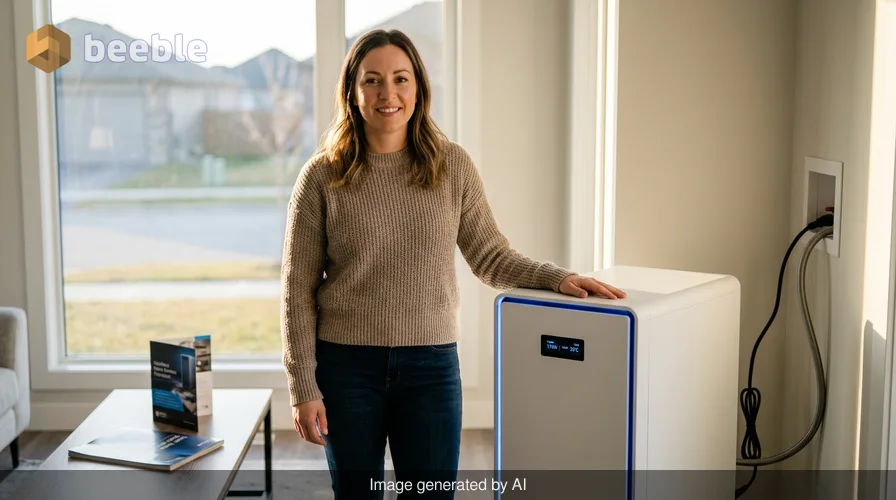
To solve this, a new and disruptive pitch is making its way to homeowners: why not host a mini data center in your own living room? Companies are now marketing sleek, silent server units that double as space heaters or water boilers, effectively turning your home into a tiny node in a global, decentralized brain. While the marketing suggests a win-win scenario where you get free heat and the tech giants get more compute power, the practical reality for the average user is far more complex than the glossy brochures suggest.
Behind the Jargon: The Shift to the Edge
In simple terms, what we are seeing is the move from centralized computing to what the industry calls edge computing. Historically, if you asked an AI to write a poem or analyze a spreadsheet, that request traveled hundreds of miles to a massive warehouse full of servers, processed the data, and zipped back to you. This creates two problems: latency (a slight delay) and a massive concentration of heat and power usage in a single location.
By distributing these servers into thousands of homes, companies can bypass the need to build billion-dollar facilities that local communities often despise. For the homeowner, these devices look like high-end designer furniture or utilitarian appliances. They are essentially boxes packed with the same microchips—the digital crude oil of our era—that power the world's most advanced AI models. Instead of cooling these chips with massive fans and industrial chillers, the heat they generate is diverted to warm your air or your shower water.
Looking at the big picture, this is a systemic attempt to offload the industrial footprint of the AI boom onto the consumer. It is a brilliant logistical pivot, but it raises significant questions about who actually benefits when your spare bedroom becomes a cog in a corporate machine.
The Economics of the "AI Furnace"
Practically speaking, the financial pitch relies on a concept called heat recovery. In a standard data center, heat is a waste product that costs money to get rid of. In a home, heat is a commodity you pay for. By combining the two, companies like those emerging in this 2026 market claim they can offer you "free" or heavily subsidized heating.
However, we need to apply the "So What?" filter here. Under the hood, these machines are incredibly power-hungry. A single high-end AI node can pull as much electricity as a large refrigerator and a microwave running simultaneously. While the provider might offer to pay your electricity bill for that specific device, the overarching impact on your home’s electrical infrastructure is tangible.
- The Power Load: Most modern homes are built to handle standard appliances. Adding a continuous, high-draw server can put a resilient but limited home electrical panel to the test.
- The Noise Factor: Even with advanced liquid cooling, electronics produce a high-pitched hum. For someone living in a quiet apartment, that transparent background noise can eventually become a nuisance.
- The Incentive Gap: If the AI market is volatile, what happens to your heating if the company providing the server goes bankrupt or the demand for their "compute" drops? Suddenly, your high-tech radiator is a heavy, expensive paperweight.
Privacy in a Decentralized World
One of the more robust arguments for hosting your own mini data center is privacy. The theory is that if the AI processes your data locally—right there in your hallway—your personal information never has to travel to a central server where it could be leaked or sold.
To put it another way, it’s like having a tireless intern living in your guest room. They do the work you need, but they never leave the house. This sounds intuitive and user-friendly, but the reality is more opaque. Most of these home units are still interconnected. They are part of a mesh network where they might be processing a medical research task for a university in the morning and a financial algorithm for a hedge fund in the afternoon.
What this means is that while your own data might stay local, your home is now hosting a small slice of the world's most sensitive or controversial data. From a consumer standpoint, you are effectively becoming a landlord for digital activity you cannot see or control. The security of these units must be airtight, as they represent a physical entry point for hackers into your home network.
Is This the Future of Home Ownership?
Curiously, this trend mirrors the early days of solar panels. Initially, people were skeptical of putting industrial equipment on their roofs, but as the technology became more streamlined and the financial incentives became clear, it became a foundational part of modern housing.
| Feature | Traditional Cloud AI | Home Data Center (Edge) |
|---|---|---|
| Latency | Higher (data travels to hub) | Lower (local processing) |
| Energy Use | Concentrated in massive centers | Distributed across residential grids |
| Heat Utility | Wasted (needs cooling) | Reused (heats home/water) |
| Privacy | Lower (centralized storage) | Potentially higher (local processing) |
| Maintenance | Managed by provider | Managed by provider (on-site access needed) |
Looking at the market side, we are likely to see property developers begin to pre-install these units in new apartment complexes. It is an elegant solution for a developer: they can market "low-cost heating" to residents while the tech companies pay for the installation. But for the person actually living there, the trade-off involves a shifting sense of what a "home" is. Is it a sanctuary, or is it a small-scale utility plant?
The Bottom Line for Your Household
Ultimately, the choice to host a mini data center shouldn't be based on the novelty of the tech. Instead, look at it as a cold, hard utility calculation. If you live in a cold climate where heating costs are a significant drain on your budget, the subsidized warmth from an AI server might make sense. If you are a privacy advocate who wants to run your own Large Language Model without big tech oversight, the hardware is a dream come-true.
Conversely, if you value a silent home and don't want to deal with the potential headache of a technician visiting your house to swap out a fried motherboard, this is a trend you should watch from a distance. The AI boom is hungry, and right now, it’s looking at your floor space as its next meal.
As we move further into 2026, pay close attention to your local building codes and utility agreements. The invisible backbone of modern life is moving from the outskirts of the desert directly into our neighborhoods. Whether that makes our lives easier or just more cluttered depends entirely on how much we value our personal space over the convenience of the digital world.
Sources:
- Department of Energy: Residential Power Grid Capacity Reports 2025-2026
- Ars Technica: The Rise of the Decentralized Compute Network
- International Energy Agency: The Environmental Impact of AI Scaling
- Edge Computing Industry Consortium: Standards for Home-Based Server Units



See you on the other side.
Our end-to-end encrypted email and cloud storage solution provides the most powerful means of secure data exchange, ensuring the safety and privacy of your data.
/ Create a free account
