


A New Chapter for Onchain Privacy: U.S. Treasury Acknowledges Legitimate Uses for Crypto Mixers

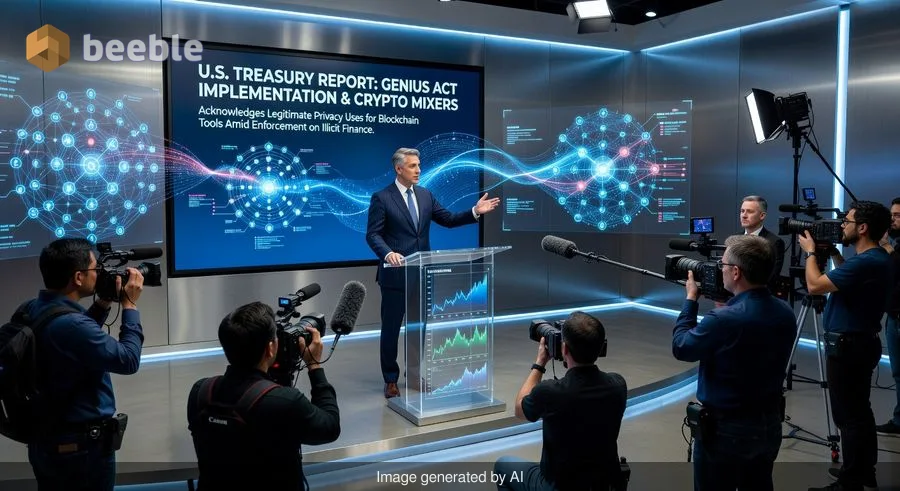
For years, the relationship between the U.S. Treasury Department and cryptocurrency privacy tools has been defined by friction. High-profile sanctions against services like Tornado Cash and Sinbad sent a clear message: obfuscation was often viewed as a proxy for illicit activity. However, a significant shift in tone has emerged from Washington. In a recent report submitted to Congress regarding the implementation of the Genius Act, the Treasury Department has officially acknowledged that blockchain mixing services can serve lawful, essential purposes for everyday users and businesses.
This acknowledgment marks a departure from the previous narrative that largely characterized mixers as tools exclusive to cybercriminals and state-sponsored hackers. While the department maintains its commitment to combating money laundering, it now recognizes that the inherent transparency of public blockchains creates a unique set of privacy risks for law-abiding citizens.
Beyond Illicit Finance: Why Privacy Matters
To understand why the Treasury is softening its stance, one must look at the mechanics of a public ledger. On networks like Bitcoin or Ethereum, every transaction is a matter of public record. If you pay a friend for dinner or donate to a controversial political cause, that transaction—and the remaining balance in your wallet—can be traced by anyone with an internet connection.
The Treasury’s report highlights several specific scenarios where privacy tools are not just helpful, but necessary. For individuals, shielding personal finances from prying eyes is a matter of physical and financial safety. High-net-worth individuals or those living in unstable regimes use these tools to prevent becoming targets for kidnapping or extortion.
For businesses, the stakes are equally high. A company paying its vendors or employees via a public blockchain risks revealing its entire supply chain or payroll structure to competitors. Without privacy-enhancing technologies (PETs), corporate espionage becomes as simple as setting up a block explorer alert. Furthermore, the report notes that charitable donations to sensitive causes—such as human rights organizations in restrictive jurisdictions—require anonymity to protect both the donor and the recipient.
The Genius Act and the Regulatory Middle Ground
The catalyst for this shift is the implementation of the Genius Act, a piece of legislation designed to modernize financial oversight in the digital age. As regulators worked through the technical requirements of the Act, they were forced to grapple with the reality that "total transparency" is often incompatible with existing privacy laws and consumer protection standards.
The Treasury’s report suggests that privacy and compliance are not mutually exclusive. Instead of a blanket ban on mixing services, the department is advocating for "compliance by design." This involves the integration of record-keeping features or selective disclosure tools that allow users to maintain privacy from the public while providing necessary information to regulators or tax authorities when legally required.
The Mechanics of Compliant Privacy
How does a service provide anonymity while satisfying the Treasury? The answer lies in emerging cryptographic techniques. The report points toward several technical safeguards that could bridge the gap between the cypherpunk ethos and federal mandates:
- Zero-Knowledge Proofs (ZKPs): These allow a user to prove they have the right to move funds without revealing the history of those funds or their identity.
- Viewing Keys: Some modern privacy protocols allow users to generate a "read-only" key. A user can provide this key to an auditor or a government agency to prove the source of their funds without making that data public.
- Proof of Innocence: New protocols allow users to cryptographically prove that their deposits did not originate from a known list of flagged or illicit addresses, effectively "filtering" the mixer without deanonymizing the participants.
A Turning Point for Developers
For the developers of decentralized finance (DeFi) protocols, this report provides a much-needed sigh of relief. For a long time, building privacy-preserving software felt like walking into a legal minefield. The Treasury’s recognition of "lawful purposes" suggests a shift toward a more nuanced enforcement strategy.
However, this is not a free pass. The Treasury was careful to note that services that actively court criminal enterprises or refuse to implement basic anti-money laundering (AML) hurdles will remain in the crosshairs. The message to the industry is clear: privacy is a right, but it must be built responsibly.
Practical Takeaways for Crypto Users
As the regulatory landscape evolves, users who value their onchain privacy should stay informed about how they interact with mixing services. Here is a checklist for navigating the current environment:
- Prioritize Transparency Tools: Look for privacy protocols that offer "viewing keys" or "compliance reports." These features allow you to prove your funds are clean if you are ever audited.
- Avoid "High-Risk" Pools: Some mixers are known to be frequented by bad actors. Using these can result in your "clean" funds being tainted by association, making it difficult to off-ramp to centralized exchanges.
- Document Your Transactions: Even when using a mixer, keep your own private records of the source and destination of funds. This manual paper trail is your best defense in a regulatory inquiry.
- Watch for Protocol Upgrades: Many privacy services are currently retrofitting their systems to comply with the Genius Act. Ensure you are using the most recent, compliant versions of these tools.
The Path Forward
The U.S. Treasury’s acknowledgment is a victory for the principle that privacy is a fundamental component of a functional financial system. By moving away from the "mixer equals crime" trope, regulators are opening the door for a more sophisticated conversation about how to protect individuals in an increasingly digital world.
While the tension between state surveillance and personal liberty will likely never disappear, the recognition of legitimate privacy uses for blockchain tools is a significant step toward a balanced digital economy. The challenge now lies with the tech community to build the tools that prove the Treasury right.
Sources
- U.S. Department of the Treasury - Official Reports
- Financial Crimes Enforcement Network (FinCEN) Regulatory Guidance
- Congressional Research Service - The Genius Act Implementation Overview
- Blockchain Association - Analysis of Privacy-Enhancing Technologies
- CoinCenter - Privacy as a Civil Liberty in Digital Finance



See you on the other side.
Our end-to-end encrypted email and cloud storage solution provides the most powerful means of secure data exchange, ensuring the safety and privacy of your data.
/ Create a free account
