


Can Apple finally make Siri smart enough to matter?

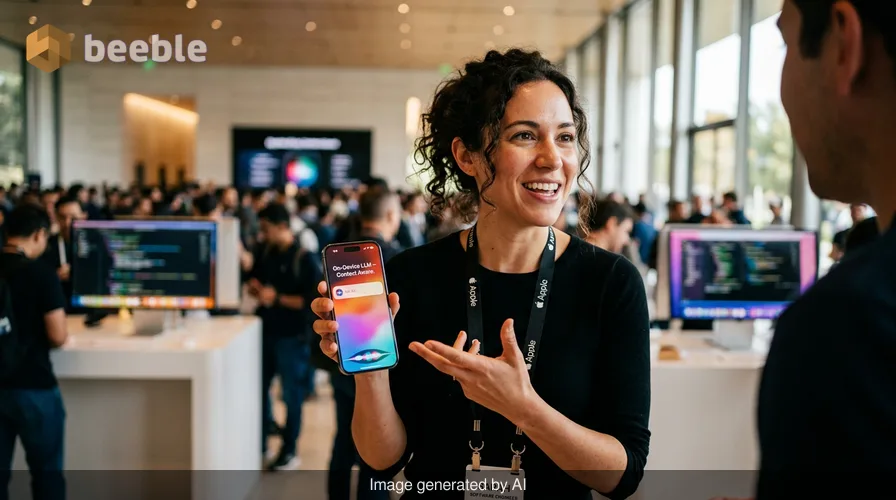
Have you ever asked Siri a simple question while driving, only to have it tell you it cannot do that right now? For most iPhone users, the assistant is a glorified egg timer or a voice-activated light switch. It is a tool that often feels stuck in 2011, the year it first appeared on the iPhone 4S. Meanwhile, the world has moved toward conversational AI that can write code, plan vacations, and summarize long documents in seconds. As Apple kicks off its developer conference in Cupertino today, the tech world is looking for one thing: a reason to stop downloading ChatGPT and start talking to Siri again.
Apple has a massive footprint with over 2.5 billion devices in use globally. This reach is a major advantage, yet hundreds of millions of people now prefer AI bots from OpenAI or Anthropic. In markets like China, consumers already use AI agents to manage their lives. These digital helpers do more than answer questions. They book appointments and handle repetitive digital chores. Apple is currently in a race to prove its hardware is still the best place for these interactions to happen. The company has spent two years working on this overhaul after previous attempts to improve the assistant fell short. This moment is about more than a software update. It is about whether Apple can remain the primary interface for our digital lives.
The data gold mine inside your pocket
To understand why Apple might still win this race, look at what is already on your phone. Your device holds a record of your life. It has your emails, your text messages, your calendar, and your health data. This information is a gold mine for an AI. Most current AI models are like brilliant scholars who have read every book in the library but do not know your name. They have no context about your specific life. If you ask a standard chatbot when your flight leaves, it has to guess. If you ask a truly integrated assistant, it checks your confirmation email and your calendar. This creates a result that is actually useful.
Patrick Moorhead, the founder of Moor Insights & Strategy, describes this as a matter of context. AI is only as good as the data it can access. Apple has the data, but it also has a self-imposed barrier. The company prides itself on privacy. Its operating system is built so that apps cannot easily peek at each other's data. Even Apple avoids looking at much of your personal information. To make Siri smarter, Apple must find a way to let the AI learn from your data without compromising the security that customers expect. This is a delicate balance. The goal is to create a tireless intern who knows your schedule perfectly but never whispers your secrets to anyone else.
How personal context changes your daily routine
Practically speaking, the most significant change expected this week is a "personal context" option. This allows Siri to connect the dots across different apps. If you receive a text about a dinner party, Siri could see that message and automatically check your calendar for conflicts. It could then look up the restaurant's location and tell you exactly when you need to leave. This level of coordination is what tech analysts call an AI agent. It is a shift from a bot that answers questions to a bot that carries out tasks.
Andrew Cornwall from Forrester suggests that Apple will introduce a new chat mode. This would make talking to Siri feel more like a natural conversation and less like giving commands to a robot. Under the hood, Apple may also allow developers to use "extensions." These act as bridges between Siri and other apps. For example, a food delivery app could create an extension that lets you say, "Siri, order my usual Friday night pizza." The assistant would handle the payment and the address because it already has access to that personal context. This streamlines the experience for the average user by removing the need to tap through multiple menus.
The battle for the desktop and the chip
While the iPhone is the main stage, the technology behind these updates relies on Apple’s custom chips. These processors are designed to handle complex math locally on the device. This is a major part of the privacy strategy. When an AI processes your request on your phone rather than sending it to a server, your data stays under your control. This local processing is a robust defense against data leaks. It also makes the assistant faster because it does not have to wait for a signal from a distant data center.
On the market side, Apple has been remarkably resilient. While companies like Alphabet and Microsoft have seen massive stock gains based on AI hype, Apple has moved more slowly. Alphabet’s shares rose about 120% over the past year as its Gemini model gained traction. Microsoft has struggled recently with the perception that it is trailing rivals like Anthropic. Despite being slower to the market, Apple’s stock is up 50% over the same period. Investors seem to believe that Apple does not need to be first. It only needs to be the most user-friendly. Apple historically avoids using technology for its own sake. It waits until a feature is practical for regular people before a wide release.
Why Apple is avoiding the agent army for now
Some competitors are pushing for even more aggressive AI. Microsoft and Nvidia are testing technologies like OpenClaw. This system allows AI agents to log into services and act as a human would. It can navigate websites and fill out forms. Ben Bajarin, CEO of Creative Strategies, does not think Apple will go this far yet. He notes that these "uncontrolled" agents have serious security risks. An AI that can log into your bank account is a powerful tool, but it is also a systemic risk if something goes wrong.
Apple is likely to keep its AI within a controlled environment. The focus is on features that feel helpful rather than futuristic. This approach matches the mood of the American public. Recent polls show that many people are uneasy about how AI works. By framing AI as a way to make existing features better, Apple avoids the "creepy" factor that often haunts new tech. The company wants you to see Siri as an improvement to your phone, not a replacement for your own judgment.
What this means for you
If these updates roll out as expected, your relationship with your phone will change in several tangible ways. You will likely spend less time switching between apps to finish a single task. The friction of daily digital life—copying a tracking number from an email to a browser, or checking a calendar to reply to a text—will decrease.
- Privacy settings will matter more than ever. You will need to choose which apps Siri can read. This will be a new layer of digital hygiene to manage.
- Battery life may see a small hit. Running powerful AI models directly on your phone's chip requires more energy than simple tasks. Older iPhones may struggle with these new features.
- App subscriptions might change. If Siri can do the work of a third-party app, you might find you no longer need certain paid services. Conversely, developers may start charging more for the "Pro" extensions that give Siri more power.
Ultimately, the goal is a more intuitive device. Looking at the big picture, Apple is trying to turn the iPhone from a box of apps into a single, cohesive assistant. This shift is a response to a world where we are overwhelmed by notifications and data. If Siri can finally filter that noise, it will be the most disruptive update to the iPhone since the App Store began.
Sources
- Creative Strategies tech industry analysis reports.
- Forrester research on AI assistant consumer trends.
- Moor Insights & Strategy report on silicon and AI context.
- Apple corporate communications on privacy and device security architecture.
- Market performance data for Alphabet, Microsoft, and Apple (2025-2026).



See you on the other side.
Our end-to-end encrypted email and cloud storage solution provides the most powerful means of secure data exchange, ensuring the safety and privacy of your data.
/ Create a free account
