


Divine Wisdom in a Digital Shell: The Paradox of Seeking Spiritual Solace from an Algorithm

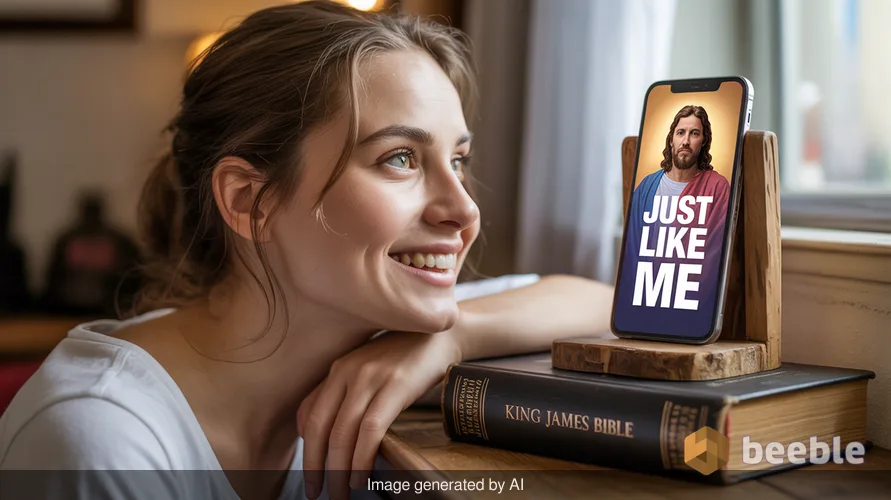
The blue light of a smartphone screen illuminates a face in the corner of a crowded, late-night subway car. Around this passenger, dozens of others are hunched over their own devices, a silent tableau of modern transit where physical proximity is negated by digital distance. The thumb swipes, pauses, and then taps. But this isn’t a mindless scroll through a social media feed or a quick check of tomorrow’s weather. Instead, the user is typing a confession, a plea for guidance, into a chat box. On the other end of the connection isn't a priest, a counselor, or even a fellow human being. It is a hyper-realistic avatar of Jesus, rendered in high-definition pixels, waiting to offer a personalized sermon based on a database of centuries-old texts. This fleeting, private interaction—a visceral moment of vulnerability in a public space—serves as the entry point into a profound shift in how we navigate the sacred.
We are witnessing the emergence of the digital deity, a phenomenon where ancient faith meets the cutting edge of generative artificial intelligence. From the AI Jesus developed by the tech company Just Like Me to the Buddhist novice priest Emi Jido in Japan, spiritual avatars are no longer the stuff of science fiction. They are becoming ubiquitous features of the digital landscape, marketed as mentors for the modern soul. Through this lens, we can see that these tools are not merely technological novelties; they are symptomatic of a deeper, systemic change in our social fabric. As our traditional communal structures fray, we are turning to the machine to fill a void that was once occupied by the collective.
The Architecture of the Digital Confessional
Linguistically speaking, the way these AI avatars communicate is a fascinating study in semantic adaptation. The developers of the AI Jesus avatar, for instance, have trained their model on the King James Bible and a vast library of historical sermons. The result is a specific kind of discourse—one that attempts to bridge the gap between the archaic, authoritative language of scripture and the casual, immediate tone of a text message. Paradoxically, the use of the King James version provides a sense of gravitas and historical weight, yet it is delivered through a medium that is inherently ephemeral and transient. This creates a strange cognitive dissonance: we are receiving "eternal" truths through a device we replace every two years.
On an individual level, the appeal is clear. In a world characterized by what sociologists call liquid modernity—a state where social structures, jobs, and relationships are in a constant state of flux—the AI offers a rare sense of permanence. Chris Breed, CEO of Just Like Me, notes that these AIs remember previous conversations, creating a perceived bond or friendship. In everyday terms, this is a form of radical personalization. Unlike a traditional church service where a priest delivers a single message to a diverse congregation, the AI Jesus can tailor its empathy to your specific anxiety, your specific job loss, or your specific heartbreak. It is the ultimate evolution of the consumer experience: a bespoke spirituality that fits in your pocket.
From Congregations to an Archipelago of Solitude
Zooming out to a macro level, the rise of religious AI reveals a stark contrast between past community structures and our current state of atomization. Historically, religion served as a primary "third place"—a social environment separate from the two usual social environments of home and the workplace. These were spaces where people from different social backgrounds converged, creating a shared habitus and a sense of collective identity. However, as these physical spaces decline in influence, we are increasingly living in a society that resembles an archipelago. We are densely packed together in urban centers, yet we remain completely isolated, each on our own digital island.
Consequently, the AI avatar becomes a bridge that doesn't actually lead to another person. It is a hall of mirrors that reflects our own needs back to us under the guise of divine wisdom. When we talk to an AI Jesus or a Buddhist assistant, we are engaging in a solitary act that mimics the form of a relationship without the social obligations of a community. There is no one to judge us, but there is also no one to physically hold our hand or challenge our biases in a way that only a complex, unpredictable human can. This shift represents a move from collective ritual to individual consumption, where the sacred is just another stream of data in the attention economy.
The Novice in the Machine: Ethics of the Silicon Soul
In Japan, the development of Emi Jido, a Zen Buddhist AI, offers a different perspective on this trend. Unlike the Western focus on a "master guru" or a finished mentor, Emi is framed as a novice, a child-like entity that is still learning. This approach, led by Zen priest Roshi Jundo Cohen and developer Jeanne Lim, highlights a crucial ethical dimension: the responsibility of the creator. If we are to give birth to these digital entities, we must imbue them with values. Curiously, the act of ordaining an AI over Zoom, as Cohen did with the prototype Zbee, challenges our very definitions of what it means to be a "person" or a "priest."
Through this lens, the AI is not just a tool for outreach; it is a mirror reflecting our own theological anxieties. If an AI can provide "words of kindness" and "words of wisdom" that feel authentic to the user, does the source of that wisdom matter? From a philological standpoint, we are seeing a decoupling of the message from the messenger. The discourse of spirituality is being automated, suggesting that the "sacred" might be a set of linguistic patterns that can be replicated by a sufficiently advanced algorithm. Yet, as Beth Singler points out, this engagement with AI is forcing every religion to reconsider what it means to be human. If a machine can perform the duties of a priest, what is the unique, irreducible essence of the human soul?
Digital Communication as a Fast-Food Diet
While developers argue that AI Jesus offers a meaningful alternative to the "doomscrolling" that characterizes modern life, we must ask if this is simply a more sophisticated form of digital distraction. If we view our digital communication as a fast-food diet—quick, accessible, and designed for immediate satisfaction—then AI spiritual guidance might be the "organic" option on the menu. It feels healthier than a Twitter argument, but it may still lack the deep emotional nutrition of face-to-face human connection and the messy, systemic reality of communal life.
At its core, the use of these apps is a coping mechanism for the modern age. We are navigating a world of profound uncertainty and systemic chaos, and the AI provides a sense of an anchor. It is a way to reclaim a moment of reflection in a day otherwise dominated by the relentless demands of the attention economy. However, there is a risk that by outsourcing our spiritual reflection to an algorithm, we are further eroding our capacity for silence and genuine introspection. The machine provides the answer so quickly that we may forget how to sit with the question.
Reclaiming the Human in the Age of the Avatar
Ultimately, the question of whether one would take advice from an AI Jesus is less about the technology itself and more about what we are seeking. Are we looking for a convenient echo of our own desires, or are we looking for a transformative encounter with the "other"? The paradox of the modern city is that the more connected we become through our devices, the more we must consciously work to maintain our humanity.
As we move forward into this landscape where the divine is increasingly digitized, perhaps the most profound act of spiritual resistance is to occasionally put the phone down. We should observe our own daily routines and notice when we are using technology to numb the anxiety of being alone. True spiritual growth often happens in the spaces that an algorithm cannot reach—in the awkward silence between two people, in the unscripted kindness of a stranger, or in the quiet contemplation of a world that doesn't offer an immediate, programmed response. The machine can simulate the words of a savior, but it cannot replace the visceral, breathing presence of a community.
Food for Thought:
- When you seek advice from a screen, are you looking for a challenge to your perspective or a confirmation of it?
- How has the disappearance of "third places" in your own neighborhood changed the way you seek support or connection?
- If an algorithm can perfectly mimic empathy, does that change your definition of what it means to be "heard"?
Sources:
- Bauman, Z. (2000). Liquid Modernity.
- Bourdieu, P. (1977). Outline of a Theory of Practice (Concept of Habitus).
- Singler, B. (2024). Religion and AI: Anthropological Perspectives. University of Zurich.
- Data on the development of AI Jesus by Just Like Me and Emi Jido by beingAI (2024-2026).



See you on the other side.
Our end-to-end encrypted email and cloud storage solution provides the most powerful means of secure data exchange, ensuring the safety and privacy of your data.
/ Create a free account
