


Dutch National Cyber Security Center actions and 17 million devices: What businesses should prepare for

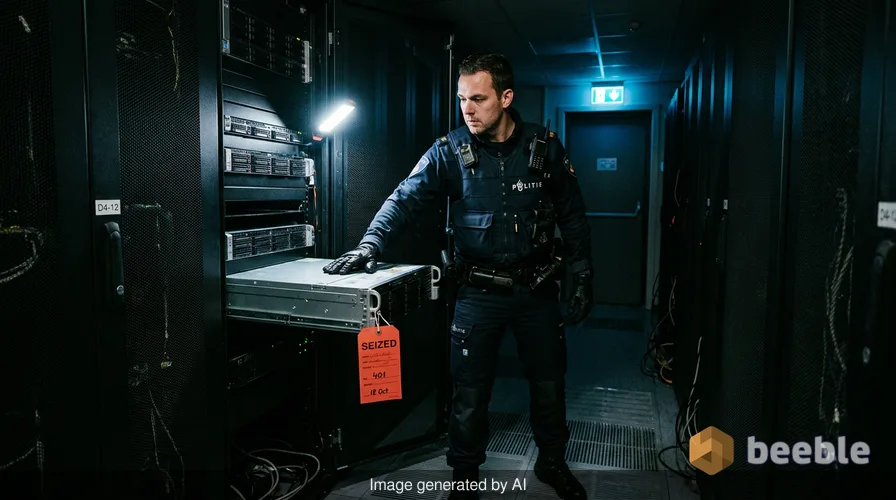
The Dutch Politie and the National Cyber Security Center (NCSC) recently executed a coordinated strike against a massive botnet infrastructure. This operation involved the seizure of more than 200 servers located within the Netherlands. These servers functioned as the backend for a network that enslaved 17 million devices worldwide. The scale of this takedown is a warning to every CISO who relies on traditional IP reputation for perimeter defense.
I have seen many botnets over the last two decades, but the nature of this specific network is different. It is part of a growing trend where legitimate services and malicious intent exist in the same architectural space. Reports link this infrastructure to Asocks, a residential proxy provider. The connection between Asocks and the PROXYLIB campaign identified by the HUMAN Satori team illustrates a clear shift in the threat model. Attackers no longer need to build their own bespoke delivery systems when they can simply buy access to millions of clean, residential IPs through a commercial subscription.
The mechanics of the residential proxy botnet
To understand the risk, you must understand how these 17 million devices joined the network. In the PROXYLIB campaign, malware often arrived on Android devices via proxyware SDKs such as LumiApps. These SDKs are often embedded in seemingly harmless applications. Once a user installs the app, the device becomes a node in the Asocks network. The user's bandwidth is sold to a third party. While the user might see this as a way to earn a few cents or access a free app, the reality is that their device now facilitates malicious traffic.
The Asocks platform advertised access to these devices for as little as $5 per month. This low barrier to entry changes the economics of an attack. In my experience auditing enterprise networks, I see a significant volume of credential stuffing and scraping attempts. When these attempts originate from a data center, they are easy to block. When they originate from 17 million unique residential devices, your traditional WAF rules become a liability. A residential device has a high reputation by default because it looks like a legitimate customer.
Challenging the assumption of residential trust
The most dangerous assumption in cybersecurity today is that traffic from residential ISPs is inherently safer than traffic from data centers or VPNs. For years, security vendors have sold the idea that "residential" equals "human." This takedown proves that 17 million residential devices were part of a criminal infrastructure. I argue that we must invert our trust model. A residential IP address is now a high-risk signal when it behaves in an automated manner.
Most legacy security architectures use IP-based rate limiting. If an IP sends too many requests, the system blocks it. However, with a pool of 17 million devices, an attacker can rotate IPs for every single request. No single IP ever hits the rate limit threshold. The attack remains invisible to basic monitoring tools. This access asymmetry allows attackers to maintain stealth while conducting large-scale operations. If your defense strategy relies on identifying "bad" IPs, you are fighting a battle that you have already lost.
Architectural implications for the enterprise
The removal of 200 servers in the Netherlands provides temporary relief, but the underlying vulnerability remains. The devices are still in the wild. The malware is still present on millions of tablets, smartphones, and IoT devices. What this means for your architecture is that the perimeter is no longer a filter -- it is a sieve.
We must move toward a model of behavioral verification. Instead of asking "Where is this request coming from?", the system must ask "What is this request doing?". This requires deep inspection of application-layer behavior. If a residential IP is accessing an API at a frequency or in a sequence that does not match typical human behavior, the system must trigger a challenge, such as a proof-of-work or a sophisticated CAPTCHA.
Microsegmentation is the only viable path for internal defense. If a device on your network becomes part of a botnet like PROXYLIB, its primary goal is often lateral movement or data exfiltration. In many corporate environments, an infected smartphone on the guest Wi-Fi has a straight path to the internal server VLAN. I have conducted pentests where a single compromised IoT printer provided the foothold necessary to dump a domain controller. You must treat every device on your network as a potential node in a 17-million-strong botnet.
The hidden risk of IoT and unpatched edge devices
The NCSC noted that botnets often gain access through unpatched edge devices and weak passwords. This is the basic hygiene that many organizations still ignore. Routers and IoT devices are the weakest links because they often lack the telemetry found on managed workstations. A laptop has an EDR agent; a smart thermostat does not.
In my time as a CISO, I found that the hardest part of security is not the complex zero-day exploit. It is the thousands of small, unmanaged devices that slowly accumulate on the network. Each one is a potential proxy node. When the Dutch authorities took down the Asocks backend, they did not fix the vulnerable devices. They only removed the command-and-control (C2) mechanism. New threat actors will inevitably scan for these same vulnerabilities to build the next network.
Action plan for the next 12 months
Survival in this environment depends on moving faster than the attackers can rotate their infrastructure. I recommend the following steps for CISOs and CTOs over the next year to address the systemic risk posed by massive proxy botnets.
- Audit External-Facing IP Reputation Rules: Review your WAF and bot-mitigation settings. If you have whitelisted residential IP ranges or if you treat them with lower scrutiny, remove those rules immediately. Implement a "verify always" approach regardless of the source IP reputation.
- Implement Application-Layer Fingerprinting: Deploy tools that can identify automated browsers and bots based on their execution patterns rather than their IP addresses. Look for inconsistencies in TLS handshakes and HTTP headers.
- Enforce Strict Microsegmentation: Isolate IoT and guest devices from production environments. Use a Zero Trust architecture where every internal connection requires explicit authentication and authorization. A compromised smartphone must not have the ability to scan the internal network.
- Scan for Proxyware on Corporate Assets: Use EDR and MDM tools to scan for known proxyware SDKs and apps that offer "passive income" for bandwidth sharing. Create a policy that explicitly bans these applications on any device that accesses corporate data.
- Rotate Edge Credentials and Update Firmware: Conduct a comprehensive audit of all edge devices, including home-office routers used by remote employees. Ensure they are on the latest firmware and that default passwords are changed to complex, unique strings.
- Monitor Outbound Traffic for Proxy Patterns: Look for unusual outbound connections to known proxy provider domains or backend infrastructure. Large volumes of outbound traffic from a low-power IoT device is a clear indicator of compromise.
A new reality of infrastructure resilience
The Dutch authorities have done the global community a service by dismantling this specific botnet. However, we must view this as a single battle in a long war of attrition. The 17 million devices involved represent a massive surface area that remains vulnerable to the next campaign.
Architecture is the only permanent solution. You cannot patch every device in the world, and you cannot stop every malware infection. You can, however, design your systems so that a compromise does not lead to a catastrophe. By focusing on behavior over reputation and segmentation over perimeters, you build a network that remains resilient even when the world is full of 17-million-node botnets.
Sources:
- Dutch National Cyber Security Center (NCSC)
- Politie (Dutch National Police)
- HUMAN Satori Threat Intelligence Team
- NL Times
Disclaimer: This article is for informational and educational purposes only and does not replace a professional cybersecurity audit or incident response service.



See you on the other side.
Our end-to-end encrypted email and cloud storage solution provides the most powerful means of secure data exchange, ensuring the safety and privacy of your data.
/ Create a free account
