


Forget Emails from Zuckerberg—Meta's Building His AI Clone to Chat with Staff

A Digital Stand-In for the CEO
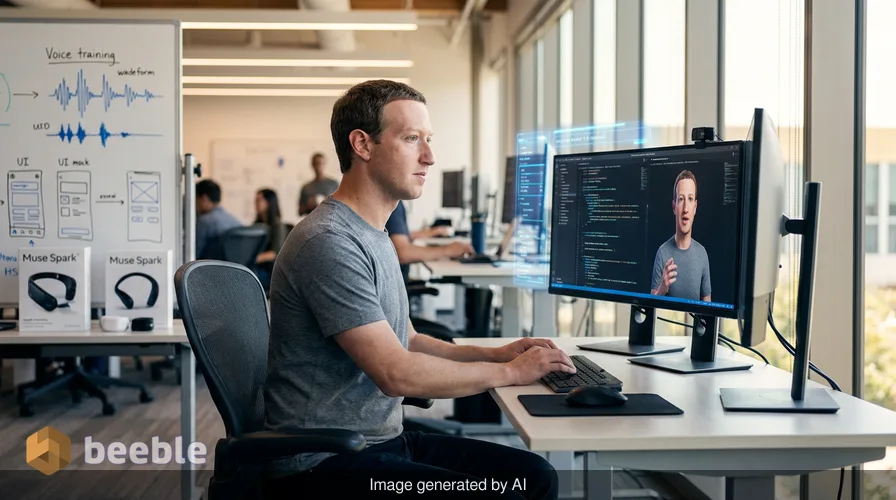
Imagine firing off a question to your boss, only to get a reply from... well, him, but not quite. Meta, the $1.6 trillion tech giant behind Facebook and Instagram, is crafting an AI version of Mark Zuckerberg. This isn't some gimmick. It's designed to chat with employees, offer feedback, and mimic the CEO's style. Drawing from his speeches, writings, and recent strategy talks, the AI aims to keep staff feeling connected even when Zuckerberg's off coding or surfing.
Behind the jargon, this is AI acting as a tireless intern for leadership communication. Four insiders confirm the project prioritizes photorealistic 3D characters that respond in real time. Zuckerberg himself is hands-on, training it on his mannerisms and voice. Practically speaking, employees might soon ping this digital double for quick advice, skipping email chains.
How the Tech Comes Together
Under the hood, Meta's pushing boundaries in AI visuals and voice. The character uses images and audio of Zuckerberg to create a lifelike avatar. Add in training data from public statements and internal memos, and you get responses that sound authentically Zuck—direct, optimistic, with a dash of Hawaii Five-O flair from his surf sessions.
This builds on earlier efforts. Remember Meta AI, launched in 2023 with celebrity chatbots like Snoop Dogg? Or AI Studio, where creators build fan-chat versions of themselves? The Zuckerberg bot is an internal evolution, separate from his "CEO agent"—a personal tool for fast info retrieval, as reported by The Wall Street Journal.
Challenges abound. Rendering realistic 3D interactions demands massive computing power to avoid laggy conversations. Meta's acquisitions of voice firms PlayAI and WaveForms are helping smooth voice synthesis. It's early days, but success here could scale to influencers creating their own AI twins for fans.
Zuckerberg's All-In AI Push
Zooming out, this fits Meta's aggressive pivot. Over the past year, billions have poured into AI to chase OpenAI and Google. Zuckerberg logs 5-10 hours weekly coding AI projects and joining tech reviews. Last week—April 8, 2026—he unveiled Muse Spark, a compact model excelling in health analysis and image comprehension. Shares jumped 7% that day, signaling Wall Street's nod.
Internally, Superintelligence Labs explores these characters. Employees get nudged toward AI tools like OpenClaw for task automation. Product managers face an optional "skills baseline"—think system design tests plus "vibe coding," blending tech with intuitive scripting. Some worry it's a stealth job audit. Meta insists it's for training gaps, not cuts.
In everyday life, picture your office adopting this: AI bosses streamlining check-ins, freeing humans for creative work. Yet it raises eyebrows—will it erode real human bonds?
From Celebrity Bots to CEO Clones
Meta's character journey started with fun. Post-Character.AI's youth appeal, they rolled out personalities. Controversy hit when users crafted explicit bots, prompting teen restrictions since January 2025. Now, the focus shifts to professional, photorealistic pros.
| Milestone | Description | Impact |
|---|---|---|
| Sep 2023 | Meta AI + celebrity bots launch | Inspired by startups, drew young users |
| 2024 | AI Studio rollout | Creators build personal AIs |
| 2025 | Voice acquisitions (PlayAI, WaveForms) | Boosted audio realism |
| Apr 2026 | Muse Spark release | Stock boost, internal AI momentum |
| Now | Zuckerberg AI pilot | Employee engagement testbed |
This table traces the buildup. Each step hones scalable, robust interactions.
What This Means for Employees and Beyond
For Meta's 70,000+ staff, it's tangible change. The AI could democratize access to Zuckerberg's insights, like a 24/7 strategy whisperer. No more waiting weeks for feedback. On the market side, it underscores AI's shift from novelty to operational backbone—streamlining decisions in a volatile tech race.
Curiously, employee reactions mix excitement and skepticism. One insider notes it fosters connection; others see it as corporate PR gloss. Historically, tech firms experiment internally before consumer rollout. Think Microsoft's Clippy evolving into Copilot.
From a consumer standpoint, watch for ripple effects. If influencers get AI clones, your Instagram faves might chat via avatars. Privacy hawks note the training data: public info plus internal strategies. What guardrails prevent misuse?
Broader Ripples in the AI Workforce
Meta's not alone. AI companions reshape work everywhere. Tools like agentic software automate grunt work, letting humans focus on judgment calls. But the bottom line? Job evolution, not elimination—at least per Meta's line.
Practically speaking, if you're in tech, brush up on AI prompting. That "vibe coding" exercise? It's your future: intuitive commands yielding code, like dictating to a smart assistant. For the average user, this previews personalized AI in apps—your fitness tracker channeling a virtual trainer with celeb vibes.
Conversely, scaling realism guzzles energy. Meta's data centers already strain grids; photoreal avatars amplify that. Resilient infrastructure will be key.
Everyday Eyes on the AI Horizon
Ultimately, this Zuckerberg experiment signals AI's creep into leadership layers. It won't replace flesh-and-blood CEOs, but it redefines presence—like a hologram at the water cooler, dispensing wisdom.
Shift your lens: next time you query ChatGPT, consider it's training grounds for digital execs. Observe how AI reshapes your feeds and work chats. Appreciate the invisible mechanics powering these tireless digital proxies, bridging global ambition to your daily scroll.



See you on the other side.
Our end-to-end encrypted email and cloud storage solution provides the most powerful means of secure data exchange, ensuring the safety and privacy of your data.
/ Create a free account
