


How a Disgruntled Researcher’s Code Shattered the Illusion of Windows Defender Security

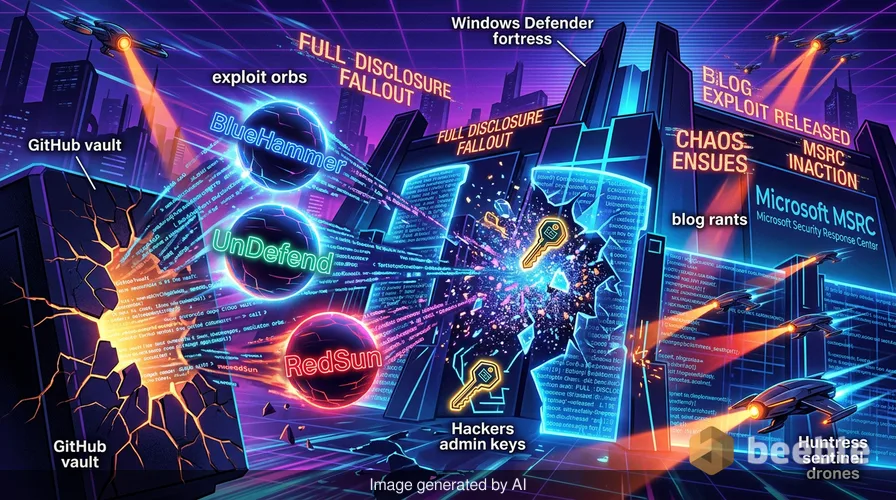
For years, the cybersecurity industry has operated under a fragile peace treaty known as coordinated vulnerability disclosure. The premise is simple: researchers find a hole, tell the vendor, and wait for a patch before going public. It is a system built on mutual respect and, more importantly, the shared goal of keeping users safe. But as we have seen over the last two weeks, that treaty is only as strong as the relationship between the researcher and the vendor. When that relationship dissolves into public vitriol, the results are often systemic and immediate.
We are currently witnessing an architectural paradox where a multi-billion dollar security ecosystem, designed to be the most resilient antivirus solution on the planet, is being dismantled by a few hundred lines of code posted to a public GitHub repository. Windows Defender, the silent guardian of millions of enterprise endpoints, has become the primary vector for a series of exploits dubbed BlueHammer, UnDefend, and RedSun. While Microsoft marketed Defender as a robust, out of the box solution capable of thwarting sophisticated nation-state actors, it took only one disgruntled individual to prove that even the most stringent defenses are exploitable when the internal logic is turned against itself.
The Anatomy of a Grudge and the Rise of Chaotic Eclipse
The researcher behind these leaks, known as Chaotic Eclipse, did not start by selling these bugs on the dark web or reporting them to a broker. Instead, they chose the path of full disclosure—a tactical nuclear option in the InfoSec world. According to their blog posts, the motivation was a breakdown in communication with the Microsoft Security Response Center (MSRC). From a risk perspective, this is the nightmare scenario for any CISO. It is one thing to defend against a stealthy APT; it is quite another to defend against a public, weaponized exploit that any script kiddie can download and execute with a single command.
In my years of covering the threat landscape, I have seen many researchers grow frustrated with the slow pace of corporate patching. I typically communicate with these sources over Signal or PGP-encrypted channels, and the sentiment is often the same: they feel ignored or undervalued. However, Chaotic Eclipse took it a step further, explicitly thanking MSRC leadership for making the disclosure possible through their perceived inaction. This is not just a technical failure; it is a failure of the human element in the vulnerability management lifecycle.
Tracing the Attack Chain: BlueHammer, UnDefend, and RedSun
The three vulnerabilities target the core functionality of Windows Defender, specifically how it handles high-level system permissions. By design, an antivirus must have deep, granular access to the operating system to identify and neutralize threats. This high level of privilege is exactly what makes it such a lucrative target. If you can compromise the security software itself, you aren't just bypassing a lock; you are convincing the security guard to open the vault for you.
BlueHammer was the first to drop. It allowed for local privilege escalation, meaning a user with limited access could suddenly become a system administrator. Microsoft managed to push a patch for this earlier this week, but the damage was already done. As a countermeasure, many organizations rushed to update, only to find themselves facing UnDefend and RedSun just days later. These latter two remain unpatched at the time of writing, leaving a pervasive gap in the defenses of any organization relying solely on Windows' native security tools.
Looking at the threat landscape, the speed at which these exploits were weaponized is staggering. Huntress, a firm known for its deep forensic analysis of endpoint behavior, confirmed that at least one organization has already been compromised using these specific tools. The hackers didn't need to be geniuses; they just needed to be fast. They took the ready-made attacker tooling provided by Chaotic Eclipse and integrated it into their existing malicious workflows before most IT teams even had time to read the initial news reports.
The Full Disclosure Dilemma and the Human Firewall
There is a long-standing debate in our community about full disclosure. Some argue it is the only way to force a slow-moving giant like Microsoft to prioritize security over features. Others see it as an act of digital arson. Proactively speaking, publishing exploit code without a patch is like pointing out a hole in a ship's hull while the vessel is in the middle of the Atlantic. You might be right about the hole, but you are also ensuring everyone on board is in immediate danger.
In the event of a breach, the blame is often placed on the IT department for failing to patch. But patching aside, we have to look at the systemic issue of trust. We have spent a decade telling users that Windows Defender is enough—that it is a mission-critical component of a modern security stack. When that trust is broken, it creates a vacuum that malicious actors are all too happy to fill. The network perimeter as we once knew it is an obsolete castle moat; if the guards inside the castle are the ones letting the Trojan horse in, the height of the walls doesn't matter.
Assessing the Attack Surface in a Post-Eclipse World
For those of us who live and breathe this stuff, the Chaotic Eclipse incident is a reminder that no system is decentralized or robust enough to be immune to a dedicated insider or a frustrated contributor. Behind the scenes, SOC analysts are currently racing with their adversaries to create custom detection rules that can catch the specific signatures of these exploits. But this is a reactive game of whack-a-mole.
From an end-user perspective, the risk is high but manageable if you understand the attack surface. These exploits generally require an initial foothold on the machine. They are not magical remote-code execution bugs that can jump across the internet—at least, not yet. They are tools for lateral movement and privilege escalation. This means that your primary defense is still the human firewall. If you can stop the initial phishing email or the unauthorized software download, the attacker never gets the chance to run RedSun or UnDefend in the first place.
Practical Defense: Beyond the Patch
Waiting for Microsoft to release a patch for UnDefend and RedSun is a necessary but insufficient strategy. We need to move toward a more resilient posture that doesn't rely on a single point of failure. This is where the concept of Zero Trust comes in—acting like a VIP club bouncer at every internal door. Just because a process claims to be part of Windows Defender doesn't mean it should be granted unauthorized access to the kernel without secondary verification.
If you are managing a network today, you should be looking for specific indicators of compromise (IoCs) related to these exploits. This involves monitoring for unusual service registrations and unexpected changes to Defender’s configuration files. In terms of data integrity, you should also be auditing who has local admin rights. If a user doesn't need it, take it away. Reducing the number of accounts that can even attempt a privilege escalation is a simple, effective way to shrink your attack surface.
Key Takeaways for IT Leaders and Users
- Audit Local Administrator Rights: The Chaotic Eclipse exploits rely on escalating privileges. If a user is not an admin, the impact of these bugs is significantly mitigated.
- Implement Multi-Layered Defense: Do not rely solely on Windows Defender. Use third-party EDR (Endpoint Detection and Response) tools that can provide a second opinion and detect behavioral anomalies that Defender might miss while it is being compromised.
- Monitor for Shadow IT: Unpatched systems are often the dark matter of the corporate network. Use scanning tools to ensure every device on your network is accounted for and running the latest security updates.
- Review Incident Response Plans: In the event of a breach involving these exploits, your team needs a clear, pre-defined plan. This includes isolating affected machines and conducting a thorough forensic investigation to ensure no persistence mechanisms were left behind.
- Stay Informed via Trusted Channels: Avoid the FUD (Fear, Uncertainty, Doubt) prevalent on social media. Follow verified researchers and vendors who provide actionable intelligence rather than just alarmist headlines.
Sources
- Microsoft Security Response Center (MSRC) Vulnerability Guidelines
- Huntress Labs Incident Report on Chaotic Eclipse Exploits
- NIST Special Publication 800-209: Security Guidelines for Storage Infrastructure
- MITRE ATT&CK Framework: T1068 (Exploitation for Privilege Escalation)
- TechCrunch Cybersecurity Reporting on Windows Defender Flaws
Disclaimer: This article is for informational and educational purposes only. It does not constitute professional legal or cybersecurity advice. Organizations should conduct their own risk assessments and consult with certified security professionals before making significant changes to their infrastructure or incident response protocols.



See you on the other side.
Our end-to-end encrypted email and cloud storage solution provides the most powerful means of secure data exchange, ensuring the safety and privacy of your data.
/ Create a free account
