


How a Simple Memory Boundary Error Exposed the Secrets of Local AI Models

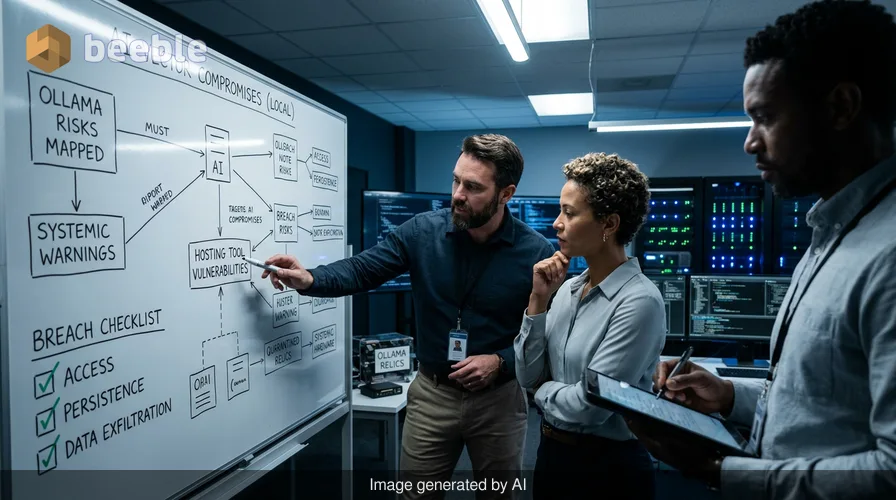
A developer sits at a workstation late at night, crafting a sensitive internal tool using a local Large Language Model (LLM). They believe their data is safe because it never leaves their hardware. However, a silent vulnerability in the very software hosting that model, Ollama, was recently discovered to be leaking bits of the system's memory to anyone who knew how to ask. This incident highlights a jarring reality: the tools we use to ensure data privacy can, through a single architectural flaw, become the primary vector for its compromise.
From a risk perspective, this vulnerability represents a significant breach of confidentiality within the CIA triad. The flaw, categorized as an out-of-bounds (OOB) read, allows a remote attacker to bypass intended memory boundaries and access data that should have remained strictly off-limits. Looking at the threat landscape, this is not just a theoretical concern for researchers; it is a systemic risk for any organization deploying local AI to handle proprietary code, personal identifiable information (PII), or mission-critical logic.
The Silent Leak in the Digital Vault
Behind the scenes, the vulnerability resides in how Ollama handles specific API requests. In the world of C++ and Go, which often power high-performance AI tools, memory management is a high-stakes game of keeping data within its designated lanes. When a program is told to read a certain amount of data but isn't given a strict 'stop' command, it might keep reading right past the finish line.
I often think of encryption as a shatterproof digital vault, but that vault is useless if the clerk inside starts handing out documents through a gap in the floorboards. In this scenario, the OOB read is that gap. An attacker sends a specially crafted request to the Ollama server—perhaps one that misrepresents the size of a data buffer—and the server responds by dumping whatever happens to be sitting in the adjacent memory. This could be previous prompts, snippets of system environment variables, or even fragments of the model's weights themselves.
Dissecting the Out-of-Bounds Mechanism
At the architectural level, the issue stems from a failure to validate input lengths before processing memory-intensive operations. When the Ollama service receives a request to process an image or a complex multi-modal prompt, it allocates a specific chunk of memory. If the code logic assumes the input will always be a certain size without verifying it, a malicious actor can trigger a read operation that overreaches.
By design, memory is a shared resource, though modern operating systems try to sandbox processes. However, within the memory space allocated to the Ollama process itself, there is a wealth of sensitive data. Because the read happens within the legitimate process space, it is incredibly stealthy. No traditional antivirus or basic firewall rule is going to flag a standard HTTP request that simply asks for 'too much' data, especially when the response looks like a normal, albeit slightly garbled, stream of information.
The Shadow IT of the AI Era
In my experience as an ethical hacker, I have often seen shadow IT described as the dark matter of the corporate network. It is invisible to the IT department but exerts massive risk. Today, Ollama and similar tools are becoming the new shadow IT. Developers download them to bypass restrictive corporate AI policies, unknowingly opening a window into their workstations.
Assess the attack surface for a moment: if a developer runs Ollama on a machine that is also used to access a corporate VPN, a compromise of the Ollama process memory could theoretically leak session tokens or PGP keys stored in memory during the same session. Proactively speaking, the danger isn't just that your 'recipe for sourdough' prompt is leaked; it is that the memory of the process might contain the keys to the kingdom.
Why Patching is Plugging Holes in a Ship's Hull
In the event of a breach, the first reaction is usually to panic, but as a journalist who values accuracy over FUD, I prefer to look at the remediation lifecycle. The Ollama team moved quickly to address this, releasing updates that implement more stringent boundary checks. Patching, in this context, is literally like plugging holes in a ship's hull. It stops the immediate leak, but it doesn't change the fact that the ship was built with vulnerable materials in the first place.
As a countermeasure, users must realize that 'local' does not mean 'isolated.' If the service is listening on all interfaces (0.0.0.0) rather than just the localhost (127.0.0.1), that memory leak is reachable from anyone on the same network—or worse, the open internet if port forwarding is active. From an end-user perspective, the most immediate fix is to update to the latest version and audit the network configuration to ensure the API is not unnecessarily exposed.
Building a Resilient AI Infrastructure
Looking beyond the immediate patch, we need to treat AI tools with the same granular security scrutiny we apply to web servers or database engines. Decentralized AI is a powerful movement, but it lacks the centralized security oversight of major cloud providers. This puts the burden of security squarely on the user.
In terms of data integrity, the OOB read doesn't necessarily corrupt the model, but it shatters the trust in the environment's confidentiality. Consequently, we must move toward a zero-trust model for local services. Imagine zero trust as a VIP club bouncer at every internal door. Even if you are already inside the 'building' (the computer), every request to access a specific 'room' (a memory buffer) must be verified and checked against the guest list.
Practical Defense: Your AI Security Checklist
To move from a reactive posture to a proactive one, I recommend the following steps for anyone integrating Ollama into their workflow or corporate environment:
- Audit Network Exposure: Ensure Ollama is bound to 127.0.0.1 unless there is a mission-critical reason for remote access. Use a firewall to restrict access to the Ollama port (typically 11434).
- Implement Containerization: Run Ollama inside a Docker container or a similar sandbox. While not a silver bullet against all memory leaks, it adds a layer of isolation between the AI process and the rest of the host system's sensitive data.
- Monitor Process Memory: For high-security environments, use forensic tools to monitor for unusual memory access patterns or spikes in outbound data from the Ollama process.
- Standardize Updating: Treat Ollama as a mission-critical service. Use automated tools to check for new releases and apply security patches within 24 hours of release.
- Sanitize Inputs: Even if the software is patched, implementing a proxy that validates the size and structure of requests before they reach the Ollama API can provide a robust layer of 'defense in depth.'
Accuracy Over Alarmism
The discovery of this vulnerability is a reminder that the rapid pace of AI development often outstrips the implementation of core security principles. However, it is not a reason to abandon local LLMs. Instead, it is a call to professionalize how we deploy them. By understanding the technical reality of out-of-bounds reads and treating local AI as a part of the enterprise attack surface, we can continue to innovate without turning our data into a toxic asset.
Ultimately, securing the digital footprint of our AI systems requires a shift in mindset. We cannot assume that just because a tool is 'ours' and 'local' that it is inherently resilient. Verification and constant auditing are the only ways to ensure that our digital vaults remains shatterproof.
Sources:
- NIST National Vulnerability Database (NVD)
- MITRE ATT&CK Framework: Data from Local System (T1005)
- Ollama Security Advisories and GitHub Repository
- CWE-125: Out-of-Bounds Read Documentation
Disclaimer: This article is for informational and educational purposes only. It does not replace a professional cybersecurity audit, forensic analysis, or official incident response service. Always consult with a qualified security professional before making significant changes to your infrastructure.



See you on the other side.
Our end-to-end encrypted email and cloud storage solution provides the most powerful means of secure data exchange, ensuring the safety and privacy of your data.
/ Create a free account
