


How a Simple Utility App Stole Millions from 7.3 Million Android Users

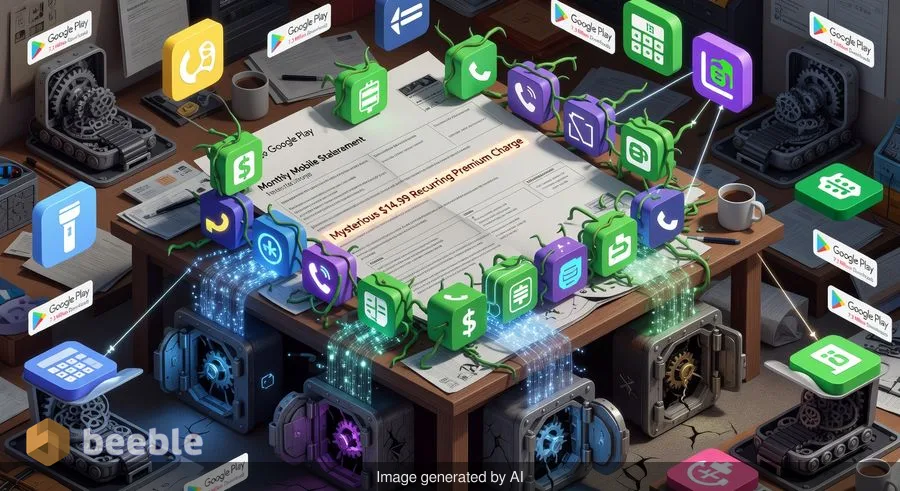
It began with a subtle discrepancy on a monthly mobile statement—a recurring $14.99 charge labeled as a premium service subscription that the account holder never knowingly joined. Within weeks, incident responders and mobile security analysts began tracing a surge of these unauthorized transactions back to a cluster of seemingly innocuous utility applications on the Google Play Store. By the time the digital dust settled in early May 2026, over 7.3 million users had downloaded a suite of fake call history recovery tools that served as a sophisticated front for systemic payment theft.
Looking at the threat landscape, this incident highlights a persistent failure in automated app vetting processes. From a risk perspective, the attackers did not rely on complex zero-day vulnerabilities; instead, they exploited the inherent trust users place in official app repositories and the broad permissions typically granted to system-level utilities. Assessing the attack surface, it becomes clear that the attackers targeted a demographic of users looking for simple solutions to technical problems—recovering a lost phone number or cleaning up a call log—only to find their financial integrity compromised.
The Anatomy of the Digital Trojan Horse
The campaign was anchored by a series of apps designed to look like legitimate system tools. Behind the scenes, these applications were engineered with a dual-purpose architecture. On the surface, they provided basic, albeit buggy, call log management. At the architectural level, however, they contained heavily obfuscated code blocks that remained dormant for the first 24 to 48 hours after installation. This delayed execution is a classic stealthy tactic designed to bypass the initial dynamic analysis performed by Google Play Protect.
Once the cooling-off period expired, the apps initiated a connection to a decentralized command-and-control (C2) infrastructure. From an end-user perspective, nothing appeared to change. Proactively speaking, the malware didn't seek to crash the phone or display intrusive ads; it wanted to remain a ghost in the machine. Consequently, the apps began subscribing users to premium Wireless Application Protocol (WAP) billing services. Unlike credit card transactions that trigger immediate bank alerts, WAP billing adds charges directly to a mobile carrier bill, a medium many users only audit once a month, if at all.
The Permission Paradox: Legitimate Access as a Malicious Tool
To facilitate this fraud, the apps required a specific set of permissions that, while seemingly relevant to a call history tool, provided the granular access needed for theft. By design, a call history app needs access to phone logs. However, these malicious variants also requested permission to read and send SMS messages and, more critically, access to notification listeners.
In the event of a breach of this nature, the notification listener is the most lethal tool in the attacker's arsenal. When a mobile carrier sends a one-time password (OTP) or a confirmation text for a premium subscription, the malware intercepts the notification before the user sees it. It then extracts the code, confirms the subscription, and deletes the incoming message. This level of automation ensures the victim remains entirely unaware of the financial bleed until the bill arrives. This is the human firewall being bypassed not through social engineering, but through technical silence.
| Requested Permission | Stated Purpose (User Perspective) | Malicious Utility (Attacker Perspective) |
|---|---|---|
| READ_CALL_LOG | Display and recover call history | Identify high-value targets and active users |
| RECEIVE_SMS | Auto-fill verification codes | Intercept and confirm premium service subscriptions |
| BIND_NOTIFICATION_LISTENER_SERVICE | Clear notifications for a clean UI | Silence carrier alerts and hide subscription confirmations |
| REQUEST_INSTALL_PACKAGES | Update the app for better features | Download secondary payloads or more aggressive adware |
Bypassing the Gatekeeper
One might wonder how 7.3 million downloads could occur before a red flag was raised. As an ethical hacker-journalist, I’ve communicated with several SOC analysts who specialize in mobile forensics, and the consensus points to a highly resilient obfuscation technique. The developers used a technique known as "staged execution." The initial app uploaded to the Play Store was clean, containing only a downloader stub. Once installed, it fetched the malicious components from an external, encrypted server.
Furthermore, the attackers utilized a decentralized hosting strategy. By spreading the malicious payload across multiple legitimate-looking cloud storage providers, they avoided triggering the domain-reputation filters that many security vendors rely on. This is where shadow IT becomes a metaphor for the attacker's playground—invisible infrastructure that exerts massive risk. The apps also featured a sophisticated logic that checked for the presence of a mobile debugger or an emulator. If the app detected it was being run in a laboratory environment, it simply functioned as a mediocre call log tool and never made the C2 connection.
Assessing the Damage to Data Integrity and Financial Security
While the primary goal was unauthorized payment, the mission-critical data exposed during this campaign cannot be overlooked. By having access to call logs and SMS, the threat actors possessed a treasure trove of metadata. They knew who the users were talking to, how often, and in some cases, through intercepted SMS, they gained insights into two-factor authentication (2FA) codes for unrelated banking or social media accounts.
From a forensic standpoint, tracing the flow of funds is notoriously difficult in WAP billing fraud. The money often passes through a series of shell companies and offshore aggregators before disappearing into the decentralized world of cryptocurrency. For the 7.3 million victims, the recovery process is not as simple as a chargeback. It requires a systemic audit of their mobile carrier accounts and a granular review of every permission granted to every app on their device.
The Practical Defense: Strengthening Your Mobile Perimeter
Patching aside, the most effective defense against this type of pervasive threat is a combination of technical vigilance and healthy skepticism. We often treat our smartphones as secure, shatterproof digital vaults, but they are more like homes with many windows; if you leave one unlatched, the security of the front door is irrelevant.
In my own lab, I treat every new application as a potential liability. Before installing a utility, I check the developer's history and look for a "red flag" pattern in reviews—often a mix of five-star bot-generated praise and one-star warnings about hidden charges. If a simple utility asks for notification access, that is a mission-critical failure of the principle of least privilege.
Key Takeaways for Users and Organizations
To prevent becoming a statistic in the next multi-million download breach, consider the following proactive measures:
- Audit Your Permissions: Periodically review the "Special Access" settings on your Android device, specifically looking for apps with "Notification Access" and "SMS" permissions.
- Carrier Billing Blocks: Contact your mobile service provider to disable third-party WAP billing or premium SMS services if you do not intentionally use them.
- Review App Reviews: Sort reviews by "Most Recent" rather than "Top Rated" to see if current users are reporting unauthorized behavior.
- Monitor Financial Statements: Treat your phone bill like a credit card statement. Any unexpected recurring charge, no matter how small, warrants a forensic investigation.
Looking ahead, the network perimeter as an obsolete castle moat is a reality we must embrace. Security must be granular and reside at the device and application level. Until app store gatekeepers can effectively identify staged, encrypted payloads, the responsibility of the human firewall remains our strongest line of defense. Conduct a risk assessment of your personal devices today; the cost of a few minutes of auditing is significantly lower than the price of a compromised digital life.
Sources:
- MITRE ATT&CK Framework: Mobile Matrix (T1444, T1516)
- NIST Special Publication 800-163 Rev. 1: Technical Guide to Information Security Testing and Assessment of Mobile Applications
- Google Play Security Rewards Program (GPSRP) Documentation
- Analysis from independent SOC and Incident Response reports (2026)
Disclaimer: This article is for informational and educational purposes only. The information provided does not replace a professional cybersecurity audit, forensic analysis, or official incident response services. Always consult with a certified professional before making significant changes to your organization's security posture.



See you on the other side.
Our end-to-end encrypted email and cloud storage solution provides the most powerful means of secure data exchange, ensuring the safety and privacy of your data.
/ Create a free account
