


How forty minutes of compromised AI code emptied the digital vaults of tech giants

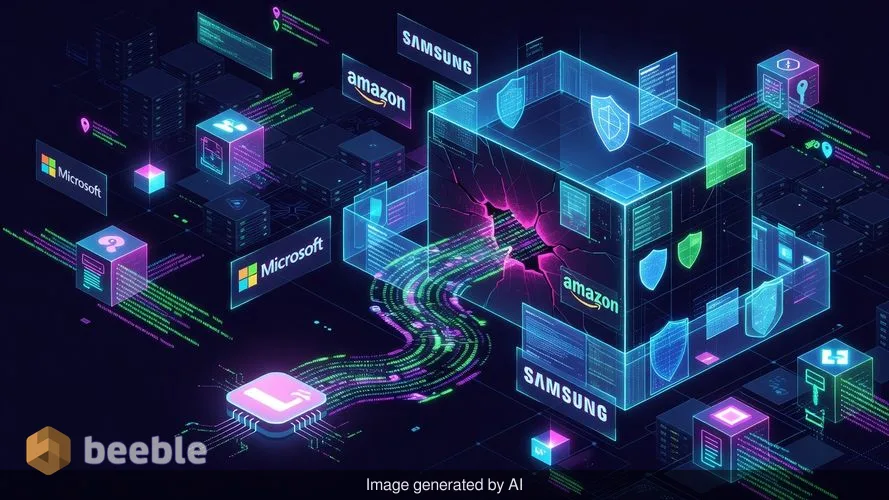
A modern enterprise security stack costs millions of dollars in licensing and personnel fees. These organizations deploy top-tier vulnerability scanners and strict access controls to maintain a robust perimeter. Yet, a forty-minute window in March proved that a single malicious dependency in a popular AI tool is enough to bypass these defenses entirely. The LiteLLM supply-chain attack resulted in the exfiltration of terabytes of sensitive credentials from some of the most secure environments on the planet, including those managed by Microsoft, Amazon, and Samsung.
From a risk perspective, this incident reveals a systemic failure in how we vet the tools used to build AI-driven software. The breach did not occur because of a flaw in artificial intelligence itself. It occurred because the DevOps infrastructure we use to deploy AI is fragile. When developers at 2,500 organizations downloaded versions 1.82.7 and 1.82.8 of LiteLLM from the Python Package Index, they inadvertently invited a digital Trojan horse into their most sensitive systems.
The paradox of the secure scanner
The most jarring aspect of this breach is its origin. The infection began with a supply-chain attack on Trivy, a widely respected open source vulnerability scanner. Organizations use Trivy specifically to find security flaws. By infecting the tool meant to provide safety, the attackers gained a position of absolute trust. Behind the scenes, the attackers exploited a lapse in how the Trivy developers managed their automation tokens. Although the team attempted to rotate a compromised token, they failed to revoke it completely for twenty days. This oversight gave the threat actors a three-week window to force-push malicious code into downstream builds.
This infection spread to other software packages, including KICS and the Telnyx Python SDK, before landing in LiteLLM. This creates an architectural paradox where the very tools designed to harden the attack surface become the primary vector for exploitation. In my experience auditing cloud environments, I often find that teams trust their security tooling implicitly. They assume that if a scanner is official and popular, its integrity is guaranteed. This incident proves that such an assumption is a critical vulnerability.
A forty minute window into the heart of the cloud
The actual window of active infection for LiteLLM was remarkably brief. For only forty minutes, the compromised versions were available on the official Python Package Index (PyPI) repository. In that short time, automated CI/CD pipelines and developers around the world pulled the malicious code. The speed of modern software delivery means that forty minutes is more than enough time to infect hundreds of thousands of systems.
Security firms CloudSEK and Hudson Rock analyzed the fallout after obtaining a 195TB file containing the stolen data. The sheer volume of information is staggering. The dump includes cloud keys, repository tokens, SSH keys, and Kubernetes secrets. These are the master keys to the digital kingdom. Proactively speaking, the fact that a forty-minute window could yield terabytes of data suggests that the infected code was highly efficient at identifying and exfiltrating high-value secrets.
Memory scraping and the toxic asset of stored secrets
The mechanism of the attack was both simple and devastating. The compromised versions of LiteLLM contained code designed to access the memory of the infected machine. Most developers believe that if a secret is not saved in a text file, it is safe. This is a fallacy. The malicious code scraped the contents of the system memory, looking for environment variables and active session tokens.
Data is a toxic asset when it is handled improperly. In this case, the "data" consisted of the credentials required to manage 434,000 CI/CD pipelines. These pipelines are the assembly lines of software development. If an attacker has the credentials to a pipeline, they can inject their own code into every future update the company releases to its customers. The researchers noted that many of these credentials were plain-text variables sitting in memory, completely unprotected. The harvested data includes active database passwords and third-party API keys that lack any identifying information, making it difficult for researchers to even notify the correct victims.
The teenage threat and the reality of DevOps myopia
Responsibility for the attack lies with TeamPCP, a group largely composed of teenagers. While their methods may not have involved zero-day exploits of high complexity, their success is undeniable. Independent security researcher Kevin Beaumont noted that these attackers are running circles around organizations that are currently obsessed with rushing AI products to market.
This rush creates DevOps myopia. Organizations prioritize the speed of AI integration over the basic hygiene of software supply chain security. When I communicate with white-hat hackers through encrypted channels, the consensus is always the same: you do not need a sophisticated exploit if the target leaves the door unlocked. By focusing on the "next big thing" in AI, many firms ignored the basic requirement of verifying the integrity of their dependencies.
The failure of the incomplete credential rotation
Perhaps the most concerning part of this story is the reactive posture of the affected organizations. After the breach was disclosed, several large tech companies claimed they had already rotated their keys and that the incident was a "nothingburger." However, verification efforts by the security community told a different story.
Kevin Beaumont reported that after one major U.S. technology company claimed all credentials were rotated, he tested the leaked keys against their public-facing infrastructure. Almost every key still worked. This suggests a superficial approach to incident response. Rotating a key is not the same as revoking it. If the old key is still valid in a secondary system or a legacy environment, the breach remains active. In the event of a breach of this magnitude, an organization must assume that every secret accessible to the infected environment is compromised. A partial rotation is essentially no rotation at all.
Practical steps for supply chain resilience
If your organization uses LiteLLM, Trivy, or any AI proxy infrastructure, the time for a passive response has passed. Assessing the attack surface requires a granular audit of every credential that passed through your CI/CD pipelines in the last six months.
Immediate Mitigation Checklist:
- Verify Versions: Audit your environment for LiteLLM versions 1.82.7 and 1.82.8. Even if you have since updated, the data was likely exfiltrated during the window those versions were active.
- Aggressive Credential Revocation: Do not simply update passwords. Invalidate and rotate every cloud key (AWS/Azure/GCP), Kubernetes service account token, and Git Personal Access Token (PAT) that was present in your environment variables.
- Audit Logging and Egress: Look for unusual outbound traffic to unknown IP addresses during the month of March. The exfiltration of terabytes of data should have triggered egress filtering alerts if they were properly configured.
- Implement Pinning and Hashing: Moving forward, do not allow your CI/CD pipelines to pull the "latest" version of a package. Use dependency pinning and verify the SHA-256 hashes of every external library before it enters your build environment.
The scale of this attack pushes the industry into a new reality. The network perimeter is an obsolete castle moat in an era where we voluntarily download code from the internet every few minutes. As a countermeasure, organizations must treat every external dependency as potentially malicious until proven otherwise. Security is not a checklist you complete once a year; it is a continuous process of verification.
Sources:
- CloudSEK Threat Intelligence Report on LiteLLM Supply Chain Attack
- Hudson Rock Analysis of TeamPCP Data Dump
- MITRE ATT&CK Framework: Supply Chain Compromise (T1195)
- NIST Software Supply Chain Security Guidance
Disclaimer: This article is for informational and educational purposes only and does not replace a professional cybersecurity audit or incident response service.



See you on the other side.
Our end-to-end encrypted email and cloud storage solution provides the most powerful means of secure data exchange, ensuring the safety and privacy of your data.
/ Create a free account
