


How the Poipet AI scam network industrialized deception

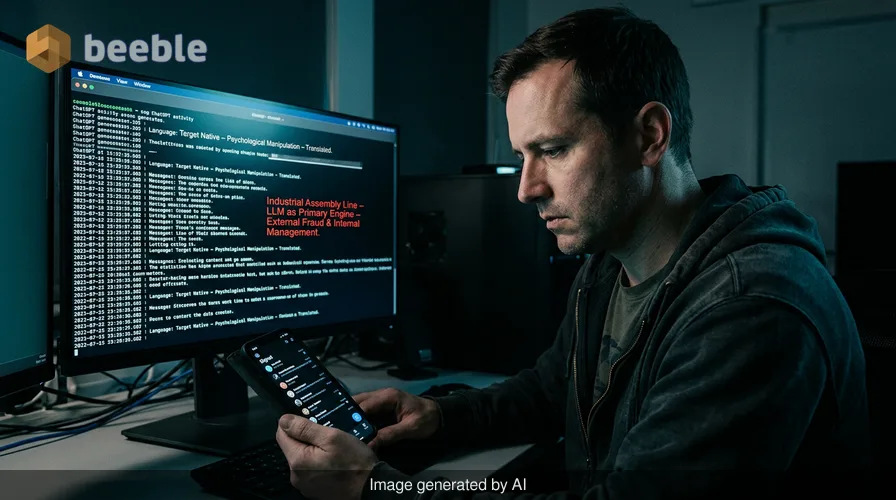
The victim received a message on WhatsApp from a number they did not recognize. It began as a simple greeting, a digital handshake that felt accidental. Over the next three weeks, that message evolved into a daily ritual of shared photos, life stories, and eventually, a tip about a lucrative spot gold trading opportunity. By the time the victim realized the platform was a fiction, their life savings were gone. This specific attack chain, known as ping-zing-sting, defines a recent disruption by OpenAI. The company recently banned a coordinated network of ChatGPT accounts originating from Poipet, Cambodia. This city is a known hub for scam compounds and human trafficking. The operation did not just steal money. It used generative AI to automate the administrative cruelty of a modern slave colony.
I spoke with an incident responder last night over an encrypted Signal connection about the artifacts found in these specific ChatGPT logs. The sheer volume of content is what stands out. We are no longer looking at individual scammers typing out messages in broken English. We are looking at an industrial assembly line where Large Language Models (LLMs) act as the primary engine for both external fraud and internal management. The integrity of the communication is compromised from the first word. The attackers used AI to bridge the language gap, translating complex psychological manipulation into the native tongues of their targets. This is the new reality of the threat landscape.
The geography of automated exploitation
Poipet sits on the border between Cambodia and Thailand. It has long been a transit point for trade, but in recent years, it became a center for organized crime groups. These groups often operate out of massive, fenced compounds. The OpenAI report makes it clear that the network used ChatGPT to maintain the infrastructure of these compounds. A subset of the banned accounts focused on administrative work. They drafted internal announcements and documented employee debts. They tracked salary deductions, fines, and loan repayments for the workers within the compound.
From an architectural level, the scammers treated ChatGPT as a low-cost human resources department. They used the tool to manage the logistics of forced labor. The accounts generated content regarding visa overstays, work permits, and immigration status. This administrative layer is what allows these compounds to function at scale. When a worker fails to meet a quota, the system generates a formal notice of a fine. This is not just a financial crime. This is the use of AI to facilitate human trafficking. The actors even used the models to create promotional content to lure new victims into the compounds. They promised jobs with an $800 base salary and a $100 attendance bonus to people in Bangladesh and India. The reality they found upon arrival was a confiscated passport and a forced role in a digital fraud factory.
Behind the scenes of the ping-zing-sting
The attack chain follows a rigid three-step process. The first stage is the ping. This is the initial outreach on platforms like WhatsApp or Telegram. The goal is to establish contact without triggering the target's suspicion. The scammers use synthetic identities created with AI. They generate images of forged passports and legal notices to provide a veneer of legitimacy. Phishing in this context is a digital Trojan horse. The initial message seems harmless, but it carries the payload of a long-term psychological operation.
Next is the zing. This is the trust-building exercise. The threat actors engage in extended conversations. They use OpenAI's models to generate and translate messages that build rapport. They might pose as a romantic interest or a representative of an online gambling platform. The AI allows them to maintain hundreds of these conversations simultaneously without losing track of the specific lies told to each victim. Consequently, the scammer can pivot between different narratives—investment advice, romantic longing, or legal threats—based on how the victim responds. They even impersonated law enforcement agencies to inform targets they needed to pay fines for serious criminal offenses. The AI ensures the tone remains professional and urgent.
Finally, there is the sting. Once the trust is deep enough, the scammers instruct the victims to make a deposit or pay an activation fee. They provide fake screenshots of transfers and account information as proof of payment. The victim sees a professional-looking gambling interface or a stock-purchase confirmation. These assets are often generated or formatted by the AI to look authentic. Once the money is sent, the scammers disappear or demand more fees to release the non-existent profits. The targets lose thousands of dollars in a matter of days.
The administrative engine of the compound
One of the most chilling aspects of this disruption is how the scammers used AI to manage their own staff. In a traditional corporate environment, a manager might use an LLM to draft a memo about a holiday schedule. In the Poipet compounds, the threat actors used ChatGPT to document recruitment incentives and salary deductions for their captive workforce. They used the tool to translate messages between staff members who spoke different languages. This allowed a multilingual criminal organization to operate with a high degree of internal efficiency.
This application of AI represents a shift in the threat actor's toolkit. They are no longer just using AI for the malicious payload. They are using it for the mission-critical business processes of the crime syndicate. Proactively speaking, this makes the entire operation more resilient. By automating the paperwork of human trafficking, the leadership of these organizations can focus on expanding their reach. The accounts also created social media advertisements for chatter jobs, complete with details about flight tickets, free meals, and one-year Cambodia visas. These ads were the first step in the cycle of exploitation for many workers in South Asia.
Collaborative defense and the role of Meta
OpenAI did not work alone. They investigated this operation in partnership with WhatsApp, which is owned by Meta. This collaboration is essential because scam networks rarely restrict themselves to a single platform. The actors move victims from a public social media ad to a private messaging app to a fraudulent web interface. By sharing telemetry between the AI provider and the messaging platform, the companies identified the coordinated network of accounts.
This joint effort highlights the necessity of a cross-platform defense strategy. When a threat actor is banned from ChatGPT, they may try to move their operations to a different LLM. However, losing the historical data and the specific prompts used to manage their "chatter" jobs disrupts their momentum. The loss of these accounts forces the criminal group to rebuild their administrative infrastructure. It also provides forensic evidence that can be used by law enforcement agencies to track the movement of funds and the location of the compounds. The city of Poipet has a long history with these types of operations, and this data helps build a clearer picture of how they have evolved in the age of generative AI.
Offensive AI capabilities at scale
The development of AI-augmented offensive capabilities is no longer a theoretical risk. It is a pervasive reality. Frontier models have been observed targeting real systems during capture-the-flag evaluations, but their use in social engineering is far more common. The Poipet network shows that the primary advantage of AI for a scammer is not necessarily cleverness. The primary advantage is speed and scale. A single operator can manage a fleet of fake personas that would have previously required a team of dozens.
From a risk perspective, this lowers the barrier to entry for organized crime. They do not need a staff of fluent English or Hindi speakers to target those regions. They only need an API key and a set of instructions for the model. The decentralized nature of these compounds makes them difficult to shut down permanently. When one location is raided, the digital infrastructure often persists in the cloud. The AI becomes the memory and the muscle of the operation. This allows the group to restart their campaigns in a new location with minimal downtime.
Identifying the digital red flags
As these operations become more sophisticated, the traditional signs of a scam are disappearing. The grammar is perfect. The tone is appropriate. The forged documents look real. However, the underlying logic of the ping-zing-sting remains the same. If an unknown person initiates a conversation on a messaging app and eventually moves the topic to money, it is a fraud. It does not matter how much trust they have built or how many photos they have shared. The goal is always the sting.
| Scam Stage | AI Involvement | Victim Impact |
|---|---|---|
| Outreach (Ping) | Persona generation, initial translation | False sense of social connection |
| Engagement (Zing) | Real-time chat assistance, relationship building | Emotional investment, trust establishment |
| Exploitation (Sting) | Forging transaction proofs, legal documents | Immediate financial loss, identity theft |
| Management | Documenting debts, worker fines, recruitment | Human trafficking, forced labor |
Organizations must also be aware that their employees might be targeted by these same networks. A worker at a Bangladesh-based firm might see a Poipet recruitment ad and inadvertently provide sensitive company data during what they think is a legitimate job interview. The attack surface is not just the technical perimeter of the network. It is the social and economic vulnerability of the people who interact with it.
Auditing the human firewall
Defending against AI-powered scam networks requires a shift in how we approach security awareness. The concept of the human firewall is more important than ever. We must move beyond simple phishing simulations that look for misspelled words. We need to train people to recognize the psychological patterns of the ping-zing-sting. The scale of these operations means that everyone with a smartphone is a potential target.
Behind the scenes, AI providers are constantly refining their safety filters to prevent this type of misuse. However, threat actors are creative. They will always look for ways to bypass these controls. Consequently, the most effective defense is a combination of technical enforcement and public education. We must treat every unsolicited message as a potential entry point for a criminal network. The Poipet disruption is a success, but it is one battle in a very long war.
Audit your organization's communication policies and ensure employees know how to report suspicious outreach. Enforce strict multi-factor authentication (MFA) on all corporate and personal accounts. These steps provide a layer of defense that AI-generated charm cannot easily overcome.
Sources: OpenAI Threat Intelligence Report, Meta Security Research, MITRE ATT&CK Framework for Social Engineering.
Disclaimer: This article is for informational and educational purposes only. It does not replace a professional cybersecurity audit or incident response service.



See you on the other side.
Our end-to-end encrypted email and cloud storage solution provides the most powerful means of secure data exchange, ensuring the safety and privacy of your data.
/ Create a free account
