


Inside China's Robot Half-Marathon: Where Humanoid Machines Are Learning to Outrun Human Limits

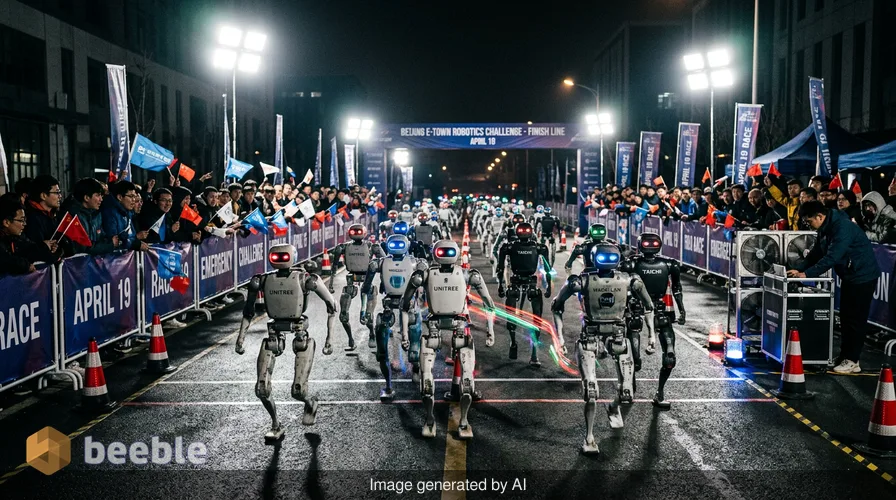
Robots Hit the Pavement in Beijing
More than 70 teams recently unleashed their humanoid robots on a 21-kilometer test course in Beijing's E-Town development zone. This overnight trial run sets the stage for China's second annual robot half-marathon on April 19, 2026. Over 100 machines are expected to compete in the main event, navigating urban streets, obstacles, and real-world chaos without much human help. Participation has exploded—nearly five times more teams than last year's debut, where only six out of 21 starters crossed the finish line.
Behind the jargon, this isn't just a gimmick. It's a practical proving ground for robots designed to work alongside humans in warehouses, factories, and homes. Think of these humanoids as tireless interns, methodically learning to handle the unglamorous grind of everyday movement.
The Trial Run: Simulating Real-World Chaos
The test mimicked the official race's demands: route navigation, gear coordination, and emergency handling. Teams pushed their creations through the night, dealing with uneven terrain, crowds, and sudden stops. Around 40% now use fully autonomous navigation, a leap from last year. Liang Liang from the Chinese Institute of Electronics called it a "significant challenge," and he's not exaggerating.
One team from China Agricultural University assembled their robot at 1 p.m. and threw it into the fray hours later. Yang Kechang, the team's lead, grinned post-run: "We were satisfied just to finish." Their machine overheated during battery swaps, joints locking like a sprinter's cramps after a long haul. Xu Bo from Genisom AI faced similar woes with his 1.3-meter-tall bot—motors frying and batteries draining faster than expected.
These glitches highlight the gap between lab demos and street reality. Robots must balance power-hungry strides with efficient energy use, much like tuning a car for a cross-country drive without constant pit stops.
New Rules Reward Grit Over Glory
Organizers added fresh categories this year: endurance prizes and a finisher's award. Last year's dismal completion rate—under 30%—drove the change. Simply reaching the end now earns recognition, lowering the bar for experimental entries.
This shift makes sense. For many, the race is less about winning and more about data collection. Teams tweak algorithms on the fly, optimizing for resilience. Yang plans software upgrades to cut overheating; Xu eyes better batteries. It's iterative engineering, where each stumble informs the next build.
| Challenge | Last Year Impact | This Year's Fix |
|---|---|---|
| Navigation | Manual overrides common | 40% fully autonomous |
| Overheating | Multiple failures | Cooling during swaps |
| Battery Life | Quick drains | Endurance awards |
| Completion | 6/21 finishers | Finisher prizes |
Practically speaking, these tweaks build scalable tech. A robot that endures 21 km could patrol vast factory floors or deliver packages door-to-door without babysitting.
Why Humanoid Robots Matter Beyond the Race
Zooming out, China's event underscores a global push in humanoid robotics. Companies like Boston Dynamics and Tesla's Optimus project aim for versatile machines that mimic human form for intuitive use. No need for custom factory layouts—these bots slot into existing human spaces.
In everyday life, that means cheaper labor in labor-short economies. China's aging population—projected to shrink its workforce by millions annually—needs this. A resilient humanoid could stack shelves in your local grocery or assemble gadgets in the phone you scroll daily. On the market side, participation surge signals investor confidence. Robotics funding hit record highs in 2025, with Asia leading deployments.
Curiously, the half-marathon tests more than legs. It probes AI decision-making under fatigue, akin to a driver navigating rush hour after a long shift. Failures here prevent costlier mishaps in warehouses, where a toppled pallet could mean thousands in damages.
Hurdles on the Horizon
Don't expect flawless performers yet. Overheating persists because motors generate heat like a microwave in overdrive. Batteries lag too—lithium tech drains fast under continuous load, forcing frequent recharges. Navigation glitches arise from sensor overload in dynamic environments: a pedestrian darting across or debris on the path.
Teams counter with streamlined cooling (fans, heat sinks) and foundational AI tweaks for predictive pathing. Yet systemic issues remain. Humanoids are power hogs compared to wheeled bots; legs offer versatility but guzzle energy. Historically, robotics milestones—like roombas conquering homes—took years of refinement. This race accelerates that cycle.
From a consumer standpoint, early stumbles mean delayed rollout. Your warehouse job might feel safe for now, but shifting dynamics loom as these machines get robust.
Global Ripple Effects for Workers and Buyers
What this means is tangible progress toward decentralized automation. Factories in Shenzhen already test humanoids for assembly lines, cutting costs by 20-30% per reports from industry watchers. For the average user, cheaper goods follow: robots streamline production, easing price pressures from volatile labor markets.
Conversely, job displacement worries persist. A Beijing delivery bot finishing 21 km autonomously could replace bike couriers. Yet new roles emerge—robot maintainers, programmers—much like assembly lines birthed mechanics decades ago. The bottom line: adaptability wins.
Under the hood, China's lead stems from interconnected supply chains. It dominates rare earths for motors and batteries, giving home teams an edge. Western firms watch closely, with events like this democratizing tech insights via open trials.
Lessons from the Starting Line
This half-marathon isn't spectacle; it's a crucible forging practical humanoids. Last year's survivors paved the way; this year's horde promises breakthroughs. As teams iterate, expect machines that handle your world—cluttered homes, busy streets—with growing reliability.
Ultimately, shift your gaze to these invisible mechanics. The robot plodding Beijing's streets today echoes in tomorrow's smarter factories and homes. Watch how endurance here reshapes the tools around you, from swifter deliveries to resilient gadgets. It's the quiet grind turning sci-fi into routine.
Sources:
- Chinese Institute of Electronics announcements
- Event coverage from Beijing E-Town development zone reports
- Team interviews via official race press releases
- Robotics market data from 2025-2026 industry analyses (e.g., IDTechEx, McKinsey Robotics reports)
- Historical data from inaugural 2025 robot half-marathon results



See you on the other side.
Our end-to-end encrypted email and cloud storage solution provides the most powerful means of secure data exchange, ensuring the safety and privacy of your data.
/ Create a free account
