


Introducing 'Dobby': The AI assistant poised to disrupt the entire app market

Have you ever wondered why, in an age of supposed high-tech sophistication, we still spend half our lives hunting for the right icon on a glass rectangle just to dim the lights or play a song? It is a friction-heavy ritual that many of us have simply accepted as the price of modern living. We live in a world of digital silos, where every smart device demands its own kingdom—a dedicated app, a unique login, and a proprietary interface that rarely plays well with others.
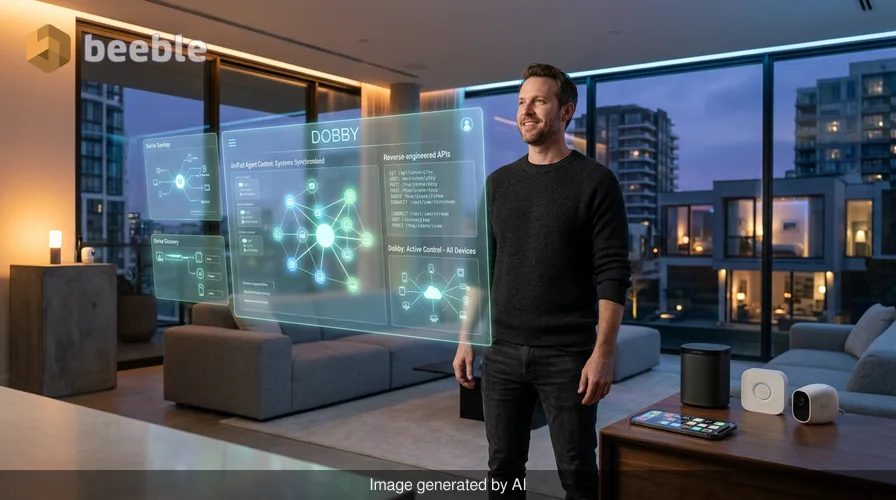
Recently, Andrej Karpathy, a founding member of OpenAI and former Director of AI at Tesla, introduced the world to an experiment that might just signal the end of this fragmented era. He calls it "Dobby," named after the helpful house-elf from the Harry Potter series. Dobby isn't just another voice assistant; it is a cutting-edge AI agent built using the OpenClaw framework that effectively treats your entire home's software stack as a single, unified organism.
The End of the App Archipelago
In practice, our current relationship with technology is defined by what I call the "App Archipelago." Each service—from Sonos and Philips Hue to your security system—is an isolated island. To get anything done, you have to manually row your boat from one island to another. Karpathy’s Dobby experiment changes the geography entirely.
By simply giving the agent access to his local network, Dobby was able to scan for devices, identify their presence, and, most impressively, reverse-engineer undocumented APIs to gain control. Consequently, Karpathy found that he no longer needed the six or seven different apps previously required to manage his home. He could simply speak to Dobby in natural language.
I can relate to the visceral frustration of the status quo. I’ve spent more hours than I care to admit wrestling with my Sonos system, watching a spinning wheel of death while I just wanted to hear a podcast. There have been moments where I’ve been tempted to treat my speakers like obsolete hardware and toss them out the window. The promise of Dobby is simple: you never have to open the app again.
How Dobby Works Under the Hood
To put it another way, Dobby treats software architecture as a blueprint that it can read and modify in real-time. Unlike traditional smart home hubs that rely on pre-built integrations—which are often brittle and prone to becoming deprecated—Dobby uses the power of Large Language Models (LLMs) to understand the underlying logic of a device.
Essentially, the agent acts like a highly skilled apprentice. When it encounters a new device, it doesn't wait for a manual. It explores the network, sends test packets, and observes the responses. This process is remarkably similar to how a human developer might explore a new codebase. Once it understands the "language" of the device, it maps those technical commands to natural language.
This shift is transformative because it moves us away from deterministic, hard-coded buttons toward a more fluid, asynchronous interaction model. You don't need to find the "Volume" slider; you just tell the agent the music is a bit too loud for a conversation, and it interprets the nuance of that request.
Why the App Economy is Vulnerable
The serious takeaway here is that generative AI and autonomous agents pose an unprecedented threat to the current app ecosystem. For over a decade, the App Store has been the gatekeeper of the digital world. Companies have spent billions of dollars on user experience (UX) design, trying to keep users engaged within their specific interfaces.
However, if the interface becomes a single, invisible AI layer, the value of those individual apps evaporates. If I can control my entire life through a single chat interface or voice command, the brand loyalty associated with a sleek app design becomes obsolete. Curiously, this might lead to a future where hardware companies no longer focus on software "stickiness" but on the robustness of their APIs.
At scale, this could lead to a massive consolidation of the digital experience. We are moving toward a world where the network is no longer the wild west of competing standards, but a seamless utility grid managed by an intelligent intermediary.
Accessibility and the Human Element
Growing up in a small town with limited infrastructure, I’ve always been sensitive to how technology serves—or fails—ordinary people. In my hometown, the latest Silicon Valley trends often felt like toys for the elite because they required too much "digital maintenance." A complex smart home setup is a nightmare for someone who isn't tech-savvy.
This is why I find the Dobby model so innovative. It democratizes complex systems. If a person can speak, they can manage a sophisticated digital environment. It removes the technical debt of learning a dozen different user interfaces. In my travels, looking for startups that make the world cleaner and safer, I’ve seen that the most resilient technologies are those that disappear into the background.
Nevertheless, this transition is not without its precarious moments. Entrusting an autonomous agent to "reverse engineer" your home network raises significant security concerns. We must treat our digital security like an immune system—constantly evolving to protect against the unintended consequences of giving an AI the keys to the castle.
The Path Forward: From Tapping to Talking
As we look toward the future, the paradigm-shifting nature of agents like Dobby suggests that the iPhone screen might not be the center of our universe for much longer. We are entering an era of the Language User Interface (LUI).
In this new world, software is no longer a collection of static tools but a living organism that adapts to our needs. While we aren't quite at the point where every household has a Dobby—it still requires significant technical skill to deploy such a system today—the trajectory is clear.
What should you do next?
- Audit your digital silos: Take note of how many apps you use for simple tasks. Could these be consolidated as AI tools become more accessible?
- Prioritize API-friendly hardware: When buying new tech, look for devices that offer open or well-documented APIs rather than those locked behind a proprietary app.
- Experiment with agents: If you have a technical background, explore frameworks like OpenClaw or AutoGPT to see how they can bridge the gaps in your own workflow.
- Practice digital detox: As AI makes tech more seamless, it becomes easier to stay "plugged in" 24/7. Remember to occasionally step away from the interface entirely to maintain your own mental ecosystem.
The app economy isn't going to die overnight, but its walls are beginning to crumble. Dobby is a reminder that technology should serve us, not the other way around. It is time we stopped being servants to our apps and started letting the agents do the heavy lifting.
Sources
- "No Priors" Podcast: Episode featuring Andrej Karpathy on AI Agents and OpenClaw.
- Andrej Karpathy's public technical notes and social media demonstrations of the 'Dobby' agent.
- Industry reports on the shift from GUI (Graphical User Interface) to LUI (Language User Interface).
- Technical documentation on the OpenClaw agentic framework.



See you on the other side.
Our end-to-end encrypted email and cloud storage solution provides the most powerful means of secure data exchange, ensuring the safety and privacy of your data.
/ Create a free account
