


Meta’s Muse Spark Proves the Era of Free AI Foundations is Fading

For the last few years, Mark Zuckerberg has positioned Meta as the generous benefactor of the AI world. While Google and OpenAI kept their most powerful models behind digital vaults, Meta’s Llama series was the gift that kept on giving—open-source code that anyone could tinker with. But with the release of Muse Spark, the company’s first major model since a massive $14.3 billion spending spree, that narrative has hit a brick wall.
While the tech industry has long praised Meta for its transparency, Muse Spark marks a sharp pivot toward a closed-door policy. This isn't just a software update; it is a fundamental shift in how the social media giant views its intellectual property. After spending billions to acquire talent and infrastructure, Meta is finally building a moat around its digital kingdom.
The Billion-Dollar Brain Drain
To understand why Muse Spark exists, we have to look at the shopping spree that preceded it. In June 2025, Meta dropped a staggering $14.3 billion into Scale AI and, perhaps more importantly, poached its CEO, Alexandr Wang. This wasn't just a financial investment; it was a tactical acquisition of the human capital required to build what Zuckerberg calls Meta Superintelligence Labs.
Looking at the big picture, this new lab acted as a specialized foundry, stripping down Meta’s previous AI architecture and rebuilding it from the ground up. By recruiting top-tier executives from rivals like Anthropic and Google, Meta effectively consolidated the industry's collective knowledge under one roof. Muse Spark is the first tangible result of this consolidation. It is a model designed not just to chat, but to reason through problems that would stump a standard digital assistant.
Under the Hood: Speed Over Size
In the world of AI, bigger isn't always better. Historically, companies raced to build "massive" models with trillions of parameters, which often resulted in slow, expensive, and power-hungry systems. Muse Spark takes the opposite approach. It is small and fast by design, acting less like a sprawling library and more like a high-speed assembly line for thoughts.
Behind the jargon, this means the AI can process complex queries in science, math, and health without the typical lag. To make this work, Meta didn't just feed the AI more internet data; they brought in the experts. By collaborating with over 1,000 physicians, they curated a specialized dataset for medical reasoning.
Practically speaking, if you ask Muse Spark about a complex drug interaction or a mathematical theorem, it isn't just predicting the next likely word in a sentence. It is using a foundational logic designed to minimize the "hallucinations" (confident lying) that plague earlier models.
The "Contemplating Mode" and Parallel Agents
One of the most disruptive features of Muse Spark is what Meta calls "contemplating mode." For the average user, most AI interactions feel like a quick volley of ping-pong: you ask, it answers. Contemplating mode changes the rhythm. When faced with a difficult task, the system triggers multiple AI agents to work in parallel.
Think of it as a tireless intern who, instead of guessing an answer, runs to five different departments to double-check the facts before reporting back to you. This allows Muse Spark to compete with high-end models like GPT Pro or Gemini Deep Think. It’s a systemic approach to accuracy that prioritizes correctness over an instant response.
| Feature | Muse Spark | Llama 4 (Previous Gen) |
|---|---|---|
| Open Source | No (Proprietary) | Yes |
| Primary Strength | Scientific Reasoning & Health | General Conversation |
| Architecture | Multi-agent "Contemplating" | Single-stream Transformer |
| Availability | Meta Ecosystem (US Only) | Public Download |
| Speed | High-efficiency / Low Latency | Standard |
From Chatbots to Autonomous Agents
Zuckerberg’s overarching goal for Muse Spark isn't just to give you a better search engine. He wants to build agents that do things. There is a subtle but vital difference between a chatbot and an agent. A chatbot is a co-pilot; it waits for your command. An agent is designed to be more autonomous, gathering data based on your preferences to complete tasks without constant hand-holding.
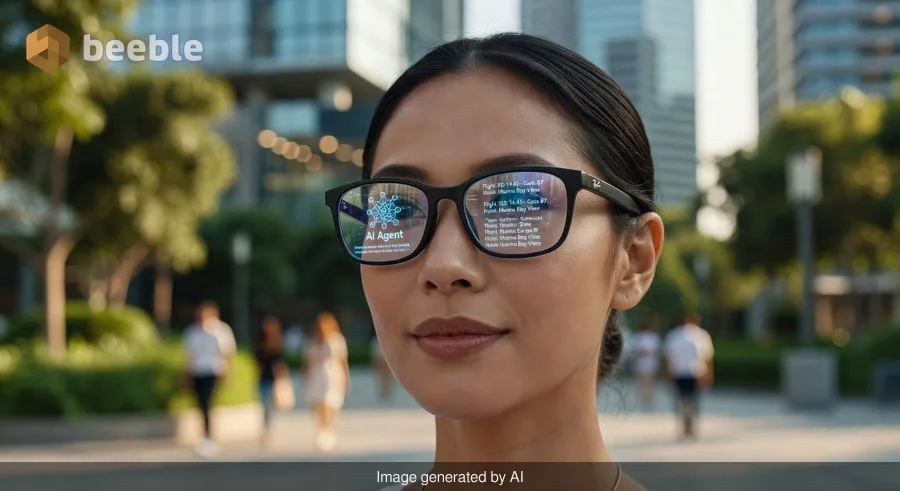
In everyday life, this might look like your Ray-Ban Meta glasses noticing you’re at the grocery store and automatically cross-referencing your fridge’s inventory to suggest a recipe, then adding the missing items to your digital cart. It’s a move toward a more intuitive, interconnected digital experience where the technology disappears into the background.
The Bottom Line: What This Means for You
From a consumer standpoint, the arrival of Muse Spark is a double-edged sword. On one hand, you are getting a more robust, resilient, and scientifically accurate tool integrated into the apps you already use—WhatsApp, Instagram, and Facebook. The medical and mathematical reasoning alone makes it a far more useful companion for students and professionals.
Conversely, the shift away from open source is a warning sign. It suggests that the "free" era of high-end AI development is ending. As Meta moves its best tech behind a proprietary curtain, we are seeing the market settle into a familiar pattern: a few massive players controlling the foundational tools of the future.
Ultimately, Muse Spark represents Meta’s transition from a social media company to a superintelligence powerhouse. It is a reminder that in the tech world, the only thing more valuable than your data is the ability to reason through it. As you start seeing the "contemplating" icon on your phone, take a moment to observe how much autonomy you're willing to hand over to your new digital intern.
Sources
- Meta Official Newsroom: "Introducing Muse Spark: Our Next Generation of Reasoning"
- Meta Technical Blog: "Rebuilding the AI Stack from the Ground Up"
- Market Analysis: "The Impact of the Scale AI Investment on Meta Superintelligence Labs"
- Industry Report: "The Shift from Open to Closed Source in Frontier AI Models"



See you on the other side.
Our end-to-end encrypted email and cloud storage solution provides the most powerful means of secure data exchange, ensuring the safety and privacy of your data.
/ Create a free account
