


Mozilla's AI Pivot Sparks Privacy Backlash

A New Captain for a Challenged Ship
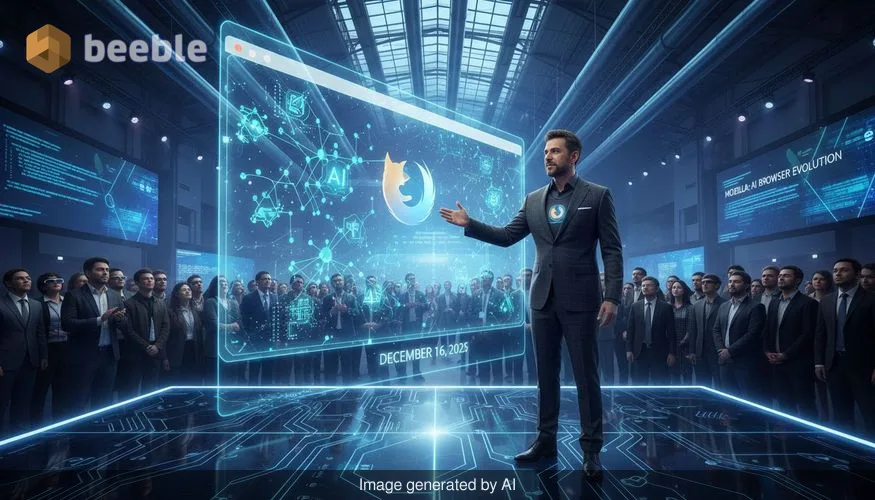
The Mozilla Corporation, the entity steering the venerable Firefox browser, is embarking on one of the most significant strategic pivots in its two-decade history. Effective December 16, 2025, Anthony Enzor-DeMeo formally stepped into the role of Chief Executive Officer, taking the helm from interim CEO Laura Chambers, who now returns to the company's board of directors. Enzor-DeMeo, who previously served as the General Manager of Firefox, inherits a ship navigating increasingly treacherous waters. His inaugural address was not merely an acceptance speech; it was a manifesto declaring a profound transformation: over the next three years, Firefox will evolve into a "modern AI browser."
The need for this dramatic course correction is starkly clear. Firefox’s global market share, once a formidable rival to Internet Explorer, has dwindled to a precarious rounding error in the face of Chrome’s dominance. Furthermore, Mozilla’s financial stability has long been dependent on a lucrative, yet vulnerable, search deal with Google, which supplies the vast majority of its revenue. Amid intensifying antitrust scrutiny toward Big Tech, this reliance has become a palpable albatross. The new CEO’s goal is ambitious: to redefine Mozilla as the "world's most trusted software company" and, critically, to diversify revenue streams, aiming for 50% non-search income by 2028.
The Core of the AI Vision: Agency and Choice
In a world rapidly saturating with AI-driven products, Enzor-DeMeo insists that Mozilla’s approach will be fundamentally different, one that honors the company’s cherished open-source and privacy-first ethos. The core of his strategy hinges on the concept of *agency*. He asserts that AI features must not be compulsory but a clear, informed choice for the user. Controls must be simple. AI should always be a choice—something people can easily turn off, the new CEO articulated.
To differentiate from competitors like Google and Microsoft, who often rely on massive cloud-based models that harvest user data, Firefox is doubling down on privacy-preserving integration. This includes running small-scale AI models directly on the user’s device for features like automatic alt-text generation and real-time translation, ensuring sensitive data remains local and secure. Furthermore, in a nod to vendor-neutrality, the upcoming "AI Window" feature allows users to select their preferred cloud AI chatbot provider, offering a multi-model approach rather than restricting them to a single ecosystem.
This is Mozilla’s tightrope walk: to embrace the cutting edge of AI innovation while maintaining their long-standing position as a bulwark against the data-hungry practices of the industry giants. The three-year roadmap views AI not as a surveillance tool, but as a co-pilot designed to enhance productivity and understanding without sacrificing anonymity.
The Existential Dilemma: Innovation vs. Ethos
Despite the explicit promises of user control and transparency, the announcement has been met with a wave of passionate trepidation and outright hostility from a significant portion of the Firefox community. Many core users deliberately chose Firefox precisely to escape the relentless "AI obsession" and algorithmic mediation now pervasive in Chrome and Edge. The sentiment is raw, with online posts suggesting the move proves management is "astoundingly out of touch" with its loyal user base.
The central critique revolves around the implementation of resource-intensive AI. Critics argue that since Mozilla lacks its own proprietary AI stack, its reliance on commercial, cloud-hosted Big Tech models—even if optional and vendor-neutral—will essentially turn Firefox into an "AI buffet" for the very companies it vows to challenge. This creates a painful contradiction: to fight browser monoculture, Mozilla risks having to leverage the technology of the monopolists, potentially eroding the very trust it seeks to cultivate. The urgency to diversify revenue, while necessary, is fueling fears that financial desperation is overriding fundamental open-source principles.
As Anthony Enzor-DeMeo sets his strategic vision into motion, the stakes are impossibly high. Can Mozilla truly thread the needle, integrating advanced AI features to regain market relevance and financial independence, without alienating the passionate, privacy-conscious community that constitutes its very soul? The next 36 months will determine whether this pivot is a stroke of visionary genius or an existential gamble that pushes one of the internet's most vital mavericks past the point of no return.



See you on the other side.
Our end-to-end encrypted email and cloud storage solution provides the most powerful means of secure data exchange, ensuring the safety and privacy of your data.
/ Create a free account
