


Stripping Away the Source: Why the Netherlands is Pushing for a European Ban on AI ‘Nudify’ Tools

In the physical world, we would never tolerate a stranger following us through a shopping mall with a device designed to see through our clothes. We would recognize it instantly as a systemic violation of dignity and a clear-cut crime. Yet, in the digital realm, ‘nudify’ tools—AI-driven applications that can digitally remove clothing from photos—have operated in a precarious legal gray zone, often dismissed as a niche problem for individual victims to solve.
That era of regulatory ambiguity is coming to an end. In a significant move this week, the Dutch National Police, the Public Prosecution Service (Openbaar Ministerie), and various Dutch authorities issued a joint statement calling for an outright European ban on these tools. As a digital detective who has spent years investigating how personal data is weaponized, I see this not just as a policy shift, but as a fundamental redesign of how we approach digital harm.
Moving Upstream: Targeting the Source, Not Just the User
For years, the legal response to non-consensual deepfake pornography has been reactive. Authorities would wait for a victim to come forward, then attempt to track down the individual perpetrator who used the tool. This is like trying to clean up an oil spill with a single sponge while the tanker is still leaking. It is inefficient and places the entire burden of trauma on the victim.
The Dutch authorities are now proposing a shift in the regulatory landscape. By calling for a ban on the tools themselves, they are targeting the source of the harm. From a compliance standpoint, this moves the responsibility from the end-user to the developers and hosting platforms. If the tool is illegal to provide, the systemic risk is mitigated before the first pixel is even rendered. In practice, this means that the mere existence of a service designed to ‘nudify’ individuals becomes a statutory violation, regardless of how it is used.
The Consent Paradox
One of the most nuanced aspects of the Dutch proposal is the rejection of the ‘consent’ defense. Typically, in privacy law, consent is a key that unlocks the door to lawful data processing. If you agree to have your data used, the company is usually in the clear. However, the Dutch statement argues that nudify tools should be prohibited even if the depicted individual allegedly consented.
Why such a stringent approach? Because these tools treat the human body as a toxic asset—something that can be manipulated and exploited without regard for the long-term reputational or psychological fallout. In a regulatory context, the authorities argue that the potential for abuse is so high, and the technology so intrusive, that it falls into a category where individual consent cannot override the collective need for protection. It is a recognition that some technologies are inherently incompatible with fundamental human rights.
The EU AI Act as a Regulatory Compass
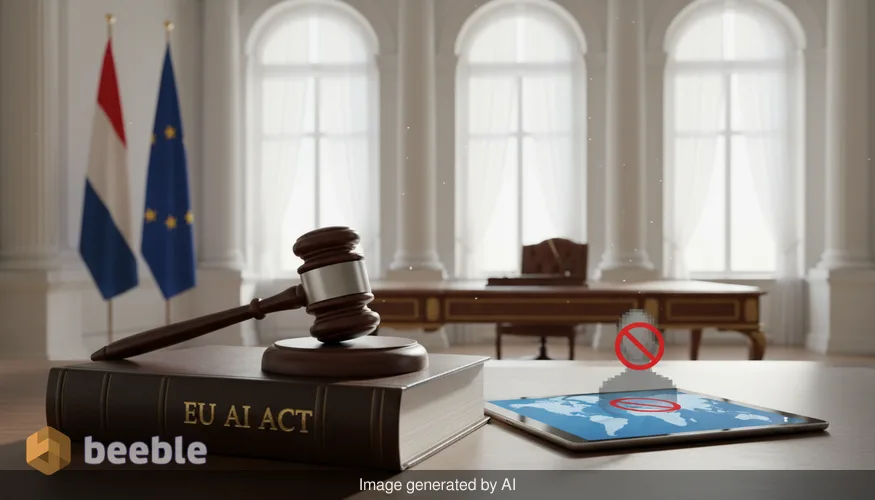
To make this ban binding across borders, the Netherlands is looking toward the EU Artificial Intelligence Act. This landmark legislation categorizes AI systems based on risk. The Dutch proposal suggests that nudify tools should be classified under ‘Unacceptable Risk,’ alongside technologies like real-time biometric surveillance or social scoring by governments.
If this proposal is adopted, it would provide an extraterritorial reach, meaning any company offering these services to European citizens—regardless of where the company is headquartered—would face massive fines. For businesses, this is a clear signal: compliance is no longer just a checklist; it is the foundation of a house that must be built on ethics. Companies that ignore these shifting winds are not just being non-compliant; they are building their business models on a fault line.
A Meticulous Investigation into Digital Hygiene
When I investigate these types of tools, I often find a trail of breadcrumbs leading back to opaque developers who hide behind layers of shell companies. These platforms often claim they are merely providing ‘artistic tools’ or ‘entertainment.’ However, when you look at the metadata and the marketing strategies, the intent is clear. They are mapping our lives and our bodies without our knowledge, creating a world where no photo is safe from alteration.
I recently looked into a case where a high school student’s social media profile was used to create deepfake images. The school’s response was to tell the students to ‘be careful what you post.’ This is the digital equivalent of telling someone to wear a raincoat during a flood. The Dutch authorities are finally saying that we shouldn’t have to live in a flood. By banning the tools, we are building a dam.
What This Means for Businesses and Individuals
For tech companies and developers, the message is one of transparency and proactive risk management. If your software uses generative AI to manipulate human imagery, you need to audit your features now. Waiting for a formal summons is a high-stakes gamble that could lead to systemic failure for your brand.
For individuals, this development is an empowering step toward reclaiming digital autonomy. It signals that the law is finally catching up to the sophisticated reality of AI-driven harassment. While we wait for the European Parliament to weigh in on the Dutch proposal, there are actionable steps you can take to protect your digital footprint.
- Audit Your Online Presence: Use privacy-preserving tools to see where your images are indexed and consider tightening the privacy settings on your social media accounts.
- Review Terms of Service: If you use AI image generators for work or hobby, read the fine print. Ensure the platform has robust policies against generating non-consensual content.
- Support Legislative Action: Stay informed about the progress of the EU AI Act and support initiatives that prioritize human dignity over technological ‘innovation’ for its own sake.
Ultimately, the Dutch joint statement is a reminder that privacy is not just a compliance checkbox; it is a fundamental human right. By treating these tools as the digital hazards they are, we can begin to build a more secure and respectful internet for everyone.
Sources:
- EU Artificial Intelligence Act (Regulation (EU) 2024/1689)
- General Data Protection Regulation (GDPR), Article 6 (Lawfulness of processing) and Article 9 (Processing of special categories of personal data)
- Joint Statement of the Dutch National Police and Public Prosecution Service (April 2026)
- European Convention on Human Rights, Article 8 (Right to respect for private and family life)
Disclaimer: This article is for informational and journalistic purposes only and does not constitute formal legal advice. If you are facing a legal issue regarding digital privacy or AI, please consult with a qualified legal professional.



See you on the other side.
Our end-to-end encrypted email and cloud storage solution provides the most powerful means of secure data exchange, ensuring the safety and privacy of your data.
/ Create a free account
