


The Anatomy of a National Anxiety: Why British Citizens Fear an AI-Driven Social Collapse

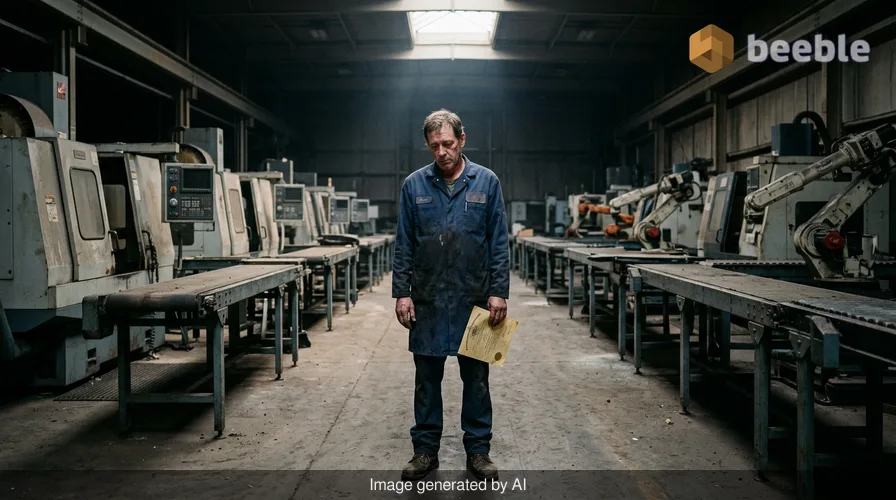
In the mid-twentieth century, the British labor market functioned as a cohesive social anchor—a predictable trajectory of apprenticeship, tenure, and retirement—whereas today’s landscape is defined by a pervasive sense of liquid instability; the advent of generative AI has transformed the workplace from a site of collective security into a fragmented archipelago of individual anxiety. While the previous generation viewed technology as a tool to lighten the physical load of the factory floor, the current workforce perceives it as a systemic replacement for the human mind itself. This shift is not merely an economic concern but a visceral transformation of our social habitus, where the very concept of a 'career' is becoming as ephemeral as a digital notification.
Recent data from King's College London, surveying over 4,500 individuals across the United Kingdom, reveals a nation holding its breath. We are no longer debating the theoretical ethics of automation in academic journals; we are witnessing a public that views the rapid development of artificial intelligence with more fear than excitement. Seven in ten citizens are now worried about the economic fallout of job losses, and perhaps most strikingly, one in five believes this technological transition could culminate in civil unrest. Paradoxically, the more 'intelligent' our systems become, the more atomized and precarious our social fabric feels.
The Great Disconnect: Employer Optimism vs. Public Dread
There exists a profound gap between the boardrooms of the City of London and the kitchen tables of ordinary households. On a macro level, employers appear to be living in a different reality than the people they employ. Nearly 70% of business leaders express genuine excitement about the opportunities AI creates, often framing the technology as a benevolent assistant designed to augment human capability. To put it another way, the view from the top is one of synergy and efficiency—a narrative where AI handles the mundane so humans can focus on the creative.
In contrast, the view from the street is one of displacement. While 56% of employers claim AI will assist workers, only 32% of the general public buys into this optimistic discourse. Curiously, the data suggests the public’s skepticism is grounded in a very tangible reality: 22% of employers admitted they have already reduced hiring or made positions redundant specifically because of AI. Among large organizations, that figure rises to nearly a third. It is difficult to sell the 'AI assistant' narrative to a population that sees its entry-level rungs being systematically removed from the professional ladder.
Historically, economic growth was expected to lift all boats, yet two-thirds of the UK public now believes the gains from AI will be funneled almost exclusively to wealthy investors and corporations. Only 7% believe these benefits will be distributed fairly. Through this lens, AI is not seen as a rising tide, but as a digital enclosure—a process where the common resource of human labor is fenced off for the benefit of a few, leaving the rest of society to navigate a shrinking territory of opportunity.
The Stolen Horizon: Why Youth Fear the Future
For the younger generation, the anxiety is not just about losing a job; it is about the loss of a beginning. Zooming out to the broader educational landscape, we see university students reconsidering their entire life paths before they have even started them. Nearly 60% of respondents agree with the harrowing prediction that half of all entry-level white-collar jobs could vanish within the next five years. Consequently, the labor market is becoming a theater of high-stakes competition where the script is written by algorithms.
Linguistically speaking, the way we talk about the 'entry-level' job has changed. It used to imply a space for learning and gradual integration into a professional community. Now, it is often discussed as a vulnerability—a segment of the market that is 'ripe for disruption.' This has led to a poignant psychological state among students: three in ten say they would now choose a different degree subject if they could start over. The degree, once a ticket to stability, now feels like a map for a territory that no longer exists.
Interestingly, a gender gap has emerged in this digital disillusionment. Young male students are significantly more likely than their female counterparts to view AI as a positive force for the UK. This is not mere posturing; it reflects a systemic reality highlighted by the International Labour Organisation, which noted that women in high-income countries are three times more likely than men to lose their jobs to AI automation. For women, who often occupy roles in administrative and service sectors that are easily codified into algorithms, the 'AI revolution' feels less like a breakthrough and more like a structural threat.
The Rise of the 'QuitGPT' Sentiment
As the reality of these shifts sinks in, we are seeing the emergence of new forms of collective coping and resistance. The 'QuitGPT' movement is a symptomatic example of this burgeoning discontent. What began as a niche concern has surged into a broader boycott, particularly following OpenAI’s strategic partnership with the United States’ Department of War. This has created a resonant moral dilemma for many: the same tools that threaten their livelihoods are now being integrated into the machinery of state-sponsored conflict.
Ultimately, the public’s response to AI is a demand for a new social contract. There is an overwhelming consensus—66% of the population—that the government must intervene with tighter regulation. This is not a call for a Luddite-style smashing of the machines, but rather a plea for systemic guardrails. People are asking for retraining programs and, perhaps most controversially, a tax on companies that replace human workers with silicon ones. They are seeking a way to anchor themselves amidst the systemic chaos of the attention economy and the rapid automation of the mundane.
Food for Thought
As we navigate this transition, we might ask ourselves how we define the value of a person beyond their productivity. If AI can indeed perform the tasks that once defined our professional identities, what remains of our social connection? Here are a few perspectives to consider as we move forward:
- The Revaluation of the Human Touch: As AI masters the technical and the administrative, will we see a societal shift that finally places a premium on 'high-touch' professions—caregiving, teaching, and complex social mediation—that cannot be distilled into code?
- The Regulation of the Algorithm: If technology is the new infrastructure of society, should its benefits be treated as a public utility rather than a private windfall?
- The Search for Community: In an era of increasing digital atomization, how can we rebuild the 'third places'—cafes, libraries, and community centers—that provide the social nutrition a fast-food digital diet lacks?
- Mindful Resistance: How can we engage with technology without surrendering our agency, ensuring that we use these tools to enhance our humanity rather than merely accelerating our obsolescence?
Behind the scenes of this trend lies a fundamental truth: technology is never neutral. It is a reflection of our collective priorities. If the UK public is watching with fear, it is because they sense that, for the first time in history, the machine is not just replacing the arm, but the very essence of the individual’s contribution to the collective quilt of society.
Sources:
- King’s College London Policy Institute: Survey on AI Public Perception (May 2026).
- International Labour Organisation (ILO): Report on AI and the Gendered Labor Market (2025).
- Anthropic CEO Dario Amodei: Industry Predictions and White-Collar Displacement.
- The QuitGPT Movement: Digital Boycotts and Ethical AI Discourse.



See you on the other side.
Our end-to-end encrypted email and cloud storage solution provides the most powerful means of secure data exchange, ensuring the safety and privacy of your data.
/ Create a free account
