


The Android PC: Google, Qualcomm, and the Audacious Plan to Finally Unify Computing

The Enduring Quest for Seamless Computing
For as long as pocket-sized devices have been powerful, the technology world has been captivated by one persistent, almost mythological ideal: unified computing. It is the audacious dream of a singular, seamless experience that fluidly follows the user from the small glass screen in their hand to the sprawling workspace on their desk. For decades, this aspiration has proven to be a computational graveyard, littered with the ambitious but ultimately ephemeral remains of brave experiments.
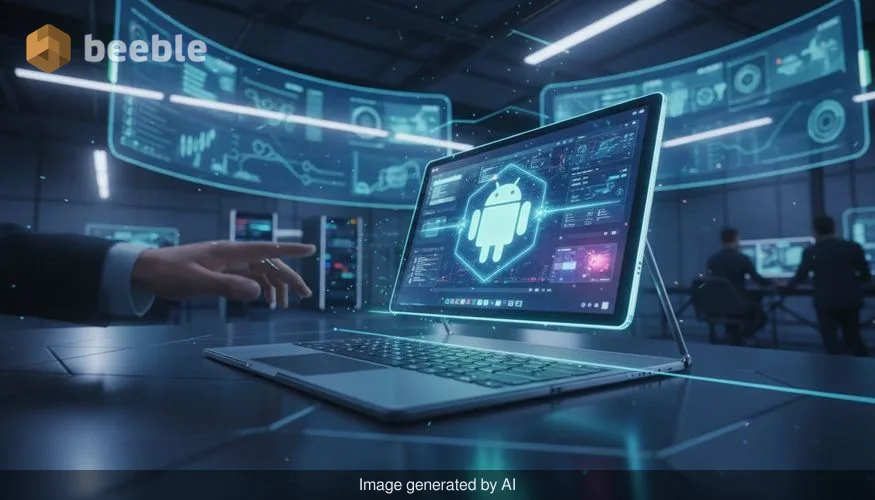
Yet, as we move into 2026, the whispers that began in the fall of last year have coalesced into a loud, unmistakable declaration: Google is taking its second, and most serious, shot. This time, the company is not merely iterating on the successful, but ultimately distinct, ChromeOS platform. Instead, in a powerful, vertically integrated partnership with Qualcomm, Google is making a foundational play to scale the world’s dominant mobile operating system, Android, directly into the traditional laptop and PC form factor.
This initiative is not just an incremental update; it is a fundamental re-architecture, a determined effort to finally bridge the chasm between mobile and desktop that has frustrated users for so long. Qualcomm’s CEO, Cristiano Amon, has seen the results, and his effusive assessment—“It’s incredible. It delivers on the vision of convergence”—underscores the profound stakes of this new endeavor.
The Ghosts of Convergence Past
To appreciate the gravity of Google’s current move, one must first look at the headstones marking the failures of the past. The history of unified computing is a cautionary tale of hubris, particularly the fatal flaw of trying to shrink a desktop experience. Microsoft’s ill-fated Windows 8, for example, attempted to impose a touch-centric interface onto mouse-and-keyboard users, alienating its core base while simultaneously failing to attract mobile developers.
Other notable computational cadavers include the Motorola Atrix with its clunky Webtop interface and the various short-lived Linux-based dockable phone experiments. The common thread was attempting a “desktop-down” approach, where legacy code and clunky interfaces suffocated the fluidity required for mobile.
Google, however, is reversing the paradigm. By focusing on a "smartphone-up" strategy, they leverage Android’s unparalleled strength: an ecosystem of billions of users and millions of developers already building for the platform. This means the immediate elimination of the dreaded “app gap”—the existential problem that doomed so many previous attempts.
Silicon and Software: The New Blueprint
Success in this new era hinges on a powerful, efficient hardware base, and this is where Qualcomm's role becomes the true game-changer. The new Android PCs are set to be powered by the highly anticipated Snapdragon X Elite and X2 Elite series chips. These ARM-based processors are explicitly engineered to challenge Apple’s M-series in providing stellar performance alongside _all-day battery life_—a key ingredient in the seamless computing recipe.
Qualcomm's partnership ensures deep, native optimization, with engineers actively integrating Snapdragon X support directly into the core Android codebase (rumors point to Android 16 being the target).
Google's strategy is to take the best elements of the popular ChromeOS user experience—like its security model and simplicity—and then 're-baseline' the underlying technology onto the robust foundation of Android. This isn't just about making Android look like a laptop OS; it's about building a common technical core for all of Google’s computing products.
This hybrid approach avoids the pitfalls of simply bolting a desktop shell onto a mobile OS. Instead, it creates a clean, modern system unburdened by the architectural baggage of decades-old legacy code that still weighs down competitors.
The Trifecta: Apps, AI, and True Continuity
Beyond hardware, the Google-Qualcomm Android PC push rests on three pillars designed to deliver the unified vision:
- Massive App Reach: While traditional desktop productivity apps remain a challenge, the vast majority of consumer and light-professional tasks are already covered by Android's colossal app store. Furthermore, the push for better multi-windowing, file management, and mouse/keyboard support is transforming Android from an oversized mobile experience into a legitimate desktop environment, particularly for the modern, web-centric worker.
- AI Ubiquity via Gemini: Deeply baked into the new platform is Google's sophisticated Gemini AI model. This is the intelligence layer that finally enables true, predictive continuity. Imagine researching a topic on your phone and then, moments later, sitting at your Android PC to find the desktop staged with relevant documents and the corresponding browser tabs already open. AI becomes the seamless glue holding the experience together, enabling generative features and smart content organization across all devices.
- One Seamless Ecosystem: The ultimate goal is to erase the lines between devices. Your smartphone becomes the central brain, capable of docking into a full desktop monitor, an ultra-light laptop shell, or simply serving as the connection hub for a larger PC—all running the same software with your context and preferences intact.
A High-Stakes Wager
The confirmed 2026 launch window means the PC landscape is about to become fiercely competitive. Google is not just aiming at Windows; it is taking a direct shot at the coveted ecosystem integration that has been Apple’s proprietary domain for years.
The potential reward is immense: establishing Android as the third pillar of mainstream computing. However, the path is fraught with the daunting challenge of execution. Google has a well-earned, if unsettling, reputation for abandoning projects—the infamous "Google Graveyard" looms large in the minds of skeptical users and developers. For the Android PC to succeed, Google must demonstrate unwavering commitment to the platform and provide developers with the incentive to optimize their apps for a true desktop experience. The dream of unified computing is alive, but its ultimate reality depends entirely on the flawless execution of this high-stakes wager.



See you on the other side.
Our end-to-end encrypted email and cloud storage solution provides the most powerful means of secure data exchange, ensuring the safety and privacy of your data.
/ Create a free account
