


The Blind Spot in the Booth: Why the Dutch DPA Warns Against AI Voting Assistants

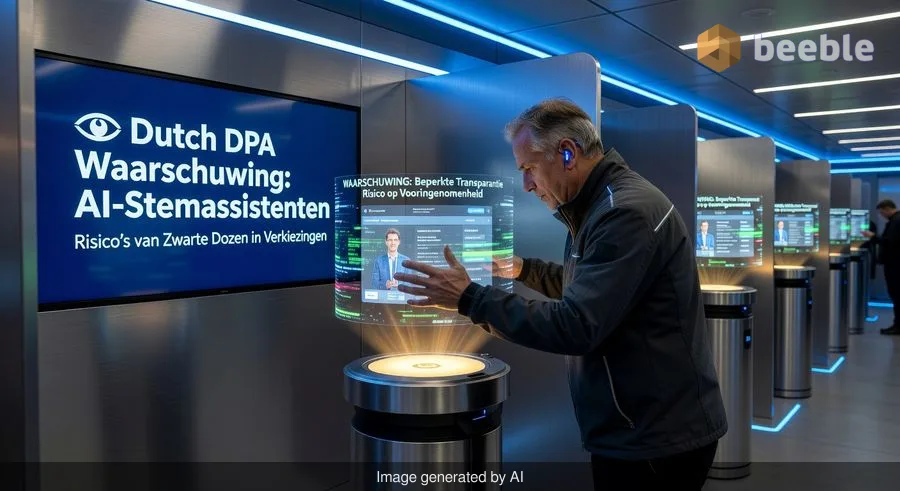
As voters increasingly turn to Large Language Models (LLMs) for quick summaries of complex political landscapes, the Dutch Data Protection Authority (Autoriteit Persoonsgegevens or AP) has issued a sobering reality check. A recent study conducted by the regulator reveals that popular AI chatbots—including industry leaders like ChatGPT and Claude—are significantly ill-equipped to guide voters in local elections, often ignoring the very grassroots parties that define municipal governance.
The investigation arrives at a critical juncture for digital democracy. With the 2026 municipal elections on the horizon, the AP sought to determine whether AI could serve as a reliable digital "Stemwijzer" (the popular Dutch voting compass). The results suggest that while these tools are technically impressive, their reliance on global datasets creates a dangerous disconnect from local reality.
The Local Party Erasure
In the Netherlands, municipal elections are frequently dominated by local interest parties that do not have a national presence. These groups often capture a significant portion of the vote, addressing hyper-local issues from neighborhood zoning to regional transit. However, the AP’s testing of five major models—ChatGPT, Claude, Gemini, Grok, and Mistral—found a staggering omission: less than one percent of the chatbots' voting recommendations even mentioned a specific local party.
This "erasure" creates a skewed digital landscape. When a voter asks an AI for advice on local issues, the model tends to default to well-known national entities like the VVD, PVV, or GroenLinks-PvdA because these parties have a larger digital footprint. For a local party that exists only in a specific municipality, the AI’s training data is often too thin to provide an accurate representation, effectively silencing local voices in the democratic process.
Hallucinations and the Illusion of Neutrality
Beyond the omission of local parties, the AP study highlighted the persistent issue of "hallucinations." In several instances, chatbots attributed policy positions to parties that were either entirely fabricated or diametrically opposed to the party’s actual manifesto.
The danger here lies in the presentation. Unlike a traditional search engine that provides a list of sources for the user to verify, a chatbot delivers a conversational, authoritative response. This "illusion of neutrality" can lead voters to accept incorrect information as objective fact. The AP notes that because the internal logic of these models is a "black box," it is nearly impossible for a citizen to trace how a specific recommendation was reached or to identify the biases inherent in the training data.
Risks to the Democratic Process
According to the AP, the use of AI as a primary voting aid poses three distinct risks to the democratic process:
- Information Monopolies: If a handful of US-based or French-based AI models become the primary gatekeepers of political information, the diversity of the Dutch political landscape is at risk.
- Manipulation Vulnerability: While the study focused on general model behavior, the potential for chatbots to be subtly steered toward certain political outcomes—either through prompt engineering or biased training sets—remains a high-level security concern.
- Erosion of Accountability: If a voter makes a decision based on a hallucinated policy, there is no recourse. The AI companies generally include disclaimers about accuracy, but these are often buried in terms of service that users rarely read before asking for a quick voting tip.
Comparing the Contenders
While all models struggled with local nuances, the AP noted slight variations in how they handled political queries.
| AI Model | Local Party Recognition | Policy Accuracy | Tone/Neutrality |
|---|---|---|---|
| ChatGPT (OpenAI) | Very Low | Moderate | Highly Conversational |
| Claude (Anthropic) | Very Low | High | Cautious/Refusal-prone |
| Gemini (Google) | Low | Moderate | Integrated with Search |
| Grok (xAI) | Very Low | Variable | Less Filtered |
| Mistral (Mistral AI) | Low | Moderate | Concise |
Note: "Low" indicates less than 1% mention of local parties across all test scenarios.
Practical Takeaways for Digital Citizens
If you are looking for political clarity, the AP suggests that AI should, at most, be a starting point for broader research rather than a final destination. Here is how to navigate the digital booth safely:
- Verify with Primary Sources: Always cross-reference AI claims with official party websites or established, transparent voting tools like the Stemwijzer or Kieskompas.
- Check for Local Presence: Explicitly ask the AI about local parties in your specific municipality. If the AI cannot name them, it is a clear sign the model lacks the necessary context to give you advice.
- Beware of Confident Tones: Just because a chatbot sounds certain does not mean it is accurate. Treat every political claim from an AI as a hypothesis that requires external verification.
- Report Inaccuracies: Most AI platforms have feedback mechanisms. Reporting political hallucinations can help developers refine their models to be more cautious in sensitive contexts.
The Path Forward
The Dutch Data Protection Authority’s findings serve as a call to action for both developers and regulators. As the European AI Act begins to take shape, the transparency of models used in democratic processes will likely face stricter scrutiny. For now, the message from the AP is clear: when it comes to the ballot box, human intelligence—and local knowledge—remains irreplaceable.
Sources:
- Autoriteit Persoonsgegevens (Official Website)
- European Data Protection Board (EDPB) Guidelines on AI
- Dutch Municipal Elections Archive (Kiesraad)



See you on the other side.
Our end-to-end encrypted email and cloud storage solution provides the most powerful means of secure data exchange, ensuring the safety and privacy of your data.
/ Create a free account
