


The Cannon in the Tropics: Why We Can’t Let Nathan Drake Rest
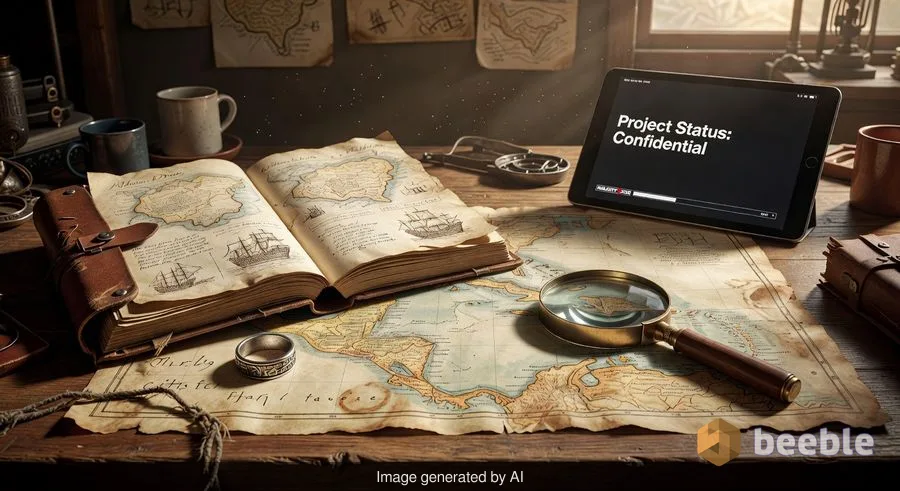
You are scrolling through Instagram, past the blurred photos of brunch and the targeted ads for ergonomic chairs, when a single image stops your thumb. It’s a cannon—weathered, iron, and silent—resting against a backdrop of lush, tropical greenery. For most, it’s a vacation snapshot. But for a specific subset of the gaming community, this post by Naughty Dog creative director Shaun Escayg isn’t just a photo; it’s a coordinate on a treasure map. Within minutes, the digital archaeology begins: fans cross-reference the foliage, identify the fort, and link it to the historical merchants of Trinidad and Tobago. This is the modern ritual of the 'stealth tease,' where a single pixel can ignite a firestorm of speculation about Uncharted 5.
Behind the scenes, this reaction reveals a fascinating tension in how we consume media today. We are no longer just players; we are investigators in a permanent state of high alert. The Uncharted series, which seemingly reached its narrative zenith in 2016 with A Thief’s End, left us with a closed book. Yet, the industry’s current architecture—built on the pillars of the 'forever franchise'—has conditioned us to believe that no ending is truly final. When a developer posts a photo of a cannon, we don’t see a hobby; we see a hint.
The Digital Archaeology of Fandom
In everyday terms, the fervor surrounding Escayg’s post is a symptom of how the relationship between creator and audience has evolved. Historically, a game announcement came via a glossy magazine cover or a high-budget trailer at a trade show. Today, the conversation is a constant, low-frequency hum on social media. Fans analyzed the 'research' caption on Escayg’s post with the intensity of a forensic team. Why Fort George? Why now?
This behavior isn't just about excitement; it’s about the way we’ve been trained to look for 'meta-narratives.' In an era of interconnected cinematic universes and live-service roadmaps, every piece of personal content from a high-level developer is scrutinized for its potential as a breadcrumb. Paradoxically, this level of scrutiny can be exhausting for creators. A simple trip to a historical site becomes a PR liability or a cryptic promise. Yet, for the audience, this speculation is part of the game itself—a pre-release level where the mechanics are social media sleuthing and the reward is hope.
The Ghost of Nathan Drake and the Franchise Machine
Zooming out to the industry level, the rumors of Uncharted 5 highlight a broader dilemma: the struggle between creative closure and commercial necessity. Uncharted 4 was a rare bird in the AAA gaming space—a definitive, emotional conclusion to a protagonist’s journey. Nathan Drake retired, grew old, and passed the torch. To bring him back would be to risk 'franchise fatigue,' that feeling when a story begins to sound like an overplayed pop song on the radio—familiar, but lacking its original soul.
However, Sony’s business model operates on a different logic. Uncharted is a 'four-quadrant' blockbuster franchise, a pillar of the PlayStation brand that recently successfully bridged the gap to Hollywood with a $400 million film starring Tom Holland. In practice, a dormant IP of this magnitude is a dormant gold mine. Studio head Neil Druckmann has previously hinted that while Naughty Dog might be 'done' with the series, the world could live on through a different developer. This is the 'home renovation' approach to franchises: the foundation remains, but a new crew comes in to update the interior for a new generation.
The PS5 Generation’s Quiet Giant
Curiously, Naughty Dog has been uncharacteristically quiet during the PlayStation 5 era. While they have released polished remasters and a high-profile (if divisive) television adaptation of The Last of Us, they have yet to ship a brand-new title built from the ground up for current hardware. We know they are working on multiple single-player projects, including the rumored Intergalactic: The Heretic Prophet, but the silence creates a vacuum.
In that vacuum, nostalgia rushes in. When we don’t have a new world to explore, we look back at the ones that defined our previous decade. Through this audience lens, the desire for Uncharted 5 isn't just about wanting more climbing and shooting; it’s a desire for the comfort of a 'cinematic' experience that feels increasingly rare in a market saturated with bloated, open-world live services. We miss the tight, linear, and resonant adventure that Nathan Drake perfected.
The Burden of the 'Essence'
If Uncharted 5 is indeed in development—whether at Naughty Dog or a sister studio like Sony’s rumored San Diego team—it faces a daunting architectural challenge. How do you maintain the 'essence' of a series when its primary anchor, the protagonist, has already said his goodbyes?
Narratively speaking, the series has already experimented with this in The Lost Legacy, proving that the world of thieves and hidden cities is larger than just one man. But at its core, Uncharted was always a conversation between the player and the developer about the joy of the 'pulp adventure.' To succeed, a sequel must avoid being a derivative copy of past glories. It needs to find a new reason to exist beyond filling a slot on a quarterly earnings report.
Reclaiming the Joy of the Unknown
Ultimately, whether the cannon in Escayg’s photo is a hint at Uncharted 5 or just a cool piece of history he saw on vacation, the reaction tells us everything we need to know about our current cultural moment. We are hungry for the next big thing, yet we are deeply tethered to the ghosts of our favorite stories.
As consumers, perhaps the most pragmatic approach is to step back from the digital archaeology for a moment. Instead of treating every social media post as a missing puzzle piece, we can appreciate the craft of the mystery itself. The entertainment industry will always try to keep us inside its 'content walled garden,' promising that the next big reveal is just around the corner. But there is a quiet power in letting a story stay finished—and an even greater excitement in being genuinely surprised when a new one finally begins.
Food for Thought:
- Does a definitive ending make a franchise more or less valuable to you as a fan?
- How much of our excitement for 'leaks' is about the game itself, and how much is about the community experience of the hunt?
- Can a franchise maintain its 'essence' if the original creators are only acting as consultants?
Sources
- Naughty Dog official studio updates and executive interviews.
- Sony Pictures theatrical performance reports (2022-2024).
- Social media analysis of Naughty Dog creative staff posts (February-April 2026).
- Industry analysis on AAA development cycles and franchise management.



See you on the other side.
Our end-to-end encrypted email and cloud storage solution provides the most powerful means of secure data exchange, ensuring the safety and privacy of your data.
/ Create a free account
