


The Carbon Paradox: Why Google’s AI Ambitions are Reviving Fossil Fuels

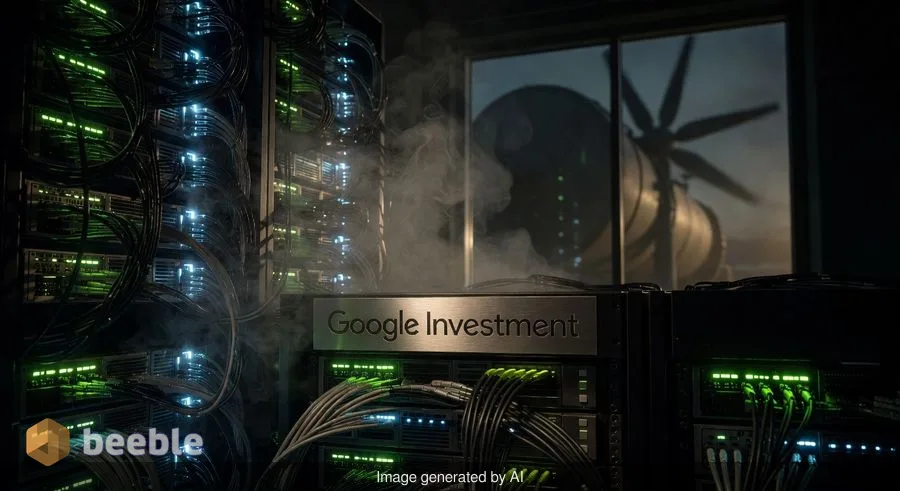
Despite the endless hype around a green digital future, the invisible backbone of our modern internet—the data center—is increasingly turning back to decades-old heavy industry infrastructure to stay powered. This week, reports surfaced that a new data center project in the United States, backed by investments from Google, will be partially powered by a massive new natural gas plant. To put it into perspective, this single facility is expected to emit the yearly equivalent of putting over 970,000 additional gas-powered cars on the road.
For the average user, this news might feel like a glitch in the matrix. We have been told for a decade that Big Tech is the vanguard of the renewable energy transition. Yet, as our thirst for Artificial Intelligence (AI) grows, the gap between corporate sustainability goals and the physical reality of the power grid is widening. This isn't just a story about a tech giant; it’s a look at the systemic friction between our digital desires and the planetary cost of keeping the lights on in the cloud.
The AI Hunger Games: Why Renewables Aren't Enough
Under the hood, the reason for this shift toward natural gas is simple: AI is incredibly power-hungry. A standard Google search uses a relatively tiny amount of energy, but a query processed by a Large Language Model (LLM) like Gemini or ChatGPT can require ten times as much electricity. As Google and its competitors race to integrate AI into every facet of our digital lives, their energy needs are skyrocketing at an unprecedented rate.
Looking at the big picture, wind and solar power are excellent, but they are intermittent. They produce energy when the sun shines and the breeze blows. Data centers, however, are the ultimate "always-on" machines. They require a steady, resilient flow of electricity 24/7 to ensure your emails, photos, and AI assistants never go offline. When renewable energy and battery storage can't fill that constant demand, tech companies face a volatile choice: throttle their growth or turn to "firm" power sources like natural gas.
The Invisible Backbone of the Digital World
We often think of the internet as something ethereal—clouds, signals, and invisible data. In reality, the internet is a physical, heavy industry. It is comprised of millions of miles of fiber optic cables and massive concrete warehouses filled with humming servers. These facilities are the foundational infrastructure of the 21st century, and they are hitting a wall.
In many regions, the local power grid is already stretched thin. When a new data center arrives, it’s like a giant straw being dipped into a small glass of water. To avoid brownouts for local residents, utilities are rushing to build new capacity. In this case, the path of least resistance is often a natural gas plant. It is scalable, relatively quick to build, and provides the robust reliability that a multi-billion dollar data center requires. Essentially, the clean energy transition is being outpaced by the sheer speed of technological expansion.
The Cost of Convenience: A Macro-Micro Synthesis
How does this actually affect a normal person? On the surface, it doesn't change how your phone works today. But zooming out, the implications are tangible. When tech giants consume massive amounts of local power, they can drive up electricity prices for everyone else in the area. This is a classic supply and demand scenario: as a massive new buyer enters the market, the cost of the remaining supply often rises.
Furthermore, there is the matter of "carbon accounting." Google has a goal to run on 24/7 carbon-free energy by 2030. By funding or partnering with projects that rely on gas, they are forced to use complex financial instruments—like Renewable Energy Credits—to "offset" the emissions. For the consumer, this creates an opaque reality where a company can claim to be green on paper while its physical footprint continues to grow in the opposite direction.
Comparing the Energy Footprint
To understand the scale of these industrial shifts, it helps to compare the energy demands of various technologies we use daily.
| Activity | Estimated Energy Impact | Infrastructure Requirement |
|---|---|---|
| Traditional Web Search | Low | Standard Data Center |
| AI-Generated Image/Text | High | High-Density GPU Clusters |
| 4K Video Streaming | Moderate | Content Delivery Networks |
| Cloud Gaming | Very High | Edge Computing Nodes |
Shifting the Perspective
Curiously, this trend highlights a cyclical pattern in industrial history. Just as the early industrial revolution relied on coal to build the machines that would eventually lead us away from manual labor, the AI revolution is currently leaning on fossil fuels to build the intelligence that we hope will eventually solve the climate crisis. It is a disruptive and somewhat ironic paradox.
What this means is that the "clean" nature of our gadgets is currently a bit of a mirage. Behind the streamlined glass of your smartphone is a global relay race of energy production where the baton is still frequently a carbon-heavy one. As consumers, we have become accustomed to the idea that tech is getting cleaner as it gets smarter, but the physical reality is more complex and far more resilient to change than PR headlines suggest.
The Bottom Line for the Digital Citizen
Ultimately, this news serves as a reality check. We are entering an era where the environmental cost of our digital habits is becoming more transparent, whether the industry wants it to be or not. The next time you ask an AI to summarize a meeting or generate a piece of art, remember that those bits and bytes are tethered to a physical plant somewhere, perhaps burning gas to keep the server cool.
Practically speaking, we don't need to stop using these tools, but we should start looking at them through a more grounded lens. Support transparency in corporate energy reporting and recognize that the "cloud" is not a weightless place—it is a heavy, power-hungry engine that requires constant scrutiny. As the energy landscape continues to shift, the most valuable tool we have is an understanding of the invisible industrial mechanics that power our daily lives.
Sources
- Federal Energy Regulatory Commission (FERC) Filings
- Google Environmental Sustainability Reports
- International Energy Agency (IEA) Data Center Energy Forecasts
- Local Utility Infrastructure Planning Documents



See you on the other side.
Our end-to-end encrypted email and cloud storage solution provides the most powerful means of secure data exchange, ensuring the safety and privacy of your data.
/ Create a free account
