


The DarkSword Dilemma: How a New iPhone Exploit Circumvents Apple’s Hardened Defenses

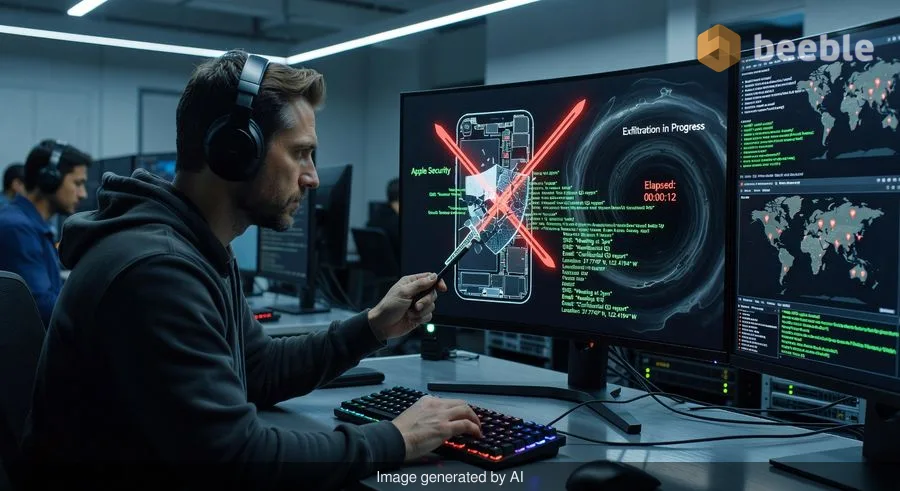
Have you ever considered how much of your life is tucked away in the silicon pockets of your smartphone? For most of us, our iPhones are more than just communication tools; they are the central nervous system of our digital existence, housing everything from intimate conversations to real-time location data. However, a startling new cybersecurity discovery known as “DarkSword” is currently challenging the perceived invulnerability of the Apple ecosystem.
Cybersecurity researchers from Google, Lookout, and iVerify have recently sounded the alarm on a sophisticated hacking campaign that targets millions of devices globally. Unlike traditional malware that lingers on a device to collect data over weeks, DarkSword is a “hit-and-run” operation. It strikes with surgical precision, exfiltrating sensitive information in a matter of seconds before vanishing without a trace.
The Anatomy of a Hit-and-Run
Curiously, the DarkSword attack does not require the user to download a suspicious file or click an obvious phishing link. Instead, it exploits a highly specific and intricate vulnerability within Safari, Apple’s default web browser. The primary point of entry involves WebGPU, a transformative graphics feature designed to provide high-performance 3D graphics and computation on the web. While WebGPU was intended to usher in a new era of browser-based gaming and visualization, it has inadvertently provided a precarious bridge for attackers to bypass the iPhone’s kernel protections.
Once a user visits a compromised or malicious webpage, the exploit triggers. In less than a minute, the script identifies and copies text messages, emails, and precise location history. To put it another way, by the time you’ve finished reading a single news article, your personal data could already be sitting on a remote server halfway across the globe.
A Precarious Scale: 221 Million Devices at Risk
The scale of this vulnerability is particularly sobering. According to data from iVerify, approximately 14 percent of the global iPhone user base is currently running the affected software versions—specifically iOS 18.4 through iOS 18.6.2. This translates to roughly 221 million devices. Nevertheless, the threat could be even more expansive; if older or slightly newer iterations of the OS share the same WebGPU implementation flaws, that number could climb to a staggering 270 million.
In my years working within tech startups, I’ve often seen how organizations function as living organisms. When one vital organ—like a mobile device used for remote work—is compromised, the infection can quickly spread to the rest of the corporate body. During the massive corporate transitions to remote work we saw earlier this decade, the mobile phone became the primary gateway for multi-factor authentication and internal communications. A breach of this magnitude isn't just a personal privacy issue; it’s a systemic risk to the modern workplace.
Why Detection is a Nuanced Challenge
What makes DarkSword particularly insidious is its “ghost” footprint. Traditional antivirus tools often look for persistent files or unusual background processes. In contrast, DarkSword operates entirely within the temporary memory of the browser. Once the data exfiltration is complete, the exploit executes a self-deletion command that wipes all evidence of the intrusion from the device’s logs.
As a result, many victims will never even know they were targeted. This level of sophistication suggests that the actors behind DarkSword are not mere script kiddies but likely a well-funded organization with a deep understanding of Apple’s internal security architecture. They have treated these security defenses not as walls, but as building blocks to be rearranged for their own purposes.
Lessons from the Remote Work Era
Managing remote teams has taught me that security is as much about culture as it is about code. I remember a specific instance during a corporate transition where a senior executive’s phone was compromised via a similar browser-based exploit. We spent days trying to trace the leak, only to realize the "entry point" was a harmless-looking recipe website visited during a lunch break.
This experience highlights the nuanced reality of modern cybersecurity: we are often most vulnerable when we are most comfortable. The DarkSword campaign thrives on this comfort, turning a routine web-browsing session into a high-stakes data breach. It serves as a stark reminder that the journey toward a truly secure digital life is never finished; it is an ongoing evolution.
How to Protect Your Device
While the situation is serious, it is not hopeless. Apple is known for its rapid response to zero-day vulnerabilities, and a patch is likely already in the works or deployed in the latest beta cycles. To safeguard your data, consider the following immediate steps:
- Update Immediately: Check your Settings > General > Software Update. If you are on iOS 18.4 through 18.6.2, move to the newest available version immediately.
- Enable Lockdown Mode: If you are a high-risk individual (journalist, activist, or corporate executive), Apple’s Lockdown Mode provides an innovative layer of protection by disabling complex web features like WebGPU.
- Clear Safari Data: Periodically clearing your history and website data (Settings > Safari > Clear History and Website Data) can help disrupt some persistent tracking mechanisms.
- Use a Secondary Browser: While most iOS browsers use the same underlying engine, using a privacy-focused browser like Brave or Firefox Focus can sometimes offer different sandboxing behaviors.
The Path Forward
The emergence of DarkSword is a remarkable example of how even the most secure ecosystems can be punctured by innovative exploitation of new features. As we continue to integrate our lives more deeply with our devices, the responsibility to remain vigilant falls on both the developers and the users.
Are you running the latest version of iOS? Take thirty seconds right now to check your settings and ensure your digital life remains your own. In the world of cybersecurity, a few seconds of prevention is worth a lifetime of privacy.
Sources:
- iVerify Security Research Division: Annual iOS Vulnerability Report (2026)
- Lookout Threat Intelligence: The Rise of Browser-Based Exfiltration
- Google Project Zero: Analysis of WebGPU Exploitation Vectors
- Apple Security Engineering and Architecture (SEAR) Documentation



See you on the other side.
Our end-to-end encrypted email and cloud storage solution provides the most powerful means of secure data exchange, ensuring the safety and privacy of your data.
/ Create a free account
