


The Digital Skeleton Key: How a High-Tier iPhone Hacking Toolkit Went Global

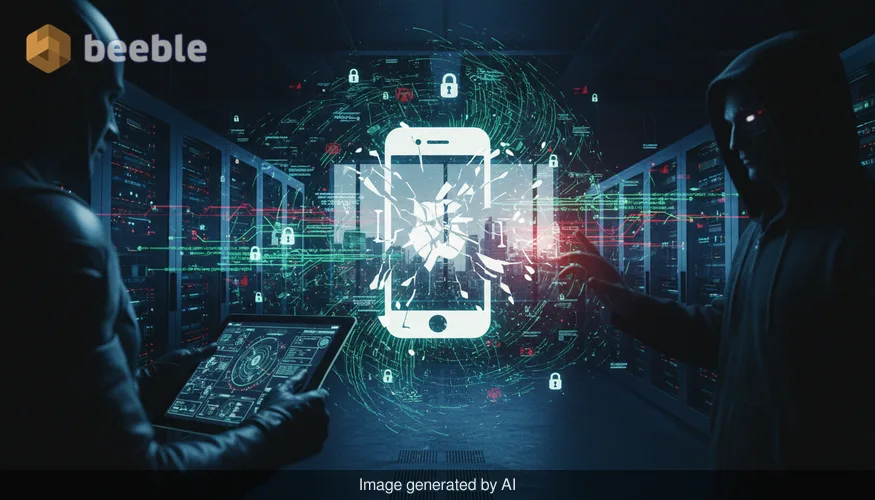
The cybersecurity landscape has long operated on a tiered system. At the top are 'nation-state' actors—government-funded agencies with the resources to discover and weaponize 'zero-day' vulnerabilities that remain unknown to software developers. For years, the consensus was that these tools were too expensive and too precious to be used on anyone but the most high-value targets. That consensus has just been shattered.
A sophisticated iPhone-hacking toolkit, previously suspected to be the exclusive domain of Western intelligence-linked contractors, has transitioned from a surgical instrument of espionage into a blunt-force weapon used by foreign spies and criminal syndicates. This shift represents a 'nightmare scenario' for mobile security: the democratization of high-end surveillance technology.
The Rise of the Watering Hole
Unlike traditional phishing, where a user must be tricked into clicking a suspicious link or downloading a malicious file, the latest campaigns utilizing this toolkit employ 'watering hole' attacks. The name is an analogy for a predator waiting at a location its prey is guaranteed to visit.
In this context, attackers compromise legitimate, high-traffic websites—news portals, community forums, or even government resource pages. When a user visits these sites using an iPhone, the toolkit silently probes the device for vulnerabilities. If a match is found, the device is exploited in the background with no visible signs of intrusion. There is no 'Accept' button to click and no warning from the browser. By the time the page finishes loading, the device's microphone, camera, and encrypted messages may already be compromised.
From State Secrets to Commodity Malware
How did a toolkit of this caliber end up in the hands of broader criminal elements? The path of high-end spyware often follows a predictable, albeit dangerous, trajectory. When a sophisticated exploit is used in the wild, it leaves traces. Security researchers and rival intelligence agencies can capture these 'digital footprints,' reverse-engineering the code to understand how it works.
In this specific case, the toolkit—often referred to in research circles as a derivative of the 'LightSpy' or 'Sandman' frameworks—appears to have been leaked or successfully reconstructed. What was once a multimillion-dollar asset is now being sold on the dark web or shared among state-aligned 'APT' (Advanced Persistent Threat) groups. This transition transforms a targeted threat into a mass-market risk, where the goal is no longer just intelligence gathering, but also financial extortion and identity theft.
The Technical 'Master Key'
The power of this toolkit lies in its ability to bypass the 'sandbox'—the security architecture that keeps iOS apps isolated from one another. Think of an iPhone as a high-security apartment building. Normally, an app (a tenant) can only access its own room. This toolkit acts as a master key, allowing an attacker to walk through the hallways, unlock any door, and even access the building's security cameras.
| Feature | Standard Malware | The Leaked Toolkit |
|---|---|---|
| Infection Vector | User interaction required | Zero-click or passive visit |
| Persistence | Often lost after reboot | Survives updates and restarts |
| Data Access | Limited to specific apps | Full system/kernel access |
| Detection | Flagged by basic heuristics | Highly evasive; uses 'living off the land' techniques |
Why This Matters for the Average User
For a long time, the average iPhone user felt insulated from the world of high-stakes cyber-espionage. The prevailing logic was: 'I’m not a diplomat or a billionaire, so why would anyone spend a million dollars to hack me?'
That logic no longer holds. When the cost of deployment drops because the toolkit is 'free' (leaked) or cheap, the barrier to entry for attackers vanishes. We are seeing these exploits used indiscriminately. Criminal groups are now using these tools to scrape banking credentials, bypass two-factor authentication (2FA), and hold personal photos for ransom. The 'surgical' tool has become a 'drift net,' catching everyone in its path.
How to Protect Your Device
While the threat is significant, it is not insurmountable. Apple and the broader security community are in a constant arms race to patch the vulnerabilities these toolkits exploit. To protect yourself against mass-exploitation campaigns, consider the following steps:
- Enable Lockdown Mode: For users who feel they may be at higher risk, Apple's 'Lockdown Mode' provides extreme protections by strictly limiting web functionalities that are often used as attack vectors.
- Rapid Security Responses: Ensure your iPhone is set to install 'Security Responses & System Files' automatically. These are smaller, critical patches that Apple pushes out between major iOS updates.
- Browser Hygiene: Avoid browsing sensitive sites on public Wi-Fi without a trusted VPN, and periodically clear your browser cache and history to remove potential 'hooks' left by malicious scripts.
- Device Reboots: While some modern spyware can survive a reboot, many 'non-persistent' exploits are cleared when the device is turned off. A weekly restart is a simple, effective habit.
The Road Ahead
The migration of elite hacking tools into the wild is a stark reminder that in the digital age, weapons cannot be permanently locked away. Once a vulnerability is weaponized, it is only a matter of time before that weapon is turned against the public. As these toolkits continue to circulate, the burden of defense shifts back to the user to maintain rigorous digital hygiene and to the manufacturer to stay one step ahead of the shadow market.



See you on the other side.
Our end-to-end encrypted email and cloud storage solution provides the most powerful means of secure data exchange, ensuring the safety and privacy of your data.
/ Create a free account
