


The disappearing agent and why the promise of effortless AI is falling short

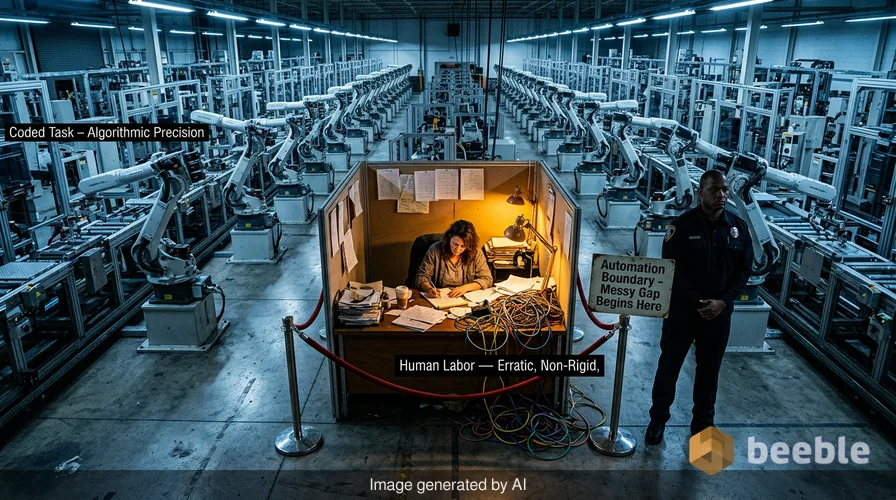
The modern tech executive dreams of a world where every digital friction point evaporates into a seamless flow of automated assistance and algorithmic grace. This vision of the future promises a workspace where artificial intelligence acts as a tireless collaborator that anticipates human needs with uncanny precision. Such a paradise of productivity relies on the assumption that complex human reasoning is easily distilled into code unless the underlying nuances of social interaction remain fundamentally opaque to silicon. Success in this realm requires more than just raw compute power because the erratic nature of human behavior algorithmically defies the rigid logic of the agent model. The transition from human labor to digital automation inevitably reveals the vast, messy gap between a person and a script.
The internal confession at Meta
Mark Zuckerberg recently stood before his remaining staff during an internal town hall to share a sobering update. The pace of development for AI agents is not moving as quickly as the leadership team expected. Earlier this year, Meta removed approximately 8,000 employees from its payroll. These cuts targeted roughly 10% of the corporate workforce. The company then moved another 7,000 survivors into new departments. One of these units is called Agent Transformation. Zuckerberg admitted during the meeting that these structural changes were not as clean as they should have been. The executive team made these decisions out of fear that the company was too slow to adapt to the new tech environment.
This admission is a rare moment of transparency in an industry that usually treats every delay as a strategic pivot. The corporate leader noted that the expected benefits of this new, AI-focused structure have not arrived yet. He still holds out hope that improvements will appear in the next three to six months. However, reports from inside the Agent Transformation unit paint a different picture. Some engineers described the atmosphere as a soul-crushing gulag. This contrast between the CEO’s optimistic timeline and the workers' visceral exhaustion suggests a profound disconnect in the company's habitus.
The philology of the word agent
Linguistically speaking, the word agent has undergone a strange transformation. In traditional sociology, an agent is an entity with the capacity to act in a world. It implies agency, choice, and a sense of responsibility. We once spoke of moral agents or secret agents. In these contexts, the person is the center of the action. Today, the tech industry has stripped the word of its human weight. An AI agent is now a piece of software designed to perform tasks on behalf of a user. It is a linguistic downgrade where the human is no longer the actor but the observer of the action.
This shift in language changes how we perceive labor. When Meta reassigns 7,000 people to Agent Transformation, the goal is to make the human obsolete by creating a digital version of their agency. But as Zuckerberg discovered, agency is not just a series of if-then statements. It is deeply rooted in social context and the ability to navigate the unwritten rules of human culture. You can teach a machine to write an email, but it is much harder to teach it to understand the subtle tension in a manager's request. The software lacks the visceral understanding of human relationships that makes a workplace function.
The archipelago of the corporate office
On a macro level, the structure of modern companies is becoming an archipelago. This is a society where people live and work in dense clusters yet remain completely atomized. At Meta, the engineers in the AI units are physically present but socially isolated by the intensity of their tasks. They work in a state of liquid modernity where their job titles and even their colleagues change overnight. The reassignment of 7,000 people is a massive disruption of the social fabric. It breaks the anchors of routine and personal connection that keep a workforce stable.
When Zuckerberg says the job cuts were not clean, he refers to the administrative mess. But from a sociological standpoint, the mess is human. People are not modular components. You cannot unplug 8,000 units and expect the remaining system to function at a higher speed immediately. The engineers described the new unit as a gulag because the pressure to produce a digital replacement for human intuition is a paradox. You are asking humans to work like machines to prove that machines can work like humans. This pressure creates a fragmented environment where the collective memory of the company is lost.
Why automation resists the easy path
Curiously, the difficulty Meta faces is a classic example of how technology hits the wall of mundane reality. We often see tech as a force that moves in a straight line toward progress. In practice, it is more like an archaeological site. Every new layer of software has to deal with the remains of the old systems and the stubborn habits of the people who use them. The AI agents are failing to accelerate because they struggle with the systemic complexity of everyday life. A digital agent needs a perfectly structured world to be effective. Our world is opaque and messy.
Sociologists often talk about the attention economy as the driver of modern tech. Meta wants agents that can capture and manage our attention so we never have to leave their platforms. But there is a limit to how much of our daily lives we can outsource to an algorithm. If an agent manages my calendar, my emails, and my shopping, I am no longer an active participant in my own life. I become a ghost in my own machine. The slow progress Zuckerberg noted is perhaps a sign that our social structures are more resilient than the tech industry likes to admit.
The ghost of liquid modernity
Ultimately, the situation at Meta is a symptom of a larger cultural shift. We are living through a period of extreme uncertainty where even the most powerful companies are guessing. The phrase "Agent Transformation" is a symbolic attempt to find order in the chaos. It is a name that sounds like progress, but it hides the anxiety of a company that is losing its way. Zuckerberg's hope for a turnaround in three to six months is a cultural anesthetic. It numbs the pain of the current layoffs and the failure of the new projects by promising a better future that is just out of reach.
This cycle of hype and disappointment is pervasive in the digital age. We are told that technology will solve the problems of labor and loneliness, yet we find ourselves more overworked and atomized than ever. The engineers at Meta are not just building software. They are participating in a theater stage where the performative speed of AI development is more important than the actual utility of the product. The result is a workforce that is exhausted by the pursuit of a goal that is fundamentally flawed.
Reflections on a human future
As we watch these tech giants struggle with the limits of automation, it is worth observing our own daily routines. We have spent the last decade trying to make our lives frictionless. We use apps for everything from ordering coffee to finding a partner. We have treated ourselves like the very agents Meta is trying to build. We focus on efficiency and speed while we ignore the value of the slow, messy human experiences that define us.
Zuckerberg’s admission is a reminder that there are some things you cannot rush. Intelligence is not just about processing data. It is about being present in a world that is often confusing and beautiful. Perhaps the slow progress of AI agents is not a failure of technology but a victory for the human spirit. It shows that our capacity for empathy, nuance, and connection is still the most valuable thing we have. We should consider reclaiming the parts of our agency that we tried to give away to the screens. Silence, boredom, and face-to-face conversation are the real anchors in a world of liquid change.
Key takeaways for the digital era
- Observe how the language of your workplace changes and whether it treats you as an actor or a component.
- Reflect on which parts of your daily routine you have automated and what human connections you lost in the process.
- Question the narrative of constant acceleration and consider the value of social stability over technological speed.
- Notice the difference between a tool that helps you act and an agent that acts for you.
Sources
- Internal reports and town hall transcripts from Meta Platforms Inc. regarding AI development and workforce restructuring.
- Demographic and economic analysis of the 2024-2026 tech layoff cycle in Silicon Valley.
- Sociological studies on liquid modernity and the atomization of the workforce in the digital age.
- Linguistic analysis of corporate discourse and the semantic evolution of artificial intelligence terminology.



See you on the other side.
Our end-to-end encrypted email and cloud storage solution provides the most powerful means of secure data exchange, ensuring the safety and privacy of your data.
/ Create a free account
