


The end of the total liability shield for social media giants

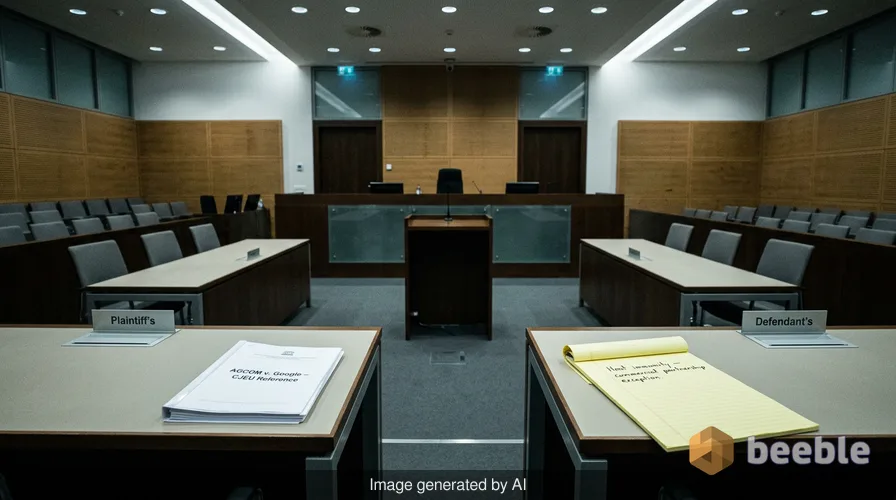
For years, social media companies have operated under a hidden legal mechanism that protects them from almost any consequence regarding what users post. This mechanism is known as the safe harbor principle. In the European Union, this rule generally treats platforms like YouTube or Facebook as passive pipelines. If a user uploads something illegal, the platform is not responsible as long as it removes the content once a person reports it. This legal wall has been the bedrock of the modern internet. It allows companies to host billions of videos without hiring a million lawyers to check every frame. However, a new ruling from the Court of Justice of the European Union (CJEU) just pulled back the curtain on this defense. The court decided that when a platform gets too involved with its creators, it loses its status as a passive middleman.
The gamble that cost three quarters of a million euros
The dispute began in Italy several years ago. Italy has strict laws regarding the promotion of online gambling. The Italian communication authority, known as AGCOM, noticed several videos on YouTube that promoted gambling websites. These videos did not come from random, anonymous accounts. They came from a content creator who had a formal commercial partnership deal with Google. AGCOM issued a fine of €750,000 against Google for allowing these advertisements to persist on the platform.
Google fought the fine in the Italian courts. The company argued that it was merely a host for the content. Under European law, a host has immunity from the illegal actions of its users. Google claimed that the creator uploaded the videos, and because Google did not create the footage, it could not be held liable for the content. The Italian court eventually asked the CJEU for a specific interpretation of the law. The question was simple: Does the safe harbor shield still apply when a platform has a business contract with the uploader?
Why the court rejected the invisible middleman defense
The CJEU ruling is a shift in how we view the responsibility of big tech firms. The judges explained that immunity is for service providers that carry out a strictly technical, automated, and passive activity. A truly passive host has no knowledge of or control over the information it stores. This is like a self-storage facility. The owner of the facility provides the space and the lock, but they do not know if you are storing old clothes or illegal contraband. Because they do not check the boxes, they are generally not liable for what is inside them.
But the court found that Google is not just a landlord for data. When YouTube enters into a commercial partnership with a creator, it takes an active role. The court pointed out that Google reviews the main theme of a video channel before signing a contract. It looks at the most viewed videos and the newest uploads. It also examines the metadata, which is the hidden data that describes what a video is about and who should see it. By performing this review, the company gains knowledge and control. At that point, the company is no longer a passive pipe. It is a business partner. When a business partner helps distribute illegal content, the law treats them as a participant rather than a neutral bystander.
The smoking gun in the metadata
Metadata is often the part of the internet that ordinary users never see, but it is the part that helps algorithms decide what to show you next. It includes tags, descriptions, and categories. The court focused on the fact that Google uses this metadata to organize and promote content for profit. In the eyes of the law, once a platform uses its tools to sort, categorize, and review content for a commercial partner, it loses its right to look the other way.
This distinction creates a new precedent. A platform is liable if it has specific knowledge of the illegal nature of the data and fails to act. In this case, the partnership itself was the evidence that Google had the means and the duty to know what was happening on those specific channels. The safe harbor is a shield, but the court ruled that this shield does not cover companies that help their partners break the law for a share of the advertising revenue.
What this means for the average social media user
This ruling does not mean that YouTube is suddenly responsible for every single video uploaded by a teenager in their bedroom. If a person with no followers and no business deal uploads something illegal, the platform likely remains protected by the standard safe harbor rules. The risk changes for the big players. Influencers, media companies, and professional creators who have formal agreements with platforms are now in a different legal category.
For the average consumer, this is a win for accountability. It means that platforms have a greater incentive to monitor their high-earning partners. If a major creator promotes a scam or an illegal service, the platform can no longer claim it was just a neutral host. This puts pressure on tech companies to clean up the parts of the internet where they make the most money. It forces them to treat their top creators like employees or contractors rather than anonymous users.
The impact on the future of content moderation
Big Tech companies often argue that they cannot possibly monitor everything. They claim that if they are held liable for user content, they will have to censor the internet to avoid lawsuits. This is a common defense, but the CJEU ruling is more nuanced. It does not demand that Google monitor everyone. Instead, it focuses on the people Google chooses to do business with.
This creates a two-tiered internet. On the first tier, we have the general public. Here, the platform remains a neutral host and is only responsible for removing content after someone reports it. On the second tier, we have the commercial partners. Here, the platform has a higher duty of care. This approach attempts to balance the freedom of the internet with the responsibility of a multi-billion-dollar corporation. It acknowledges that when money changes hands, the relationship between the user and the platform changes too.
How to protect your rights as a consumer
If you encounter illegal content or a scam on a major platform, the legal landscape is slowly moving in your favor. You are no longer just a spectator in a world where tech giants have total immunity. Understanding your rights helps you navigate these digital spaces safely. Here is how you can use this shift in the law to protect yourself:
- Report violations immediately. Even with this new ruling, platforms are generally only liable if they have knowledge of the illegal content. Your report provides that knowledge.
- Identify the source. Check if the creator is a verified partner or a high-profile account. Platforms are more likely to be held responsible for the actions of their commercial partners than for random users.
- Document the evidence. If you suffer a loss because of an illegal advertisement or a scam promoted by a partner, take screenshots of the content and any associated advertisements.
- Watch for metadata. If a video is clearly categorized or tagged in a way that suggests the platform's algorithm promoted it, this is useful information for a legal claim.
Google has expressed disappointment with the ruling and plans to continue the fight in the Italian Council of State. However, the CJEU is the highest court in the European Union for interpreting EU law. Its decision is binding. The Italian court must now apply this logic to the final verdict. This case serves as a warning to any company that tries to have it both ways. You cannot claim to be a passive observer while you simultaneously vet, categorize, and profit from your partners' content. The shield of immunity has limits, and those limits begin where the profit motive takes over.
Key takeaways for the digital age
- Liability is the legal responsibility for a mistake or a violation of the law.
- Safe harbor is a legal protection that prevents platforms from being sued for things their users post.
- Passive activity involves being a technical middleman without knowing what is being sent.
- Active activity happens when a platform reviews, edits, or partners with a creator for profit.
- The CJEU ruling means platforms are responsible for their commercial partners' illegal content.
This legal shift is a marathon, not a sprint. We are seeing a steady move toward more accountability for the digital platforms that shape our lives. For the first time in decades, the law is catching up to the reality of how these businesses actually work. The era of the invisible middleman is coming to a close.
Sources
- Court of Justice of the European Union, Case C-421/24, AGCOM (Online gambling).
- EU E-Commerce Directive 2000/31/EC, Article 14.
- EU Digital Services Act (DSA), Regulation (EU) 2022/2065.
- Italian Law No. 96/2018 (The Dignity Decree regarding gambling advertising).
Disclaimer: This article is for informational and educational purposes only and does not constitute formal legal advice. Laws regarding internet liability are complex and vary by country. If you have a specific legal issue, please consult a qualified attorney in your jurisdiction.



See you on the other side.
Our end-to-end encrypted email and cloud storage solution provides the most powerful means of secure data exchange, ensuring the safety and privacy of your data.
/ Create a free account
