


The Ghost in the Machine: How SteamOS 3.8 Prepares for a New Era of Valve Hardware

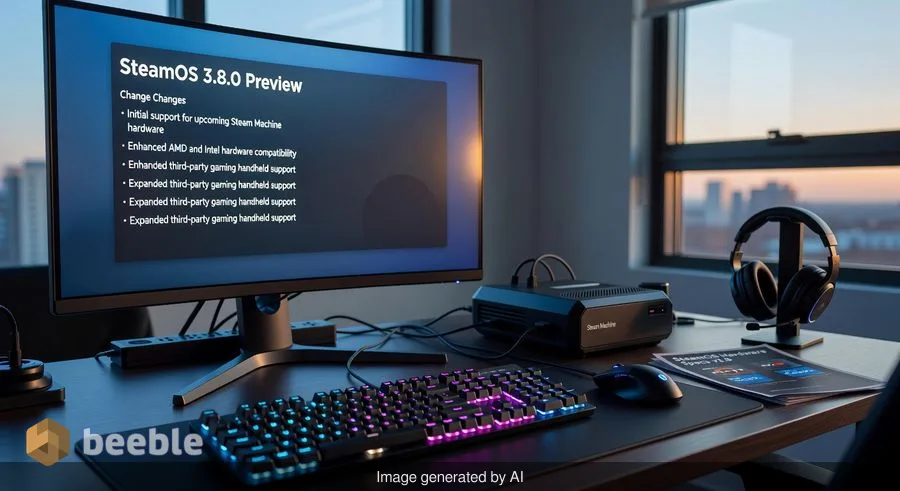
Can a software update truly breathe life into an ecosystem currently gasping for air? It is a question that has haunted the halls of Valve Corporation more than once. While the hardware world remains locked in a precarious struggle against supply chain bottlenecks, Valve has decided to double down on the one thing it can control: the code. This week’s release of the SteamOS 3.8.0 preview is not just a routine patch; it is a transformative signal of intent for the future of the Steam Machine and the broader world of Linux-based gaming.
The AI Shadow and the Hardware Drought
To understand why SteamOS 3.8 matters, we must first look at the landscape it is entering. Curiously, the biggest threat to your next gaming PC isn’t a rival console—it is the insatiable hunger of AI data centers. As organizations act as living organisms, constantly expanding their neural networks, they are absorbing the vast majority of the world’s high-performance memory and storage chips.
Consequently, the enthusiast hardware market has been left in a state of involuntary limbo. Even the venerable Steam Deck, a device that redefined portable gaming, has recently slipped into the dreaded "out of stock" status. The much-anticipated Steam Frame VR headset and the next generation of Steam Machines are facing similar headwinds. To put it another way, Valve has the blueprints for a revolution, but the building blocks are currently being diverted to train the next generation of Large Language Models.
A Nuanced Approach to Third-Party Support
Nevertheless, Valve’s software team hasn’t spent this period of scarcity idly. SteamOS 3.8.0 introduces remarkably deep support for third-party hardware, specifically targeting the latest AMD and Intel architectures. This is a strategic pivot. By ensuring that SteamOS runs flawlessly on handhelds from ASUS, Lenovo, and MSI, Valve is effectively turning its competitors into ambassadors for its ecosystem.
In my years working within tech startups, I’ve seen this play out before. When you cannot ship your own box, you make your platform so indispensable that everyone else wants to ship it for you. This update brings intricate driver optimizations that reduce latency and improve power management across a variety of chipsets. It is no longer just about the Steam Deck; it is about creating a unified gaming layer that sits comfortably atop any silicon it encounters.
The Return of the Steam Machine
Perhaps the most intriguing line in the 3.8.0 release notes is the mention of “initial support for upcoming Steam Machine hardware.” For those of us who remember the original Steam Machine launch—a fragmented, confusing era of third-party boxes—this feels like a redemptive arc.
Valve’s journey with the Steam Machine has been a long and winding road. The original vision failed because the software wasn't ready. Today, the situation is reversed: the software is more than ready, but the hardware is trapped in the supply chain. This “initial support” suggests that Valve is finalizing the internal specifications for a new flagship desktop unit. By laying the groundwork in the OS now, they ensure that when the memory market finally stabilizes, the transition from factory to living room will be seamless.
Navigating the Remote Transition
As a journalist who has spent the last decade managing remote teams and living the digital nomad lifestyle, I find Valve’s approach to development fascinating. They operate with a level of transparency that is rare in the corporate world. During a recent transition to a fully remote workflow at a previous publication, we struggled with the lack of physical hardware to test. We had to rely on virtualization and robust software environments.
Valve is doing something similar on a global scale. They are building a virtualized future where the specific brand of your handheld or desktop matters less than the OS running on it. This innovative flexibility is what will allow them to survive the current component drought. If you can’t buy a Steam Deck today, you can buy a competitor’s device and, increasingly, enjoy a near-identical experience thanks to these updates.
Practical Takeaways for Enthusiasts
If you are currently holding onto a Steam Deck or a third-party handheld, here is how you should approach the SteamOS 3.8.0 preview:
- Check the Preview Channel: To access these changes, you’ll need to switch your System Update Channel to 'Preview' in the settings. Be aware that this is pre-release software and may contain bugs.
- Monitor Storage Health: Given the current shortage of SSDs, pay close attention to the new disk management tools included in 3.8.0, which offer better health reporting for NVMe drives.
- Third-Party Calibration: If you are using a non-Valve handheld, look for the new "Universal Controller Mapper" in this update, which aims to standardize back-button and gyro inputs across different brands.
- Don't Panic Buy: While the Steam Deck is out of stock, the arrival of 3.8.0 suggests that Valve is preparing for a significant hardware refresh. It may be worth waiting for the supply chain to catch up rather than paying scalper prices for older units.
Looking Ahead
As a result of these software advancements, the eventual return of the Steam Machine feels inevitable rather than speculative. Valve is building a fortress of code while they wait for the hardware storm to pass. The intricate dance between software capability and hardware availability continues, but for now, the ball is firmly in the developers' court.
Are you ready to trade your Windows-based gaming desktop for a dedicated SteamOS machine once the hardware finally arrives? The foundation is being laid, one update at a time. Keep an eye on the preview builds, and stay tuned for the moment the silicon finally catches up to the vision.
Sources:
- Valve Corporation: SteamOS 3.8.0 Release Notes (Internal Preview)
- Global Semiconductor Trade Report: Q1 2026 Memory Allocation Analysis
- Steam Hardware & Software Survey: March 2026 Data
- TechSupply Insights: The Impact of AI Data Centers on Consumer Electronics



See you on the other side.
Our end-to-end encrypted email and cloud storage solution provides the most powerful means of secure data exchange, ensuring the safety and privacy of your data.
/ Create a free account
