


The illusion of the borderless dollar meets the reality of the global regulator

In 2014, a stablecoin was an offshore experiment for the technologically curious. In 2026, it is the primary plumbing for a $314 billion digital economy. When you send a digital dollar to a friend across the ocean, the transaction feels instantaneous. It feels disconnected from the slow, brick-and-mortar world of traditional banking. This sense of freedom is the primary appeal of stablecoins, but it is also a carefully maintained illusion. Behind the screen, the digital dollar is finally losing its status as a stateless asset.
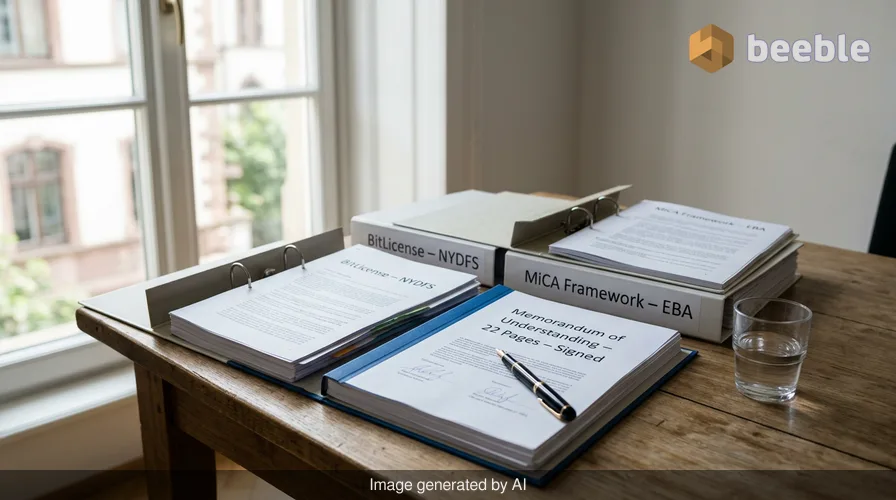
The New York Department of Financial Services (NYDFS) and the European Banking Authority (EBA) recently signed a 22-page memorandum of understanding to coordinate their oversight of these assets. This agreement bridges the gap between the two most influential regulatory regimes in the world. New York has the BitLicense. Europe has the Markets in Crypto-Assets (MiCA) framework. By sharing supervisory and confidential information, these agencies are effectively putting an end to the era of regulatory arbitrage where firms could hide in the cracks between jurisdictions.
The high stakes of a $314 billion market
Stablecoins are designed to stay at a fixed price, usually one US dollar. They are the bridge between the volatile world of crypto and the stable world of everyday commerce. For a retail investor, a stablecoin is a safe harbor. For the global financial system, it is a massive pool of capital that is increasingly interconnected with traditional treasury markets. Most stablecoin issuers back their tokens with US Treasury bills or cash. This makes them a significant player in the debt markets that fund the government.
On a macro level, the growth of this sector to $314 billion means that a failure in a major stablecoin is no longer just a crypto problem. It is a systemic risk. If a major issuer must sell billions in Treasuries to meet redemptions, it can shake the traditional bond market. This is why the NYDFS and EBA are committed to sharing insights on market trends and risks. They want to ensure that market integrity is more than a slogan.
Why your digital dollar is no longer offshore
For years, the crypto industry operated on the fringes. You could open a wallet and hold assets that no central bank claimed as its own. Paradoxically, as stablecoins became more useful, they became more centralized. Today, the most popular stablecoins are almost all denominated in dollars. This gives the United States, and specifically New York regulators, immense power over a global phenomenon.
Europe has noticed this trend. European Central Bank board member Isabel Schnabel recently observed that the dominance of the dollar in the stablecoin market threatens to erode Europe’s monetary sovereignty. When Europeans use dollar-pegged tokens for daily transactions, they are essentially importing American monetary policy. This shift in how money moves is what prompted the EBA to seek a formal partnership with New York. They are no longer just watching from the sidelines.
| Regulatory Feature | New York (NYDFS) | European Union (EBA/MiCA) |
|---|---|---|
| Primary Oversight | BitLicense / Trust Charters | MiCA Authorization |
| Reserve Requirements | 100% liquid assets in custody | High-quality liquid assets (HQLA) |
| Consumer Disclosure | Regular public attestations | Mandatory Whitepapers |
| Crisis Coordination | Information sharing with EBA | Information sharing with NYDFS |
Learning from the depegging ghosts of 2023
The memory of 2023 still haunts the digital asset market. When Silicon Valley Bank imploded, Circle’s USDC stablecoin briefly dropped to 87 cents. The peg broke because the market realized the "stable" asset had exposure to a failing traditional bank. In that moment, the distinction between a tech startup and a systemic financial institution vanished. Investors panicked. They rushed for the exit at the same time.
This behavior is what economists call a bank run. It is a psychological contagion where the fear of being the last person to leave outweighs the logic of the underlying assets. The new agreement between New York and Europe specifically addresses these emergency situations. If a supervised entity faces serious operational or financial difficulties, the regulators will attempt to flag the issue to each other as quickly as possible. This coordination is intended to prevent a localized fire from becoming a transatlantic inferno.
The risk of runs and the fragility of trust
Financially speaking, trust is the only thing that keeps a stablecoin at one dollar. If you believe you can always redeem your token for a greenback, the token is worth a dollar. If you doubt that for even a second, the value collapses. This is the "risk of runs" that Isabel Schnabel highlighted in her recent warnings. Because stablecoins lack the federal deposit insurance of a traditional bank account, they rely entirely on the transparency of their reserves.
Zooming out, the partnership between the NYDFS and EBA is an attempt to institutionalize that trust. By sharing information on criminal and civil investigations, they are making it harder for bad actors to operate in one jurisdiction while claiming legitimacy in another. This is essentially the creation of a global glass bank vault. The regulators can see the reserves, they can see the flow of capital, and they can see the risks before the retail investor does.
The end of the digital Wild West
Many early crypto adopters will see this as an overreach. They view decentralization as a way to escape the heavy hand of the state. However, in practice, the average person does not want to be their own bank. They want their money to work when they swipe a card or click a button. They want the convenience of blockchain technology without the risk of losing their life savings in a weekend depeg event.
Central banks once ignored digital tokens—today they treat them as systemic threats. This transition is a sign of the industry's maturity. The $314 billion sector is too large to remain in the shadows. Consequently, the "stateless" nature of stablecoins is being replaced by a sophisticated web of international treaties. The regulators are not just policing the coins; they are policing the companies that issue them.
Reclaiming control in a regulated digital economy
Ultimately, this transatlantic coordination changes the nature of your digital wallet. It provides a layer of protection that was missing during the chaotic cycles of the early 2020s. However, it also means that the privacy and autonomy often associated with crypto are being traded for stability and institutional acceptance. This is the trade-off of the modern financial era.
On an individual level, it is worth reflecting on what you value in your money. Is it the speed of the transaction, or the safety of the institution behind it? As the lines between New York and Brussels blur, your digital dollars are becoming more like the traditional ones they were meant to replace. This shift is a reminder that in the world of finance, nothing stays unregulated for long once it starts to matter.
Observe your own financial habits as these rules take effect. If you hold stablecoins, you are no longer participating in a fringe experiment. You are a participant in a global, regulated financial system. The illusion of the digital Wild West is over, and in its place is a new, complex architecture of international oversight. This is the price of stability in a digital age.
Sources
- New York Department of Financial Services (NYDFS) Memorandum of Understanding with the European Banking Authority (EBA), June 2026.
- European Central Bank (ECB) speech by Isabel Schnabel on monetary sovereignty and stablecoins.
- Historical market data on Circle's USDC depegging event in March 2023.
- European Union Markets in Crypto-Assets (MiCA) regulation summaries.
- Stablecoin market capitalization data from primary blockchain index providers.



See you on the other side.
Our end-to-end encrypted email and cloud storage solution provides the most powerful means of secure data exchange, ensuring the safety and privacy of your data.
/ Create a free account
