


The Power Paradox: Can Great Britain’s Grid Survive the Data Centre Boom?

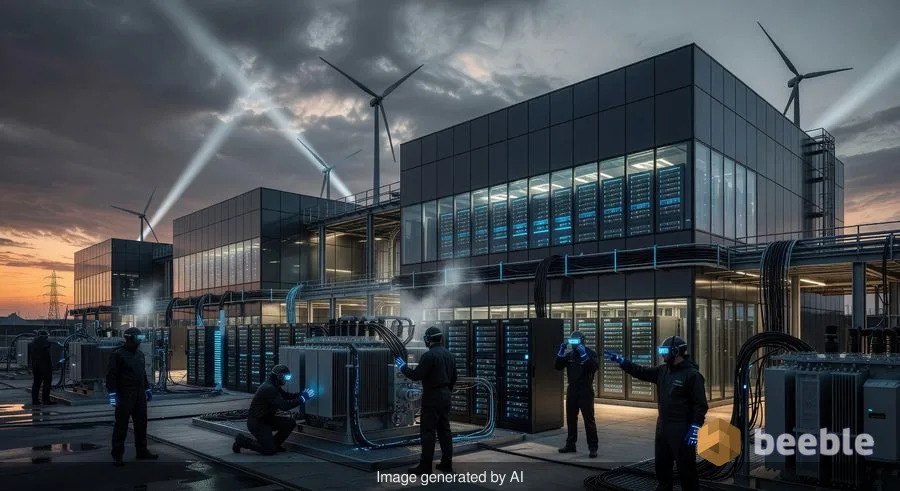
Great Britain is currently facing a digital dilemma that exists at the intersection of economic ambition and physical reality. As the nation pivots toward becoming a global hub for Artificial Intelligence and cloud services, a stark warning has emerged from industry watchdogs: the sheer volume of electricity requested by new datacentre projects now threatens to eclipse the country’s entire current peak power demand.
For decades, the national grid was designed for a predictable rhythm of domestic and industrial use. However, the sudden influx of hyper-scale datacentre applications has created a queue so large that, if fully realized, it would effectively double the nation’s electricity consumption. This surge isn't just a statistical anomaly; it represents a fundamental shift in how we must think about infrastructure in the 21st century.
The Scale of the Surge
To understand the magnitude of the challenge, one must look at the numbers. Great Britain’s typical peak demand hovers around 50 to 60 gigawatts (GW). Recent data from the National Energy System Operator (NESO) and Ofgem suggests that the pipeline of connection requests from datacentre developers has ballooned to over 60 GW in specific regions alone.
This "shadow grid" of requested capacity is a byproduct of the race to build the infrastructure required for the next generation of the internet. While not every project in the queue will reach completion—many are speculative or "zombie" projects—the sheer volume of interest has forced a radical rethink of how the UK manages its energy transmission. The grid is no longer just a utility; it has become the primary bottleneck for the nation's digital strategy.
The AI Catalyst: Why Now?
If we were simply building more websites and storing more photos, the grid might have been able to keep pace. The current crisis is driven primarily by the transition from traditional cloud computing to Generative AI.
Traditional datacentres are relatively efficient, focusing on storage and standard processing. AI datacentres, however, are power-hungry behemoths. Training a single large language model requires thousands of specialized GPUs running at full tilt for months. These chips generate immense heat, requiring sophisticated cooling systems that consume even more electricity.
Think of a traditional datacentre as a library—quiet, steady, and predictable. An AI datacentre is more like a high-performance foundry, requiring a constant, massive influx of energy to keep the furnaces burning. As companies like Microsoft, Google, and Amazon expand their UK footprints, the demand per square foot of floor space is skyrocketing.
The Infrastructure Bottleneck
It is a common misconception that the problem is a lack of power generation. While the UK is rapidly expanding its offshore wind and solar capacity, the real issue lies in transmission. The "motorways" of the electricity grid—the high-voltage pylons and cables that move power from windy Scotland to the data hubs in the Southeast—are at capacity.
| Feature | Traditional Datacentre | AI-Optimised Datacentre |
|---|---|---|
| Power Density | 5–10 kW per rack | 30–100+ kW per rack |
| Cooling Needs | Standard air cooling | Liquid cooling often required |
| Grid Impact | Steady, predictable load | High-intensity, 24/7 demand |
| Primary Driver | SaaS, Storage, Web | LLM Training, Inference |
Developers are now facing wait times of up to a decade for a grid connection in certain hotspots like West London and the M4 corridor. This has led to the government designating datacentres as "Critical National Infrastructure" (CNI), a move intended to streamline planning but one that does not instantly create more copper in the ground.
Balancing Growth and Net Zero
The UK government finds itself in a difficult position. On one hand, datacentres are the engines of modern economic growth, attracting billions in foreign investment. On the other, their massive energy appetite threatens to derail the nation’s legally binding Net Zero targets.
If these facilities are powered by gas-fired peaker plants because the renewable grid can’t cope, the carbon footprint of the UK’s digital sector will explode. To mitigate this, some developers are exploring "behind-the-meter" solutions, such as building their own dedicated solar farms or small modular reactors (SMRs) to bypass the national grid entirely. However, these solutions are years away from being viable at scale.
Practical Takeaways for the Tech Sector
As the grid remains constrained, businesses and developers must adapt their strategies. The era of "build it and they will come" is over; infrastructure must now be the first consideration in any digital expansion.
- Geographic Diversification: Developers should look beyond the crowded Southeast. Areas with direct access to renewable energy landing points, such as the Northeast or Scotland, offer faster connection times.
- Efficiency First: Implementing liquid cooling and AI-driven energy management can reduce a facility's overhead significantly.
- On-site Generation: Investing in battery storage and onsite renewables is no longer optional for those wanting to jump the queue.
- Grid Reform Engagement: Companies should actively participate in Ofgem’s "connect and manage" reforms, which aim to kick speculative projects out of the queue to make room for viable ones.
Looking Ahead
The challenge of doubling the grid's capacity to accommodate datacentres is not just a technical hurdle; it is a national priority. If Great Britain cannot solve the power paradox, it risks losing its competitive edge in the global AI race. The coming years will require a Herculean effort in infrastructure investment, regulatory flexibility, and technological innovation to ensure that the lights stay on—both in our homes and in our servers.



See you on the other side.
Our end-to-end encrypted email and cloud storage solution provides the most powerful means of secure data exchange, ensuring the safety and privacy of your data.
/ Create a free account
