


The quiet return of the crypto exile and what it means for your privacy

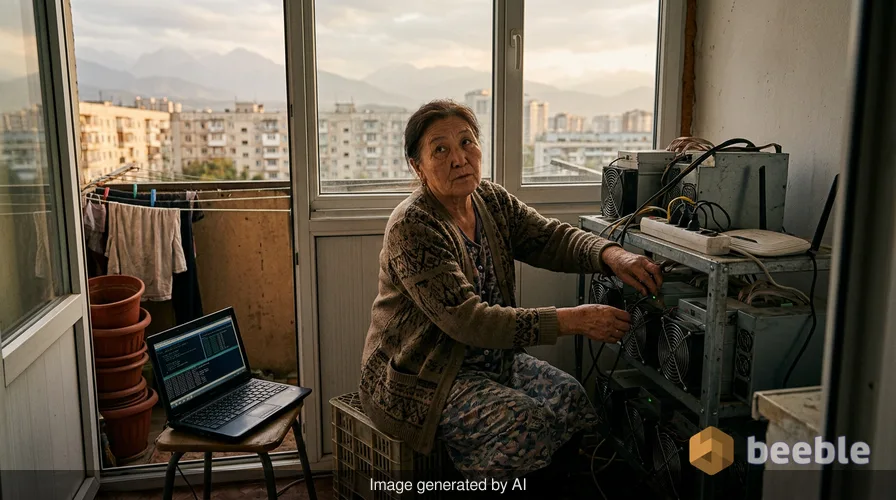
In 2021, Kazakhstan was the second-largest bitcoin mining hub in the world; in 2026, the government is inviting those same investors to come out of the shadows. The mining rigs once moved from industrial parks to apartment balconies; the capital moved from domestic banks to offshore exchanges. This shift mirrors a global pattern where nations first react to new technology with fear and then attempt to reclaim the resulting economic activity through regulation.
For the average person, the story of Kazakhstan is a case study in how government policy alters personal financial habits. When a state tightens its grip, people find creative ways to hide their assets. When the state offers an olive branch, the decision to accept it is rarely about the tax rate. It is about trust. The Kazakh government now offers a three-year tax amnesty for citizens who move their digital assets onto domestic, licensed platforms. This move is a clear attempt to integrate an estimated one million crypto wallets into the formal economy.
The grid that broke the boom
The history of this shift is rooted in the physical reality of the power grid. After China banned bitcoin mining in 2021, Kazakhstan became an accidental sanctuary. The country had low-cost electricity and a history of industrial surplus. This combination attracted thousands of miners. Some were large-scale institutional players; others were retail investors who put mining equipment in their garages or even on their balconies.
This rapid influx of activity was not sustainable for the country's aging infrastructure. In October 2021, surges in demand caused power plant failures and rolling blackouts across several regions. At the height of the boom, cryptocurrency miners consumed roughly 8% of the national electricity output. The government responded with restrictive measures. They tightened regulations on consumption and introduced new taxes. As a result, many miners left for more stable jurisdictions like the United States or moved their operations underground.
Through this economic lens, we see that money is never truly virtual. It requires physical energy, cooling, and stable wires. When the physical cost of digital money becomes too high for a state to bear, the state changes the rules of the game. Kazakhstan never banned mining entirely, but the regulatory environment became opaque. Many investors chose to keep their assets in the digital wild west rather than deal with a domestic system that felt unpredictable.
The three year tax window
The new decree signed by the Kazakh government is a pragmatic pivot. The authorities are offering a complete tax break on personal income from digital asset transactions for three years. To qualify, investors must use licensed domestic platforms like those registered with the Astana International Financial Centre (AIFC). The assets must also be clean of associations with fraud or money laundering.
Financially speaking, this is a significant incentive. A zero-percent tax rate is a powerful tool to lure capital back home. The AIFC currently has about 256,900 registered users, yet official estimates suggest Kazakh citizens hold over one million crypto wallets. This gap represents a massive amount of undeclared wealth. The government is essentially building a glass bank vault. They want to see the money inside, even if they do not tax it immediately.
This approach aligns with global trends. The UAE and Singapore have used similar frameworks to attract digital capital. By offering legal certainty, these countries turn speculative assets into tangible parts of the national balance sheet. For the individual investor, the choice is simple. They can remain in the shadows and risk future legal trouble, or they can step into the light and enjoy three years of tax-free growth.
The banking friction problem
Tax breaks are attractive, but they are not the only factor in an investor's decision. Bakhytzhan Kenzhebayev, Chairman of Kazakhstan’s Association of Fintech, AI and Crypto Industry, notes that users choose platforms based on convenience. If it is difficult to deposit local currency or withdraw funds into a standard bank account, the tax break loses its appeal.
In everyday terms, crypto is only useful if it can eventually pay for groceries or a mortgage. Many licensed exchanges in the country still face hurdles when interacting with traditional banks. If a bank views a crypto transaction as high-risk, it may freeze the account. This creates a paradoxical situation where the government encourages crypto use while the banking system remains wary.
Reliable access to banking is the bridge between the digital and physical worlds. Without it, a licensed exchange is just an island. Nurkhat Kushimov of Binance Kazakhstan emphasizes that the ease of interaction with the banking system is a key factor for user adoption. The new decree seeks to address these systemic bottlenecks by providing a clearer legal status for digital assets.
Powering the future with oil and gas
The decree also addresses the original sin of the 2021 crisis: electricity. To prevent another grid failure, the government is looking at alternative energy sources. One proposal involves using associated gas from oil fields. This gas is often a byproduct of oil extraction and is frequently flared or wasted.
By using this gas to power mining operations, the country can grow its crypto industry without straining the national residential grid. This is a structural solution to a structural problem. It turns a waste product into a source of digital value. For the miners, it offers a way to operate legally without the fear of being blamed for the next neighborhood blackout.
The risks of legal ambiguity
Despite the optimism, some experts remain skeptical about the long-term stability of these rules. Daniyar Mubarakov, President of Kazakhstan’s Blockchain and Digital Mining Association, questions what happens after the three-year exemption expires. A temporary tax break is a gift, but a sudden tax hike in year four could feel like a trap.
There is also the issue of overlapping jurisdictions. The AIFC has its own set of rules, while the national government has others. If an asset is defined differently by two separate agencies, the cost of compliance increases. Kenzhebayev warns that if definitions are too broad, the system might be abused. This could lead to a regulatory crackdown in the future, which would damage market trust once again.
Historically, investors prize predictability over temporary benefits. A high but stable tax rate is often better for a business than a zero-percent rate that might disappear tomorrow. The government is currently working on a simplified tax regime to follow the amnesty, but the details are still in development.
Beyond the tax break
Ultimately, the Kazakhstan crypto amnesty is about more than just revenue. It is a reflection of how governments are trying to make sense of a decentralized world. For the retail investor, this trend is a reminder that financial privacy is becoming a premium commodity. As digital assets move onto regulated exchanges, the anonymity that once defined the space is fading.
On an individual level, we should observe our own reactions to these changes. Do we prefer the safety of a regulated platform, or the autonomy of a private wallet? The answer usually depends on our level of financial anxiety and our trust in the institutions around us. Money is a collective belief system, and Kazakhstan is currently trying to rewrite the terms of that belief for its citizens.
As we navigate this shifting landscape, the most important asset is not the bitcoin in a wallet. It is the ability to understand the mechanics of the system that holds it. Whether you are a miner in Astana or a retail saver in London, the rules of money are changing. The move toward transparency is pervasive, and the era of the crypto underground is slowly coming to an end.
Sources
- Astana International Financial Centre (AIFC) Regulatory Reports 2025-2026.
- Euronews reporting on Kazakh Ministry of AI and Digital Development decrees.
- Binance Kazakhstan market analysis by Nurkhat Kushimov.
- Kazakhstan Association of Fintech, AI and Crypto Industry policy briefings.
- International Energy Agency reports on cryptocurrency mining power consumption in Central Asia.



See you on the other side.
Our end-to-end encrypted email and cloud storage solution provides the most powerful means of secure data exchange, ensuring the safety and privacy of your data.
/ Create a free account
