


The Robotaxi Reality Check: Volkswagen and Uber Bring the Autonomous ID. Buzz to Los Angeles

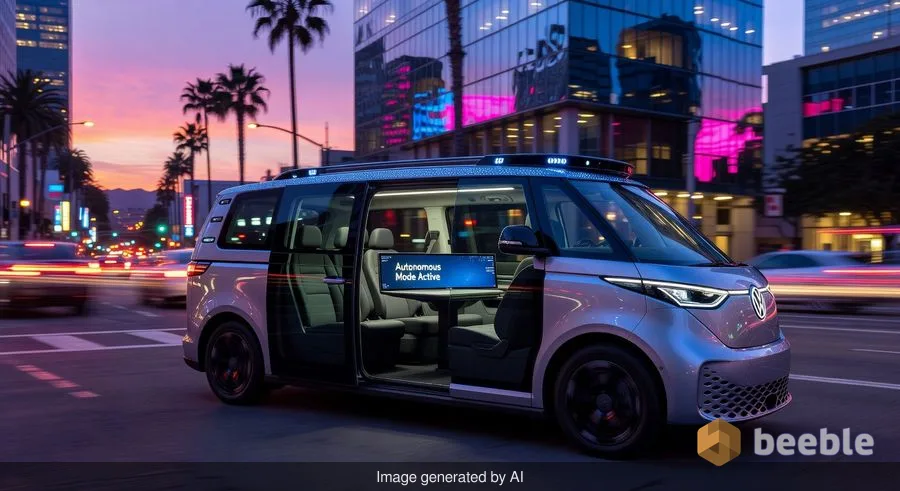
While the dream of a car that drives itself has been a staple of science fiction for decades, the actual rollout of autonomous fleets has proven to be a marathon of incremental software updates and cautious regulatory approvals rather than a single big bang moment. Despite the endless hype surrounding fully autonomous robots, the transition to driverless transport is currently a highly localized, methodical process. The latest chapter in this evolution is unfolding on the streets of Los Angeles, where Volkswagen and Uber have officially begun testing a fleet of self-driving microbuses.
This partnership, operating under the Volkswagen subsidiary MOIA America, marks a significant step toward a commercial robotaxi service slated for late 2026. For the average user, this isn't just another tech demo; it is a tangible glimpse into how the next decade of urban mobility will likely shift from personal car ownership to on-demand, automated transit. Looking at the big picture, the move represents a systemic change in how two of the world’s largest transport players—one a master of heavy industry and the other a giant of the attention economy—are betting on a driverless future.
A Nostalgic Shell with a Digital Brain
The vehicle at the center of this trial is the Volkswagen ID. Buzz, an all-electric reimagining of the classic 1960s Type 2 microbus. However, beneath its retro-inspired exterior lies a robust suite of sensors, cameras, and computing power. This version of the ID. Buzz is designed to seat four passengers, functioning essentially as a high-tech shuttle for city dwellers.
Under the hood, the vehicle utilizes a sophisticated software stack formerly developed under the name Volkswagen ADMT. Earlier this year, the division was rebranded as MOIA America to align with Volkswagen’s existing ride-pooling brand in Europe. By using the ID. Buzz, Volkswagen is attempting to marry the emotional appeal of its brand history with the cold efficiency of modern automation. For the user, this means a ride that feels less like a sterile laboratory on wheels and more like a streamlined, user-friendly version of a familiar friend.
Why Los Angeles is the Proving Ground
Curiously, the choice of Los Angeles as the initial launch site is both a challenge and a strategic necessity. Paul DeLong, president of commercialization at MOIA America, noted that the city’s long history of car culture makes it a natural market for new mobility technologies. But beyond the cultural fit, Los Angeles offers a complex, volatile environment for AI to learn in. From the sprawling highway interchanges to the dense, unpredictable traffic of the downtown core, if a self-driving system can thrive here, it is likely resilient enough for almost any other American city.
Initially, the test fleet is small, consisting of about 10 vehicles. These vans won't be wandering the streets entirely on their own just yet. Each vehicle will launch with a human safety operator behind the wheel. Think of the AI as a tireless intern: it is fast and capable of processing vast amounts of data, but it still requires professional supervision to ensure it doesn't make a rookie mistake in a high-stakes environment. The goal is to scale this fleet to more than 100 vehicles as the software matures and the public becomes more comfortable with the technology.
The Uber Connection: Scaling the Network
One of the most practical aspects of this announcement is the involvement of Uber. While Volkswagen provides the hardware and the autonomous software, Uber provides the massive, interconnected network of users. For the average user, this means you won't necessarily need a new app to hail a self-driving VW. Instead, the service will likely be integrated into the existing Uber interface, making the transition to autonomous travel feel intuitive rather than disruptive.
On the market side, this partnership is a classic example of a corporate marriage of convenience. Volkswagen needs a way to monetize its expensive autonomous research, and Uber needs to lower its long-term costs by eventually removing the human driver from the equation—the single largest expense in the ride-hailing business model. By combining forces, they are creating a scalable platform that could eventually see these electric microbuses operating in multiple U.S. cities over the next decade.
From Safety Drivers to True Autonomy
Practically speaking, we are still in the transitional phase of this technology. While testing is beginning now, true driverless operations—where the human safety operator is removed entirely—are not expected until 2027. This timeline reflects a growing sense of objective skepticism within the industry. After years of over-promising, companies like Volkswagen are now being more transparent about the foundational work required to ensure safety.
| Feature | Current Testing Phase (2026) | Future Launch Goal (2027+) |
|---|---|---|
| Fleet Size | ~10 ID. Buzz Vehicles | 100+ Vehicles |
| Supervision | Human Safety Operator Present | Fully Autonomous (No Driver) |
| Capacity | 4 Passengers | 4 Passengers |
| Service Area | Restricted LA Test Zones | Expanded Urban Coverage |
| Booking | Internal/Limited Testing | Integrated Uber App |
What This Means for Your Wallet and Your City
Ultimately, the success of the MOIA and Uber partnership will be measured by its impact on the everyday commuter. If robotaxis can be deployed at scale, they have the potential to act as a slow leak in the tire of traditional car ownership. For many people living in dense urban areas, the cost of insurance, parking, and maintenance makes owning a car a financial burden. A reliable, automated microbus service could provide a cheaper, more efficient alternative.
However, there are still hurdles to clear. The regulatory landscape remains shifting and opaque in many regions, and public trust is a fragile resource. Every minor incident involving an autonomous vehicle is scrutinized by the media and the public, creating a high bar for entry.
Looking ahead, the arrival of these microbuses in Los Angeles is a signal that the era of experimental "science projects" is ending, and the era of commercial application is beginning. For the resident of LA, your next Uber might soon arrive with a friendly, retro face and a computer at the helm. Whether we are ready to let go of the steering wheel remains to be seen, but the infrastructure for that shift is being built right now, one block at a time.
Key Takeaways for the Consumer
- Gradual Rollout: Don't expect to see thousands of these vans tomorrow. The growth will be methodical, starting with 10 supervised vehicles and scaling as safety is proven.
- Integration is Key: You likely won't need a new app; the goal is to make hailing a robotaxi as simple as calling a standard Uber today.
- Safety First: The presence of human safety drivers until 2027 shows that the industry is prioritizing caution over speed to build public trust.
- The End of Ownership? For city dwellers, services like this could eventually make the high cost of personal car ownership unnecessary.
Sources
- Volkswagen Group / MOIA America Official Press Release
- Uber Technologies Corporate Communications
- TechCrunch Mobility Archives
- Los Angeles Department of Transportation Mobility Reports



See you on the other side.
Our end-to-end encrypted email and cloud storage solution provides the most powerful means of secure data exchange, ensuring the safety and privacy of your data.
/ Create a free account
