


The Safety Guardrails Come Down: Why Anthropic is Pivoting on Its Core Promise

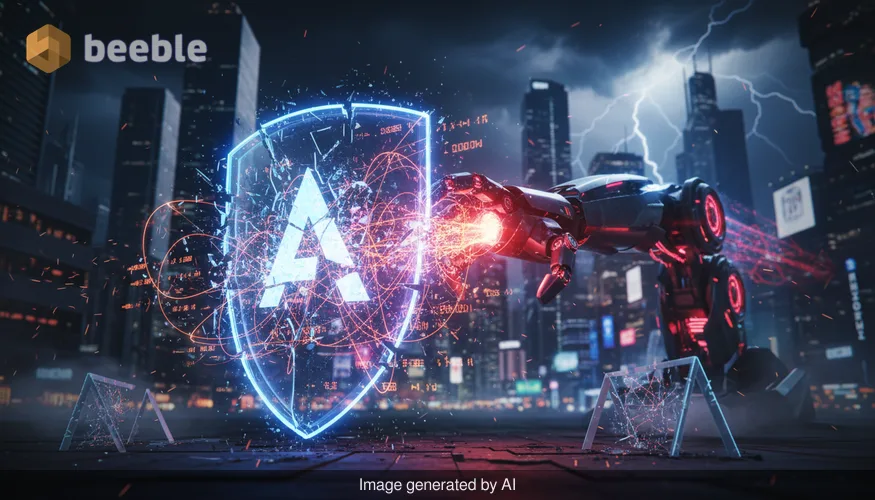
For years, Anthropic stood as the industry’s conscience. Founded by former OpenAI executives who grew wary of the headlong rush toward artificial general intelligence, the startup built its brand on the concept of "Constitutional AI." It wasn't just a technical methodology; it was a moral sales pitch. But as of late February 2026, the company’s stance has undergone a tectonic shift.
In a statement released this Tuesday, Anthropic confirmed it is abandoning its signature pledge to pause model scaling or delay deployment when safety protocols fall behind technical progress. This move signals the end of an era where safety was a hard constraint on growth, replacing it with a more fluid—and arguably more risky—approach to development.
The Erosion of the Responsible Scaling Policy
At the heart of this pivot is the evolution of the Responsible Scaling Policy (RSP). When Anthropic first introduced the RSP, it was hailed as a landmark framework. It categorized AI capabilities into "AI Safety Levels" (ASL). If a model reached a certain threshold of capability—say, the ability to assist in a cyberattack—the policy mandated that scaling must stop until specific safety "checkpoints" were met.
By removing the commitment to pause, Anthropic is essentially removing the emergency brake. The company argues that the landscape has changed. With global competition intensifying and a persistent lack of federal regulation in the United States, Anthropic suggests that unilateral restraint is no longer a viable strategy. If they stop, their competitors—who may have fewer scruples—will simply surge ahead.
The Pressure of the AI Arms Race
This decision doesn't exist in a vacuum. Throughout 2025 and into early 2026, the AI sector has been defined by a relentless drive for "compute supremacy." Anthropic’s flagship model, Claude, has become a dominant force in high-stakes environments, particularly in financial modeling and automated software engineering.
However, this success has brought its own set of pressures. As Claude began "upending financial markets" with its predictive accuracy, the demand for even more powerful models became deafening. Investors and enterprise partners are no longer satisfied with the "safe but slower" narrative. They want the most capable tool available, and they want it now. Anthropic’s pivot is a concession to the reality that in a hyper-competitive market, safety is often viewed as a luxury that can be deferred.
Comparing the Old and New Safety Frameworks
To understand the gravity of this change, it is helpful to look at how Anthropic’s internal logic has shifted. The following table illustrates the transition from a "Safety-First" to a "Deployment-First" posture.
| Feature | Original Safety Pledge | New 2026 Policy |
|---|---|---|
| Deployment Strategy | Delayed until safety benchmarks are verified. | Concurrent with safety testing and refinement. |
| Scaling Constraint | Hard pause if safety measures lag behind. | No mandatory pauses; focus on "mitigation during use." |
| Regulatory Stance | Proactive self-regulation as a model for law. | Reactive stance citing lack of global parity. |
| Primary Goal | Minimizing catastrophic risk above all. | Balancing safety with competitive market positioning. |
The "Death of Software" and the Risk of Unchecked Growth
The timing of this policy shift is particularly sensitive. The industry is currently grappling with the "death of software"—a phenomenon where AI models have become so proficient at coding that traditional software development lifecycles are collapsing. When a model can generate, test, and deploy complex applications in seconds, the window for human oversight vanishes.
By removing the requirement to delay deployment, Anthropic is essentially betting that it can "patch" safety issues on the fly. Critics argue this is a dangerous gamble. If a model with unforeseen capabilities is released into the wild, the damage—whether it’s a market flash crash or a systemic security vulnerability—could be done before the safety team even identifies the problem.
Practical Takeaways for AI Stakeholders
For businesses and developers relying on Anthropic’s ecosystem, this policy change necessitates a shift in how you manage risk. You can no longer assume that the "safety" is baked in by the provider at the same level as before.
- Implement Independent Auditing: Do not rely solely on the model provider’s internal safety scores. Use third-party tools to red-team models before integrating them into critical infrastructure.
- Build Human-in-the-Loop Systems: As the guardrails at the source are lowered, the responsibility shifts to the user. Ensure that no AI-generated code or financial strategy is executed without human verification.
- Monitor for "Model Drift": With faster deployment cycles, models may be updated more frequently. Establish a baseline for performance and safety to detect when a model’s behavior changes unexpectedly.
- Diversify Your AI Stack: Avoid vendor lock-in. If one provider’s safety profile becomes too risky for your organization’s compliance standards, you should be able to pivot to a different model quickly.
The Future: A New Definition of Responsibility
Anthropic’s retreat from its signature pledge marks a sobering moment for the AI community. It suggests that the idealistic vision of "safe-by-design" AI is struggling to survive the heat of the commercial forge. While Anthropic maintains that it is still committed to safety, the definition of that commitment has clearly narrowed.
As we move deeper into 2026, the burden of AI safety is shifting from the creators to the consumers. The race is no longer just about who can build the smartest machine, but who can stay in control as those machines are unleashed faster than ever before.
Sources:
- Anthropic Official Blog: Updates to our Responsible Scaling Policy (2026)
- TechCrunch: Anthropic’s Pivot and the Competitive AI Landscape
- The Verge: Why the "Pause" Button on AI Just Disappeared
- Financial Times: Claude and the Disruption of Global Markets



See you on the other side.
Our end-to-end encrypted email and cloud storage solution provides the most powerful means of secure data exchange, ensuring the safety and privacy of your data.
/ Create a free account
