


The Silent Death of the App Icon

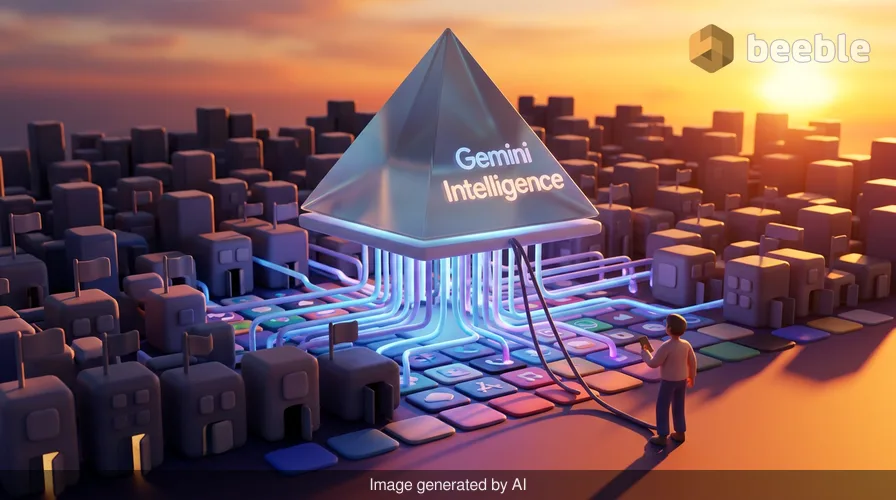
For over a decade, our relationship with the smartphone has been defined by a digital manual labor we’ve grown to accept as second nature. We used to hunt for icons in a fragmented sea of colorful grids—now we simply speak into the void and wait for the machinery to respond; we once carefully orchestrated our own digital workflows by jumping between disparate tabs—today, the operating system choreographs these movements for us behind the screen.
With the arrival of Android 17 and its integrated 'Gemini Intelligence,' we are witnessing a profound shift in the very architecture of mobile computing. The 'app'—once a sovereign kingdom with its own borders, rules, and interface—is being demoted to a mere data provider for a central, overarching intelligence. For the average user, this looks like a shortcut; for the industry, it is a paradigm shift that turns the operating system from a passive launchpad into an active agent.
From App Silos to Semantic Fluidity
Historically, the mobile experience was a series of hard hand-offs. If you wanted to send a flight confirmation to a friend, you had to manually copy the confirmation code from a travel app, switch to a messaging app, and paste it into a chat. This digital friction was the de facto tax on our productivity. Developers built robust silos, and our thumbs were the only bridge between them.
In Android 17, this manual labor is being deprecated. Gemini Intelligence doesn't just 'open' apps; it reaches inside them. Through this user lens, the 'Share' button starts to feel like a legacy relic of a more primitive era. When you ask your phone to 'email the PDF from my last Slack conversation to my accountant,' the OS is no longer just launching Slack and Gmail in sequence. It is navigating the internal data structures of those apps simultaneously to fulfill a complex intent.
Technically speaking, this is made possible by a massive expansion of what Google calls 'App Intents.' In the past, these were simple hooks that allowed one app to perform a basic action for another, like opening a web link. Today, they function more like restaurant waiters carrying highly specific, structured data between the kitchen (the app’s backend) and the table (the Gemini interface). This evolution suggests that the future of software isn't in the interface we see, but in the interoperability we don't.
Under the Hood: The Rise of the Action Model
To understand why this feels so different from the voice assistants of 2020, we have to look at the engineering logic behind Large Action Models (LAMs). Traditional assistants were essentially glorified search engines with a speech-to-text wrapper; consequently, they often failed the moment a task required more than one step. If you asked an old assistant to 'order my usual pizza,' it would likely just show you a web search for pizza places.
Android 17’s Gemini Intelligence operates on a different plane. It leverages a more resilient framework that understands the 'state' of your screen and the context of your previous actions. Behind the screen, the system uses a combination of on-device processing and cloud-based reasoning to parse the UI elements of your apps. It 'sees' the buttons and text fields not as pixels, but as functional objects.
Paradoxically, this makes the developer’s job both easier and more complex. While they no longer need to worry quite as much about creating the perfect, intuitive navigation menu, they must now ensure their app’s internal logic is transparent to the OS. If an app’s code is a messy closet—easy to throw things in but hard to find them later—Gemini will struggle to automate it. Developers are being forced to trade proprietary obscurity for structured clarity if they want to remain relevant in an AI-first ecosystem.
The UX of Invisibility
As a tech journalist who has spent years testing clunky beta software and reading dense GitHub commits, I’ve noticed a curious trend: the best technology eventually becomes invisible. We saw this with Wi-Fi, which transitioned from a finicky novelty to a ubiquitous utility that we only notice when it breaks. Android 17 is attempting to do the same for the app interface.
I recently observed a friend trying to organize a group dinner. She toggled between Yelp for reviews, WhatsApp for the vote, and Google Calendar to check her availability. It was a masterclass in digital friction—a series of micro-frustrations that we’ve been conditioned to ignore. When I showed her how Gemini could now 'find a highly-rated Italian spot near the theater and put a hold on a table for four at 7 PM on Friday,' the reaction wasn't just 'cool.' It was a sigh of relief.
This is the promise of streamlined automation. It’s the transition from a 'pull' economy, where we have to go get the information we need, to a 'push' economy, where the software anticipates and executes on our behalf. However, this seamlessness comes with an invisible price tag: ecosystem lock-in. The more Gemini does for you, the harder it becomes to imagine switching to an operating system that doesn't know your 'usual' pizza or your accountant’s email address.
The Privacy Paradox: Who Is Watching the Screen?
Zooming out to the industry level, we must confront the uncomfortable reality of how this magic works. For Gemini to automate tasks across apps, it needs a deep, multifaceted level of access to your data. It must be able to 'read' what is on your screen and 'understand' the content of your private messages and emails.
Google claims that much of this processing happens on-device, protected by the Android Private Compute Core. This is a robust attempt to maintain privacy in an era of total visibility. Yet, from a pragmatic standpoint, we are still handing the keys to our digital lives to a single entity. The software city’s infrastructure is becoming more efficient, but the company managing the pipes now knows exactly when and where the water is flowing.
Ultimately, this creates a new kind of technical debt—not for the developers, but for the users. We are borrowing convenience today at the cost of our digital agency tomorrow. As our phones become more proactive, we risk becoming more reactive, following the paths that the algorithm has curated for us rather than exploring the digital landscape ourselves.
Reclaiming the Interface
Android 17 marks the beginning of the end for the 'App Era' as we’ve known it since 2008. The icon-based grid is becoming a legacy interface, a backup plan for when the AI fails to understand our intent. We are moving toward a world of 'headless' apps, where the software provides a service but the user rarely interacts with its actual brand or design.
For those of us who appreciate the craft of UX/UI design, there is a certain sadness in this shift. There is beauty in a well-designed app, just as there is beauty in a well-written novel. When we reduce apps to mere data providers, we lose the personality and the intentionality that developers pour into their work.
As you navigate this new, automated world, I urge you to occasionally 'peek behind the curtain.' Turn off the automation for a day. Navigate your apps manually. Notice the friction, but also notice the control. The 'Gemini Intelligence' in Android 17 is a powerful tool—perhaps the most disruptive update in a generation—but it is still just a tool. Our digital lives are more than a series of tasks to be optimized; they are the spaces where we live, work, and connect. We should be careful not to automate away the very experiences that make those connections meaningful.
Sources:
- Google Android Developer Documentation: 'Advanced App Intents and Semantic Mapping'
- PCMag: 'In Android 17, Gemini Intelligence Can Automate Tasks Across Apps'
- Google I/O 2026 Keynote: 'The Future of Agentic OS'
- Android Open Source Project (AOSP) Commit History: 'Refinement of Cross-App Contextual Awareness'
- Journal of Digital Literacy: 'The Psychological Impact of Predictive Automation in Mobile UI'



See you on the other side.
Our end-to-end encrypted email and cloud storage solution provides the most powerful means of secure data exchange, ensuring the safety and privacy of your data.
/ Create a free account
