


TraceMap: How the EU is Using AI to Secure the Global Food Supply Chain

The journey of a single strawberry from a farm in southern Spain to a supermarket shelf in Berlin involves a labyrinthine network of logistics, inspections, and digital paperwork. In an era of globalized trade, the complexity of this supply chain has historically been its greatest vulnerability. When a foodborne illness strikes or a fraudulent shipment of mislabeled olive oil enters the market, tracing the source has often been a matter of weeks, not hours.
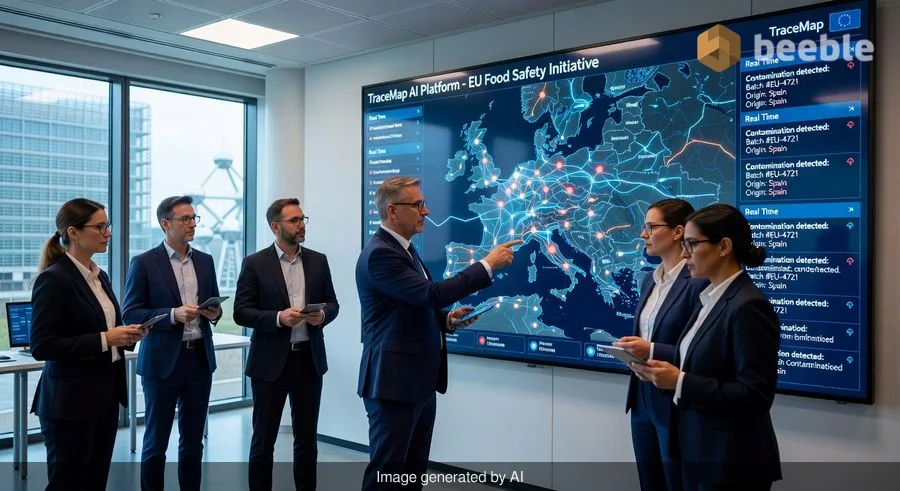
That changed this week. The European Commission has officially deployed TraceMap, a sophisticated artificial intelligence platform designed to serve as the technological backbone of the European Union’s food safety infrastructure. By centralizing data and automating the detection of anomalies, TraceMap aims to turn the tide against food fraud and drastically reduce the response time during health crises.
The Digital Sentry of the Single Market
TraceMap is not merely a database; it is an analytical engine. For years, EU member states have shared information through systems like the Rapid Alert System for Food and Feed (RASFF). However, these systems often relied on manual reporting and reactive measures. TraceMap shifts the paradigm toward proactive surveillance.
At its core, the platform uses machine learning algorithms to scan vast amounts of data—including customs declarations, laboratory test results, and supply chain logs—to identify patterns that human auditors might miss. For instance, if a specific shipment of grain shows a price point significantly lower than market value alongside a non-standard shipping route, TraceMap flags it as a high-risk candidate for food fraud or adulteration.
Revolutionizing Crisis Response
During a foodborne disease outbreak, every hour counts. In the past, tracing a contaminated ingredient back to its origin required investigators to manually cross-reference invoices and shipping manifests across multiple jurisdictions.
“TraceMap is a breakthrough which will revolutionise the EU’s capacity to react to food safety crises and to clamp down on food fraud,” says Olivér Várhelyi, European Commissioner for Health and Animal Welfare.
By integrating data from all 27 member states, TraceMap can perform "back-tracing" in seconds. If a cluster of Salmonella cases is reported in three different countries, the AI can instantly identify common nodes in their respective supply chains, pinpointing the specific processing plant or farm responsible. This precision prevents unnecessary wide-scale recalls that often devastate innocent farmers while ensuring dangerous products are removed from shelves immediately.
Combatting the Multi-Billion Euro Fraud Industry
Food fraud—the intentional substitution, addition, or misrepresentation of food—costs the global economy billions of euros annually. It ranges from the dilution of honey with cheap syrups to the mislabeling of farmed fish as wild-caught.
TraceMap addresses this by utilizing predictive modeling. By analyzing historical fraud data and current market trends, the platform can predict which commodities are currently most at risk. If a drought in a specific region reduces the harvest of a high-value spice, TraceMap alerts national authorities to increase inspections for that specific item, anticipating that fraudsters will attempt to fill the market gap with synthetic alternatives.
Privacy, Sovereignty, and Data Security
One of the primary hurdles in developing TraceMap was the sensitive nature of the data involved. National authorities are often protective of their internal investigative data, and private companies are wary of their proprietary supply chain information being exposed.
To solve this, the European Commission implemented a decentralized data architecture. While the AI processes the information to find links, the raw data often remains under the control of the national authorities. TraceMap acts as a connective tissue, allowing for "blind" analysis where the system can confirm a match or a risk without necessarily exposing trade secrets to unauthorized parties. This balance of transparency and security is a hallmark of the EU’s broader approach to trustworthy AI.
What This Means for Businesses and Consumers
For the average European citizen, TraceMap provides a silent layer of protection. It means that the "EU Organic" or "Protected Designation of Origin" labels carry more weight, backed by a digital watchdog that never sleeps.
For businesses, the implementation of TraceMap suggests a shift toward higher digital standards. Companies that maintain transparent, digitized records will find it easier to clear inspections and resolve issues if their products are ever caught up in a broad investigation.
Practical Takeaways for the Food Industry:
- Digitize Your Records: Move away from paper-based logs. The faster your data can be integrated into national systems, the faster you can be cleared in the event of a false alarm.
- Audit Your Suppliers: Use the launch of TraceMap as an impetus to re-verify your own supply chain. If the EU’s AI finds a discrepancy, you want to have found it first.
- Monitor EU Alerts: Stay tuned to the official RASFF and TraceMap public summaries to understand which categories are currently under high surveillance.
The Road Ahead
The launch of TraceMap is just the beginning. As the platform ingests more data, its predictive capabilities will only sharpen. There are already discussions about integrating satellite imagery to monitor crop health and yield in real-time, further narrowing the window for fraud.
By marrying the EU’s stringent regulatory standards with cutting-edge artificial intelligence, TraceMap represents a significant step toward a future where food safety is not just a goal, but a digital certainty.
Sources
- European Commission - Health and Food Safety
- EFSA - European Food Safety Authority
- RASFF Window - Food and Feed Safety Alerts



See you on the other side.
Our end-to-end encrypted email and cloud storage solution provides the most powerful means of secure data exchange, ensuring the safety and privacy of your data.
/ Create a free account
