


Why Italy Just Forced AI Giants to Admit Their Robots Might Be Hallucinating

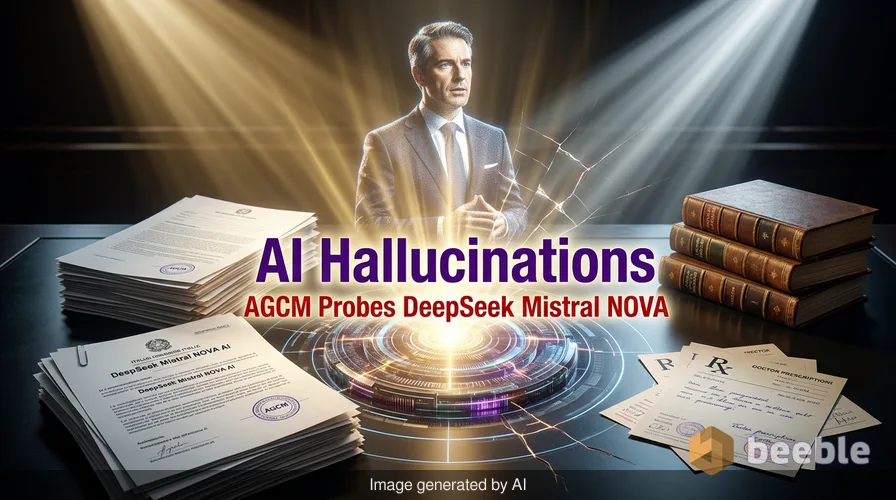
In our everyday lives, we have a certain baseline for trust. If a librarian hands you a history book, you assume the dates are correct. If a doctor gives you a prescription, you trust it isn’t a creative work of fiction. But in the digital age, we have begun handing our queries over to artificial intelligence—tools that often feel like all-knowing oracles but occasionally behave more like a confident storyteller who has forgotten the plot.
Under contract law and consumer protection frameworks, this gap between expectation and reality is more than just a technological glitch; it is a legal minefield. This is precisely why the Italian Competition Authority (AGCM) recently concluded three high-profile investigations into DeepSeek, Mistral, and NOVA AI. The central issue? The phenomenon known as "hallucinations"—those moments when an AI asserts a falsehood with the unwavering confidence of a seasoned trial lawyer.
The Watchdog in the Digital Garden
To understand this case, we first have to look at the AGCM. Think of this regulator as a consumer’s shield in a marketplace where the giants usually hold all the cards. They aren't there to stifle innovation, but to ensure that the "bridge" between a company’s promises and a user’s experience doesn't have a trapdoor in the middle.
The investigations focused on whether these AI companies were being transparent enough with Italian citizens. When an AI generates a fake legal citation or a non-existent medical fact, who is liable? If the company hasn't warned you that the software can make things up, they might be engaging in what the law calls an "unfair commercial practice." This isn't just a slap on the wrist; in a regulatory context, failing to inform users of a product’s fundamental flaws can render a company’s entire service model legally precarious.
Hallucinations as a Legal Liability
In the eyes of the law, a hallucination isn't just a quirk of machine learning; it's a potential breach of the duty of care. For the average person using these tools for work or study, a false answer isn't just annoying—it can be actionable if it leads to real-world harm.
Instead of fighting a protracted battle in court, which can be a marathon of litigation, DeepSeek, Mistral, and NOVA AI chose a different path: they offered binding commitments. These are essentially formal promises made to the regulator to change their behavior in exchange for the investigation being closed without a fine. It is a peace treaty of sorts, but one with teeth. If these companies break these promises, they face massive statutory penalties.
The Three Pillars of the Agreement
What does this mean for you when you log into these platforms tomorrow? The AGCM has secured several concessions that prioritize the vulnerable user over corporate boilerplate.
- Permanent Disclaimers in Italian: Previously, many warnings were buried in 50-page Terms of Service documents written in dense legalese. Now, these companies must provide explicit, permanent disclaimers within the user interface itself—and they must be in Italian. No more hiding behind a language barrier.
- Pre-contractual Clarity: Before you even click "Accept," the companies must provide robust information about the limits of the technology. This is like the warning on a pack of cigarettes, but for information. It tells you clearly: This content may be unreliable; verification is your responsibility.
- Technological Accountability: DeepSeek, specifically, has committed to investing in the actual mitigation of these hallucinations. This moves the issue from a simple "legal whisper" in the fine print to a systemic engineering requirement.
| Feature | Old Reality | New Regulatory Standard |
|---|---|---|
| Transparency | Buried in English-only "Fine Print" | Clear, prominent warnings in Italian |
| Verification | Assumed by the user silently | Explicitly stated as a necessity for reliability |
| Risk Disclosure | Vague or non-existent | Clearly defined as a "hallucination" risk |
| Company Stance | "Use at your own risk" | Active investment in technological mitigation |
The DeepSeek Clause: Investing in Truth
Curiously, the AGCM didn't just ask for better stickers on the box. They looked under the hood. DeepSeek’s commitment to technological investment is particularly noteworthy. It suggests that in the future, simply saying "sorry, we’re just an AI" won't be enough of a safety net. Regulators are starting to demand that companies actively work to reduce the frequency of these errors, treating them as a product defect rather than an unavoidable mystery.
This sets a powerful precedent. It tells the tech world that if you launch a tool in the European market—and specifically the Italian jurisdiction—you are responsible for the "intellectual safety" of your users. If your product has the potential to provide negligent advice, you must not only warn the user but also show that you are trying to fix the problem.
Why This Matters for the Everyday Citizen
As your Legal Navigator, I often see cases where individuals are left holding the bag because they trusted a company's marketing over the reality of the service. Whether you are a student writing an essay or a small business owner drafting a contract, these AGCM rulings are a win for you.
They shift the burden of proof. By forcing these companies to be transparent, the law is making it harder for them to hide behind "it’s a beta version" excuses. If a company fails to display these mandated warnings and you suffer a loss because of a hallucination, your legal standing to seek recourse becomes much stronger. You can point to these commitments and say, "They knew the risk, and they didn't warn me as required by the regulator."
Moving Forward: Your AI Safety Checklist
Even with these new rules, the statute of limitations on your own common sense never expires. Here is how you can protect yourself while the technology catches up to the law:
- Verify, Don't Just Trust: Treat AI output as a "first draft" or a set of suggestions. Never treat it as a final, binding fact without secondary verification from a reputable source.
- Look for the Disclaimer: If you don't see a clear warning about hallucinations in the interface, proceed with extreme caution. The absence of a warning might actually be a sign of a less reliable (and less compliant) platform.
- Document Errors: If an AI gives you a dangerously wrong answer, take a screenshot. This can be vital evidence if you ever need to file a complaint with a consumer protection agency.
- Read the 'About' Section: Look for the specific Italian-language disclosures now mandated by the AGCM. These sections will often give you a more honest look at the model's limitations than the marketing slogans on the homepage.
Ultimately, the AGCM’s decision is a reminder that the law is not a static relic; it is a living organism that adapts to new challenges. By pulling back the curtain on AI hallucinations, the Italian authorities have ensured that while the technology may be artificial, the legal protections for the people using it remain very real.
Sources:
- Italian Competition Authority (AGCM) Case Bulletins (May 2026 Update).
- Italian Consumer Code (Codice del Consumo), Article 21 on Unfair Commercial Practices.
- EU AI Act (Transparency Obligations for General Purpose AI).
- Directive 2005/29/EC concerning unfair business-to-consumer commercial practices.
Disclaimer: This article is for informational and educational purposes only and does not constitute formal legal advice. AI regulations are a rapidly evolving field; if you believe you have been harmed by misleading information from an AI service, please consult a qualified attorney in your jurisdiction to discuss the specifics of your case.



See you on the other side.
Our end-to-end encrypted email and cloud storage solution provides the most powerful means of secure data exchange, ensuring the safety and privacy of your data.
/ Create a free account
