


Why Your Phone's Small Screen Is the Perfect Cover for Phishing

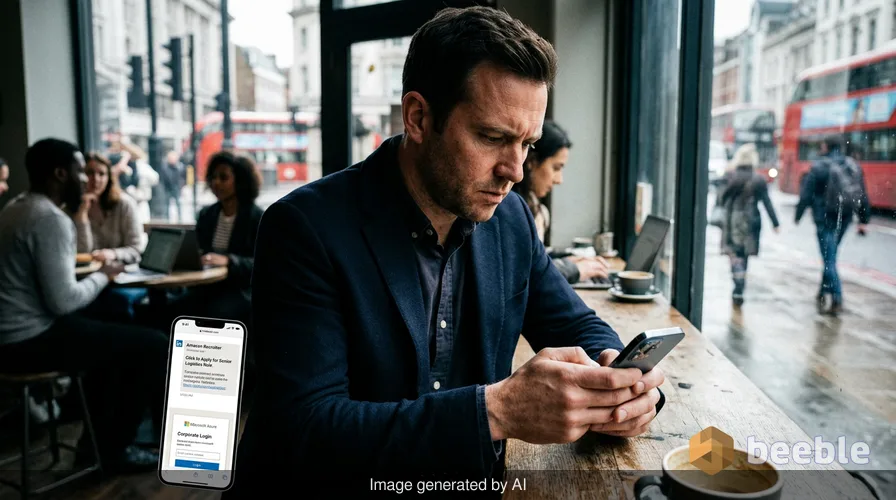
I remember sitting in a secure facility three years ago with an incident responder who was trying to trace how a global logistics firm lost control of its primary Azure tenant. The forensic trail did not lead to a sophisticated zero-day exploit or a compromised firewall. It led to a mid-level manager who received a LinkedIn message about a lucrative role at a competitor. He clicked a link on his iPhone while waiting for coffee, entered his credentials into what looked like a standard corporate login page, and effectively handed over the keys to the kingdom. This scenario is no longer an isolated incident. It is the blueprint for a sophisticated campaign that researchers now call RecruitTrap.
Recent analysis from Zimperium’s zLabs identified a persistent surge in these recruitment-themed attacks. The methodology is specific. Attackers impersonate high-profile employers like Amazon, Boeing, Deloitte, and Heineken. They do not just want any data. They want corporate identities. By shifting the attack surface from the desktop to the mobile device, these actors exploit the physical limitations of smartphones to bypass the visual cues users rely on for safety.
The mobile screen provides a perfect visual mask
On a desktop browser, a savvy user might notice a slightly off-domain name or a browser-in-the-browser (BitB) trick where a fake window sits inside a real one. Mobile devices change the rules of engagement. When a user clicks a malicious link in a mobile app, the phishing kit often triggers a full-screen counterfeit login page. This interface removes the address bar and other standard browser elements. From an end-user perspective, the screen looks identical to a legitimate authentication prompt from Microsoft 365 or a corporate Single Sign-On (SSO) provider.
Behind the scenes, the attacker uses the lack of screen real estate to their advantage. A mobile user cannot hover over a link to see the destination URL. They cannot easily inspect the site certificate. The interface is a digital Trojan horse that relies on the user's familiarity with mobile UI patterns. The Zimperium report highlights that these campaigns are not just broad nets. They are calculated operations that use 46 identified indicators of compromise (IOCs) to target employees at specific, mission-critical organizations.
Attackers now filter for corporate targets only
The most telling part of the RecruitTrap activity is the pre-qualification check. Most phishing kits are greedy; they take whatever credentials a victim provides. The RecruitTrap kit is different. It includes logic that actively screens submitted data. If a victim attempts to log in with a personal Gmail or Outlook address, the system rejects it. The kit requires a corporate email domain to proceed.
This behavior signals a shift in attacker priorities. From a risk perspective, a personal account is a low-value asset. A corporate account, however, is a gateway. When an attacker captures these credentials, they often bypass multi-factor authentication (MFA) by prompting the user for a token in real-time or by stealing OAuth tokens directly. Once they have these tokens, they reach internal communications, cloud storage, and proprietary applications. The attacker does not need to crack a password. They simply session-jack their way into the heart of the enterprise.
Why infrastructure persistence beats traditional blocklists
There is a common misconception that phishing sites are short-lived, disappearing within hours of discovery. Zimperium’s telemetry analysis over the last year suggests otherwise. These recruitment domains frequently remain on the same cloud and hosting infrastructure for extended periods. Amazon and SEDO appeared as the most frequent providers at the autonomous system number (ASN) level. The attackers are not hiding in obscure corners of the dark web. They are hiding in plain sight on reputable hosting platforms.
This persistence creates a gap in conventional security. Most URL blocklists are reactive. A domain must be reported and verified before it is blocked. Because these recruitment sites use lookalike domains and stay active on recurring infrastructure, they often remain operational for days or weeks before they hit a public threat feed. If a company relies solely on static lists, they are essentially waiting for a breach to occur before they build a defense. This is why shadow IT and mobile devices are the dark matter of the corporate network; they exist outside the view of traditional perimeter security.
The architectural gap in mobile identity security
Most enterprise security stacks were built for the desktop era. They rely on secure web gateways (SWGs) and firewalls that inspect traffic leaving the office or the VPN. Mobile devices frequently bypass these controls. An employee might check their personal LinkedIn on a phone that uses a cellular data connection rather than the corporate Wi-Fi. In this environment, the corporate firewall is an obsolete castle moat. The traffic never passes through the inspection point, so the malicious URL is never blocked.
Proactively speaking, the industry needs to treat mobile devices as the primary target they have become. Zero trust as a VIP club bouncer at every internal door is the right model, but it must extend to the mobile touchpoint. If the device itself does not have the ability to dynamically inspect network traffic for credential-harvesting attempts, the identity is vulnerable. Assessing the attack surface requires looking at how employees actually work, not just how the network diagram says they should work.
Practical takeaways for the enterprise
Securing a workforce against RecruitTrap and similar campaigns requires more than just a "don't click links" training module. Organizations must adopt a more resilient posture that assumes the user will eventually be deceived.
- Enforce Hardware-Backed MFA: Move away from SMS or push-notification MFA, which is exploitable via adversary-in-the-middle (AiTM) attacks. Use FIDO2-compliant security keys or biometrics that tie the authentication to the specific hardware.
- Deploy Mobile Threat Defense (MTD): Use tools that provide on-device protection. These solutions can detect the creation of full-screen overlays and identify malicious network traffic in real-time, even when the device is not on a VPN.
- Audit OAuth Permissions: Regularly review the applications that have access to your cloud environment. Look for unauthorized third-party apps that may have been granted permissions through a compromised mobile session.
- Implement Domain Monitoring: Use services that alert the security team when lookalike domains—such as those including "careers," "recruitment," or your brand name—are registered on major hosting providers.
- Shift to Managed Browsers: For high-risk roles, require the use of managed mobile browsers that have built-in phishing protection and integration with corporate threat intelligence feeds.
A new era of social engineering
We have moved past the era of the Nigerian Prince email. Modern phishing is a professionalized industry. The RecruitTrap campaign proves that attackers are willing to build complex infrastructure and code custom logic just to ensure they only capture high-value enterprise accounts. They understand the psychology of the job hunter and the technical limitations of the mobile interface.
As a countermeasure, security teams must stop treating mobile security as an optional add-on. If an identity is compromised on a mobile device, the entire corporate network is at risk. Data is a toxic asset if it is not protected by stringent, granular access controls that follow the user wherever they go. The next major breach will likely start with a simple notification on a phone. The only question is whether the system behind that phone is ready to catch the deception before the user clicks.
Sources:
- Zimperium zLabs: RecruitTrap: Mobile Phishing Campaigns Target Enterprise Credentials (August 2026)
- NIST Special Publication 800-204: Strategies for Microservices Security
- MITRE ATT&CK Framework: Adversary-in-the-Middle (T1557) and Steal Web Session (T1539)
Disclaimer: This article is for informational and educational purposes only. It does not replace a professional cybersecurity audit, risk assessment, or formal incident response service. Always consult with a qualified security professional before implementing significant changes to your enterprise architecture.



See you on the other side.
Our end-to-end encrypted email and cloud storage solution provides the most powerful means of secure data exchange, ensuring the safety and privacy of your data.
/ Create a free account
