


Your Lawyer is Getting a Digital Co-Pilot, but the Billable Hour Isn't Going Anywhere

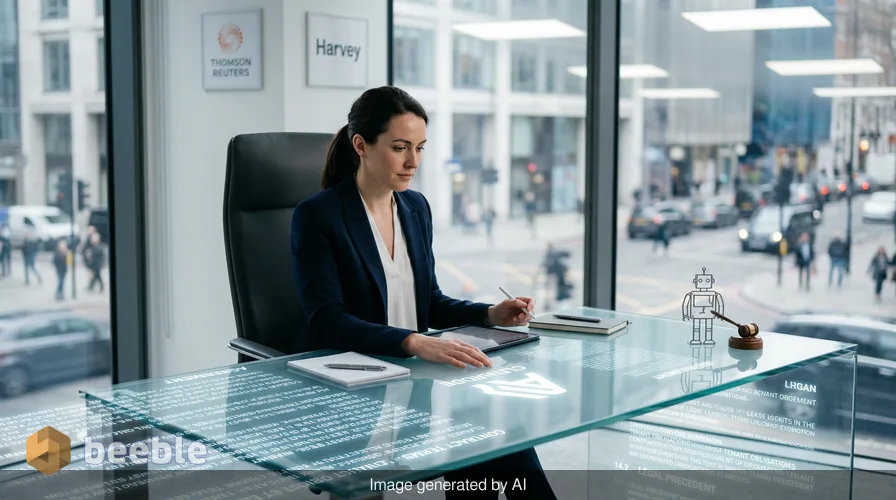
While the sensationalist headlines often suggest that a "robot lawyer" is coming to take over the courtroom, the reality unfolding in the tech world is far more practical—and arguably more disruptive. We have been told for years that artificial intelligence would eventually replace white-collar professionals, yet the latest moves from Anthropic suggest a very different trajectory. Instead of replacing the lawyer, AI is becoming the very desk the lawyer sits at.
Anthropic’s recent expansion of its Claude AI assistant into the legal sector isn't just another software update; it is a systemic shift in how professional work is conducted. By integrating directly with industry titans like Thomson Reuters and legal startups like Harvey, Anthropic is positioning Claude not as a standalone toy, but as a foundational layer for the legal industry. For the average person who might need a lawyer to review a lease or navigate a small business dispute, this change is about to make the legal machine move much faster, even if the person behind the desk remains human.
Behind the Jargon: The Digital Law Clerk
To understand why this matters, we have to look under the hood of how law firms actually operate. Historically, a significant portion of a lawyer’s time—and your legal bill—is spent on "discovery" and research. This involves sifting through thousands of pages of court records, previous rulings, and dense legal guides. In simple terms, it is a high-stakes scavenger hunt where missing one sentence can lose a case.
Anthropic’s new release allows Claude to connect directly to the Thomson Reuters Westlaw database. For those outside the legal bubble, Westlaw is essentially the digital crude oil of the American legal system. It contains almost every court record and legal guide in existence. Previously, a lawyer would have to search Westlaw in one window, copy the data, and then perhaps use an AI to summarize it in another. Now, that wall has been torn down. Claude can now reach into that verified, "fiduciary grade" database directly.
What this means is that the AI acts as a tireless intern. It doesn't get bored reading 500 pages of employment law at 3:00 AM, and it doesn't charge for coffee breaks. By creating twelve specific "plug-ins"—with titles like Litigation Associate and Commercial Counsel—Anthropic is essentially providing law firms with a fleet of specialized digital assistants tailored for different departments.
Why This Integration Matters for Your Wallet
From a consumer standpoint, the most pressing question is always the "So What?" factor. If law firms are becoming more efficient, will your legal fees actually go down? This is where the situation becomes nuanced. Looking at the big picture, the legal industry has long relied on the billable hour—a model that practically rewards slow, methodical work.
When AI can draft a standard contract in seconds instead of hours, the traditional pricing model faces a volatile future. We are already seeing a shift where some firms are moving toward flat-fee structures for routine tasks. If Claude can handle the heavy lifting of document management and initial research, a lawyer might spend two hours on a case that used to take ten. While this could lead to lower costs for the average user, it is more likely that the quality of legal work will rise while the turnaround time shrinks.
The Security Question: Is Your Data Safe?
Practically speaking, the biggest hurdle for AI in law hasn't been intelligence; it has been privacy. You wouldn't want your private legal strategy or sensitive corporate documents being used to train a public AI model. Anthropic has addressed this by ensuring these connections—whether to Box, DocuSign, or Everlaw—are secure and siloed.
When a law firm connects Claude to its internal content-management platform like Box, the AI is effectively working inside a locked room. It can see the firm’s private files to help draft a motion, but that information doesn't leak out to the broader internet. This robust approach to data privacy is precisely why we are seeing an unprecedented uptick in adoption. As Anthropic’s associate general counsel Mark Pike noted, a single webinar on these tools drew over 20,000 registrations. In the legal world, where tradition usually moves at a glacial pace, that is a stampede.
The Competitive Landscape: A Battle of Ecosystems
On the market side, this move is a direct shot across the bow of competitors like OpenAI. While OpenAI has focused heavily on making ChatGPT a household name for general tasks, Anthropic is playing a more surgical game. They are targeting high-value, information-heavy industries where accuracy is non-negotiable.
| Feature | Traditional Legal Research | Claude + Thomson Reuters Integration |
|---|---|---|
| Research Speed | Hours or days of manual searching | Minutes to find and synthesize data |
| Source Reliability | Human-verified but prone to oversight | "Fiduciary grade" Westlaw data |
| Workflow | Jumping between 4-5 different apps | Centralized within the AI interface |
| Document Handling | Manual uploads and formatting | Direct integration with Box and DocuSign |
| Cost Structure | High billable hours for paralegal work | Potential for flat-fee AI-assisted tasks |
Curiously, this trend triggered a major selloff in professional service software stocks earlier this year. Investors are beginning to realize that the old way of selling data analytics and software to lawyers is shifting. If an AI can do the analysis, the software that simply stores the data becomes less valuable unless it integrates, as Thomson Reuters has done. It is a classic case of "adapt or be disrupted."
What This Means for the Everyday User
Ultimately, the democratization of these tools means that small law firms—the ones you are likely to hire for a will, a divorce, or a property dispute—can suddenly punch way above their weight class. A solo practitioner with a Claude subscription and the right plug-ins can now access the same research power as a massive corporate firm in Manhattan.
For you, this might mean that the next time you visit a lawyer, they will be more prepared, their advice will be backed by more data, and the "paperwork" phase of your legal journey will be significantly streamlined. However, it also means you should be more curious about how your data is being handled. Don't be afraid to ask your attorney, "Are you using AI to process my documents, and how are you keeping that data private?"
As we look ahead, the goal isn't to create a world where a computer decides your legal fate. Instead, we are entering an era where the "invisible backbone" of our society—the legal and administrative systems—becomes more resilient and transparent. The digital crude oil of information is finally being refined into something usable, fast, and, hopefully, more affordable for everyone.
Sources:
- Anthropic Official Press Release: "Expanding Claude’s Professional Suite for Legal Teams."
- Thomson Reuters Corporate Statement on Westlaw and CoCounsel Integration.
- Reuters Industry Analysis: AI Adoption Trends in the Legal Sector (May 2026).
- Market Data: Q1 2026 Professional Services and Software Sector Performance Reports.



See you on the other side.
Our end-to-end encrypted email and cloud storage solution provides the most powerful means of secure data exchange, ensuring the safety and privacy of your data.
/ Create a free account
