


Binance kontratakuje: Wyjaśnienie batalii prawnej o raport WSJ dotyczący przestrzegania sankcji wobec Iranu

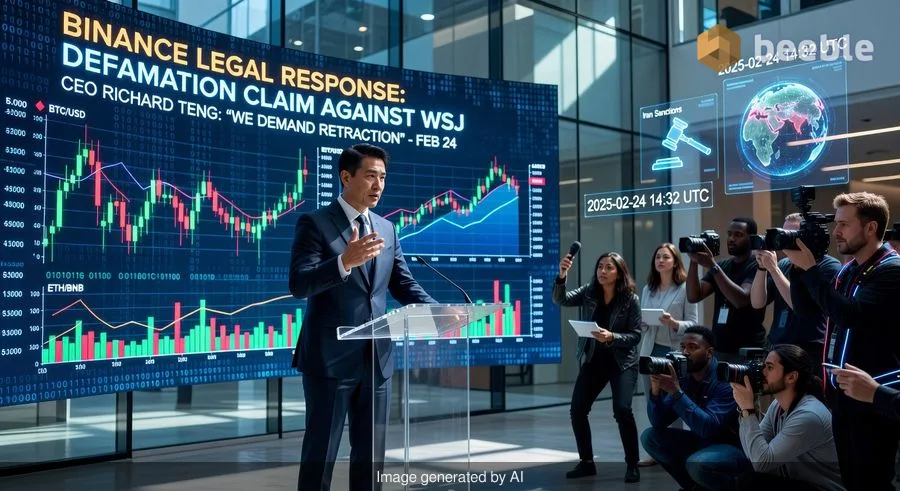
In a significant escalation of its efforts to rebuild its global reputation, Binance has officially threatened legal action against the Wall Street Journal (WSJ). The move follows a controversial investigative report published by the outlet, which alleged that the world’s largest cryptocurrency exchange remains porous to users in sanctioned jurisdictions, specifically Iran.
On February 24, 2026, Binance CEO Richard Teng confirmed that the exchange had issued a formal legal letter to the publication, demanding a full retraction and a public correction. This confrontation marks a departure from the exchange’s previous strategy of quiet settlement, signaling a new, more aggressive stance under Teng’s leadership as the company attempts to move past its turbulent regulatory history.
The Core of the Dispute
The friction stems from a WSJ report that suggested Binance’s compliance systems were failing to prevent Iranian entities from accessing the platform. According to the investigation, various workarounds—including the use of virtual private networks (VPNs) and third-party intermediaries—allowed significant capital to flow through the exchange despite strict international sanctions.
Binance has characterized these claims as not only inaccurate but defamatory. The exchange argues that the WSJ ignored documented evidence of its robust anti-money laundering (AML) and know-your-customer (KYC) protocols. In his public statement, Teng emphasized that Binance has invested over $1 billion into its compliance infrastructure since the landmark 2023 settlement with U.S. authorities, making it one of the most heavily monitored financial institutions in the world.
The Ghost of the 2023 Settlement
To understand why Binance is reacting so forcefully, one must look back at the company’s history. In November 2023, Binance reached a historic $4.3 billion settlement with the U.S. Department of Justice (DOJ), the Treasury, and the CFTC. A central component of that settlement was the admission that the exchange had failed to prevent transactions by users in sanctioned regions, including Iran, Syria, and Cuba.
As part of that agreement, Binance was placed under the supervision of independent monitors for several years. For the WSJ to allege that these issues persist is more than a PR headache; it is a direct challenge to the exchange’s compliance with its federal monitorship. If the allegations were proven true, Binance could face catastrophic legal consequences, including the revocation of its operating licenses or further multi-billion dollar fines.
Defamation and the High Bar for Legal Success
By threatening a defamation lawsuit, Binance is entering a complex legal arena. In the United States, the bar for proving defamation against a media organization is exceptionally high, particularly for "public figures" or large corporations. Binance would need to prove that the WSJ published false information with "actual malice"—meaning the publication knew the information was false or acted with reckless disregard for the truth.
Legal analysts suggest that Binance’s move may be as much about optics as it is about a courtroom victory. By taking a public stand, the exchange is signaling to its users, institutional partners, and regulators that it is confident in its internal controls. It is a high-stakes gamble: a discovery process during a lawsuit could force Binance to open its books even further, potentially revealing vulnerabilities it would rather keep private.
The Impact on the Crypto Market
The market’s reaction to this legal posturing has been one of cautious observation. While the price of BNB (Binance’s native token) has remained relatively stable, the broader implications for the industry are clear. The era of "move fast and break things" in crypto is over. Major exchanges are now expected to operate with the same rigor as traditional Tier-1 banks.
This conflict also highlights the ongoing tension between traditional investigative journalism and the crypto industry. As crypto firms seek mainstream legitimacy, they are finding themselves under the same microscope as Wall Street giants, leading to a clash of cultures that often ends in the legal system.
Practical Takeaways for Crypto Users
For the average user, the dispute between Binance and the WSJ serves as a reminder of the importance of due diligence and platform security. While the legal battle unfolds, here are a few steps users should consider:
- Monitor Regulatory News: Keep a close eye on official statements from financial regulators (like FinCEN or the SEC) regarding exchange compliance.
- Diversify Your Holdings: Avoid keeping all your assets on a single exchange. Using hardware wallets for long-term storage remains the gold standard for security.
- Verify Compliance Features: Ensure the platforms you use require full KYC and offer robust security features like multi-factor authentication (MFA).
- Understand Regional Restrictions: If you travel frequently, be aware that using a VPN to access an exchange from a sanctioned or restricted region can lead to account freezes or permanent bans.
The Road Ahead
The next few months will be critical for Binance. If the WSJ stands by its reporting, we may see one of the most significant legal battles in the history of fintech journalism. Conversely, if a retraction is issued, it would serve as a massive vindication for Richard Teng’s "compliance-first" vision for the exchange.
Regardless of the outcome, this incident underscores a fundamental truth: in the modern financial landscape, data and reputation are the most valuable currencies. Binance is betting its future on the fact that its data is more accurate than the WSJ’s reporting.
Sources
- Binance Official Blog: Our Commitment to Compliance and Transparency
- U.S. Department of Justice: Binance and CEO Plead Guilty to Federal Charges (2023 Archive)
- The Wall Street Journal: Investigations into Global Crypto Sanctions Compliance
- Financial Crimes Enforcement Network (FinCEN): Enforcement Actions and Settlements
- Reuters: Cryptocurrency Regulatory Trends and Legal Challenges



Do zobaczenia po drugiej stronie.
Nasze kompleksowe, szyfrowane rozwiązanie do poczty e-mail i przechowywania danych w chmurze zapewnia najpotężniejsze środki bezpiecznej wymiany danych, zapewniając bezpieczeństwo i prywatność danych.
/ Utwórz bezpłatne konto
