


Anthropic is building its own silicon brains to escape the global hardware bottleneck

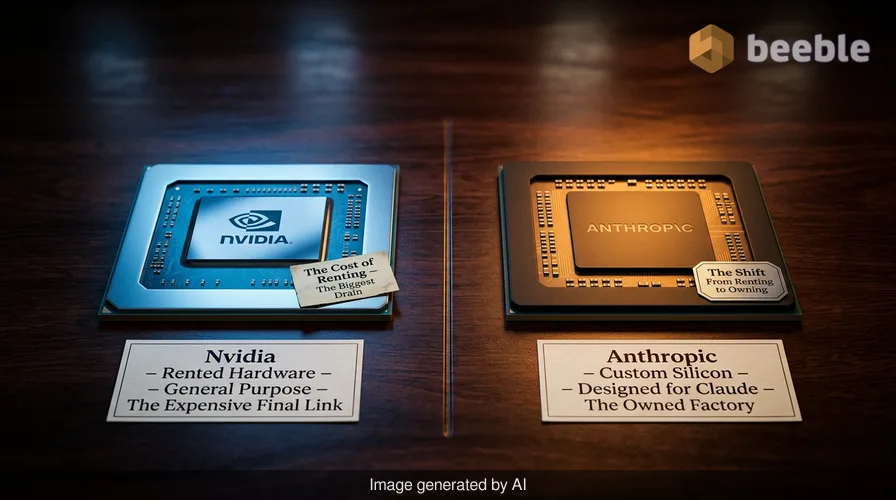
The next time you ask the Claude chatbot to summarize a legal document or write a snippet of code, the answer that appears on your screen is the final link in an expensive global chain. Each word generates a small cost, a tiny puff of heat in a data center, and a fraction of a cent in royalties to the companies that own the hardware. At the end of this chain sits a microchip, often designed by Nvidia and manufactured in Taiwan. For Anthropic, this reliance on outside hardware is a massive expense. To fix this, the company is now hiring a dedicated team to design its own custom AI chips.
Looking at the big picture, this move is a shift from renting technology to owning the factory. For years, AI startups focused almost entirely on the code. They built large language models and ran them on general-purpose hardware because it was the fastest way to get to market. But as AI becomes a permanent part of the economy, the cost of renting that hardware is the biggest drain on their bank accounts. By designing its own silicon, Anthropic wants to build a chip that is specifically shaped for the way Claude thinks. This is not about making a chip that does everything. It is about making a chip that does one thing—running AI models—exceptionally well.
The invisible tax on every chat prompt
To understand why a software company wants to get into the messy business of hardware, you have to look at the math of inference. Inference is the process where a trained AI model takes a user request and generates an answer. This process happens billions of times a day. Currently, most of this work runs on Nvidia GPUs. These chips are the digital crude oil of the modern economy. They are incredibly powerful, but they are also expensive and power-hungry because they are designed to be flexible. They can train a model, render a video, or simulate weather patterns.
Anthropic does not need that flexibility for every task. When you are just running a model that is already built, using a general-purpose GPU is like using a massive freight truck to deliver a single envelope. It gets the job done, but you pay for a lot of engine you do not use. Custom silicon allows a company to strip away the parts of the chip that are unnecessary for AI inference. This reduces the electricity required for each prompt and increases the speed at which the model can respond. For the average user, this means less waiting for the text to appear on the screen.
On the market side, the demand for these chips is so high that wait times can stretch into months. Anthropic has signed massive deals with Amazon and Google to use their infrastructure, but even these tech giants have their own priorities. By building a custom silicon team, Anthropic is trying to insulate itself from the volatile supply chain. If the company has its own designs, it can negotiate directly with manufacturers like Samsung or TSMC. This move gives them a seat at the table instead of a spot in the back of the line.
Following the path of the industry leaders
Anthropic is joining a club that was once reserved for the wealthiest tech companies. Historically, only giants like Apple or Google had the resources to design their own processors. Apple shifted the entire laptop market when it moved away from Intel chips to its own M-series silicon. It gained total control over how its software and hardware worked together. Anthropic is seeking that same level of vertical integration. The company recently confirmed it plans to co-design its hardware and its models. This means the engineers building Claude will talk to the engineers building the chips to ensure they are perfectly aligned.
Other players in the space are already deep into this process. Google has used its Tensor Processing Units (TPUs) for years to power everything from search to its Gemini models. Meta has developed the MTIA accelerator to handle the massive AI workloads behind its social media feeds. Even OpenAI has reportedly worked with Broadcom on a chip codenamed Jalapeño. For Anthropic to remain competitive, it has to match this level of efficiency. Without its own hardware, it would always be paying a premium that its competitors can eventually avoid. This is a survival strategy in a market where the cost of compute is the primary barrier to entry.
Behind the jargon of custom silicon
When a company talks about its custom silicon team, it is looking for a very specific type of talent. These engineers do not just write code. They map out the physical pathways of electricity on a piece of silicon. They have to decide how much memory should sit next to the processor and how the data should flow between them. In the world of AI, the biggest bottleneck is often not how fast the chip can think, but how fast it can move data from the memory to the processor. This is known as the memory wall.
Practically speaking, a custom chip can bridge this gap by placing memory much closer to the processing cores than a standard GPU does. Anthropic is scouting for engineers who can solve these physical puzzles. The reports suggesting a partnership with Samsung are notable because Samsung is one of the few companies in the world that can both design and manufacture these complex components. A partnership there would give Anthropic a streamlined path from a digital blueprint to a physical chip. This reduces the friction of moving from a software idea to a hardware reality.
What this means for the everyday consumer
For the person using Claude to draft emails or analyze data, these corporate maneuvers might seem distant. However, the impact is tangible. Currently, the high cost of running AI models is why many of the best features are locked behind a twenty-dollar-per-month subscription. It is also why free versions of these models often have strict limits on how many messages you can send. If Anthropic can cut its hardware costs by 30% or 40% through custom silicon, that creates room for more generous free tiers or more powerful features at the same price point.
Reliability is another factor. During peak hours, many AI services slow down or experience outages because the data centers are at full capacity. Owning the hardware design allows a company to pack more processing power into the same amount of space. This means the service stays up and stays fast even when millions of people are using it at once. Ultimately, this is about making the technology feel less like a heavy industrial tool and more like a seamless part of the daily workflow. The silicon is the invisible backbone that determines whether an AI feels like a tireless intern or a slow, aging computer.
Looking at the big picture, we are entering an era of specialized computing. The era of the one-size-fits-all processor is ending. In the coming years, your phone, your car, and your AI assistant will each run on chips that were built for their specific tasks. Anthropic's hiring spree is a clear signal that the company intends to be a permanent fixture in this landscape. It is no longer enough to have the smartest model. You also have to own the smartest brain to run it on.
Summary of the AI chip race
| Company | Custom AI Hardware | Primary Partner |
|---|---|---|
| Anthropic | Custom Silicon Team (In-development) | Samsung (Potential) |
| OpenAI | Jalapeño / Inference Chips | Broadcom |
| TPU (Tensor Processing Units) | Internal / Broadcom | |
| Meta | MTIA (Meta Training and Inference) | Internal |
| Amazon | Trainium / Inferentia | Annapurna Labs (Internal) |
From a consumer standpoint, this competition is a net positive. It breaks the monopoly on the hardware that powers our digital lives. When multiple companies compete to build the most efficient chip, the result is faster innovation and lower costs. We are moving away from a world where everyone relies on a single provider for the engines of the future. This diversification makes the entire tech ecosystem more resilient.
Ultimately, Anthropic’s decision to hire a hardware team is a move toward maturity. It shows that AI is no longer a research project or a speculative bet. It is an industrial reality that requires its own specialized infrastructure. As these custom chips move from the design phase to the data center, the way we interact with AI will change. It will become faster, cheaper, and more deeply embedded in the devices we use every day. You may never see the chip Anthropic is building, but you will certainly feel its impact the next time you hit send on a prompt.
Sources:
- Business Insider report on Anthropic hiring hardware engineers.
- TechCrunch confirmation of Anthropic custom silicon team.
- The Information report on potential Samsung and Anthropic partnership.
- Historical data on Google TPU and Meta MTIA development cycles.



See you on the other side.
Our end-to-end encrypted email and cloud storage solution provides the most powerful means of secure data exchange, ensuring the safety and privacy of your data.
/ Create a free account
