


Brazil hits TikTok with a twenty-five million euro fine over child safety failures

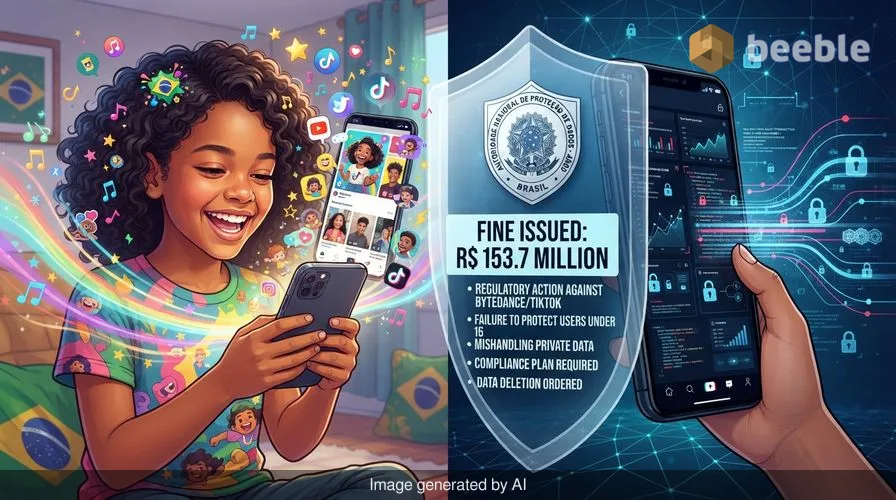
A child views a smartphone as a digital playground filled with endless entertainment. In contrast, data regulators view that same device as a sophisticated collection point for sensitive personal information. Brazil recently reminded the tech world that when these two perspectives collide, the law acts as a firm barrier. The National Data Protection Authority, known as the ANPD, issued a fine of 153.7 million reais to ByteDance, the company that owns TikTok. This penalty stems from the platform's failure to protect users under the age of 16 and its mishandling of their private data.
This legal action is a result of a long investigation into how TikTok processes the information of its youngest users. The ANPD found that the platform did not have enough safeguards to stop children from accessing the app or to protect their data once they were online. The fine is one part of a larger enforcement action. ByteDance must now delete any data it collected through these irregular methods. The company also agreed to a compliance plan. This plan is a formal set of rules the company must follow to fix its internal systems and meet Brazilian legal standards.
The high cost of ignoring age verification
In the eyes of the law, companies that handle data for minors have a higher duty of care. Brazil's General Data Protection Law, or the LGPD, sets strict rules for how businesses must treat the information of children and adolescents. The ANPD determined that TikTok failed to block users under 16 years old effectively. This failure meant that millions of children were active on the platform without the specific protections required by law.
The investigation focused on two specific ways people use TikTok: with an account and without one. The no-login version allows anyone to scroll through videos without ever creating a profile. The regulator found that this guest mode created a loophole. Children could bypass age checks entirely while the app continued to process their data for advertising and content delivery. Because of this, the ANPD ordered TikTok to suspend all advertising for non-registered users in Brazil. The company must also limit guest access to content suitable for all ages and cap guest screen time at 12 hours.
New rules for parental supervision and privacy
Legal precedent suggests that digital platforms cannot simply wait for parents to find safety settings. They must build safety into the platform from the start. As part of the new requirements, TikTok will automatically apply the strictest privacy settings to any account belonging to a person under 16. This shift places the burden of protection on the corporation rather than the individual family.
ByteDance must also improve its parental supervision tools. These tools act as a safety net for parents who want to monitor their children's digital habits. In the past, these features were often hidden deep in the settings menu or required complex setup steps. The Brazilian government now requires these systems to be more accessible and effective. Furthermore, the platform must introduce tighter content filters to ensure that minors do not see age-inappropriate videos. Users without an account will no longer have the ability to post videos or watch live broadcasts in Brazil. These restrictions aim to reduce the risks associated with real-time interaction and unsolicited content.
A broader trend of regulation in South America
This fine is not an isolated event. Brazil has become one of the most active countries in the world for social media regulation. Earlier this month, the ANPD ordered the streaming service Discord to suspend live broadcasts and video calls. This order followed a tragic incident where a teenager was reportedly encouraged to harm herself during a stream. Discord is currently appealing that suspension, but the move shows that the regulator is willing to halt entire services to protect public safety.
We also saw this firm approach in 2024 when the platform X was blocked nationwide for 40 days. That dispute involved a refusal to comply with court orders regarding disinformation. These cases show that Brazilian authorities view digital platforms not as untouchable entities, but as businesses that must follow local statutes. A recent law in the country even requires platforms to link accounts held by minors directly to the accounts of their parents. This ensures that age verification is a mandatory part of the user experience.
What this means for everyday families
For the average parent, this news is a reminder that privacy settings are not just suggestions. They are legal rights. If you have a child using TikTok, you should check their account settings today. Under the new Brazilian enforcement, these accounts should have high privacy levels by default. However, verifying these settings manually is a smart way to ensure your child is not sharing more than they intend.
You can take several steps to protect your family's data:
- Enable Family Pairing to link your account to your child's account.
- Set a daily screen time limit to prevent excessive use.
- Switch the account to private so only approved followers can see content.
- Turn off the ability for others to download your child's videos.
- Restrict who can send direct messages to the account.
If a company fails to provide these tools or mishandles your data, you have the right to file a complaint. Most countries have a data protection office similar to Brazil's ANPD. These agencies exist to ensure that your digital life is as safe as your physical one. The law is a shield for the vulnerable, and these new regulations are designed to make that shield stronger for the next generation.
Sources
- Brazil General Data Protection Law (LGPD)
- National Data Protection Authority (ANPD) Official Statement on TikTok Fine
- Brazilian Supreme Court rulings on social media compliance
- ANPD directive on Discord suspension
This article provides general information and education about data protection laws and recent regulatory actions. It does not constitute formal legal advice. If you have specific concerns regarding your data privacy or legal rights, you should consult a qualified attorney who is licensed to practice in your jurisdiction.



See you on the other side.
Our end-to-end encrypted email and cloud storage solution provides the most powerful means of secure data exchange, ensuring the safety and privacy of your data.
/ Create a free account
