


Can Gulf banks use AI without losing control of your private data?

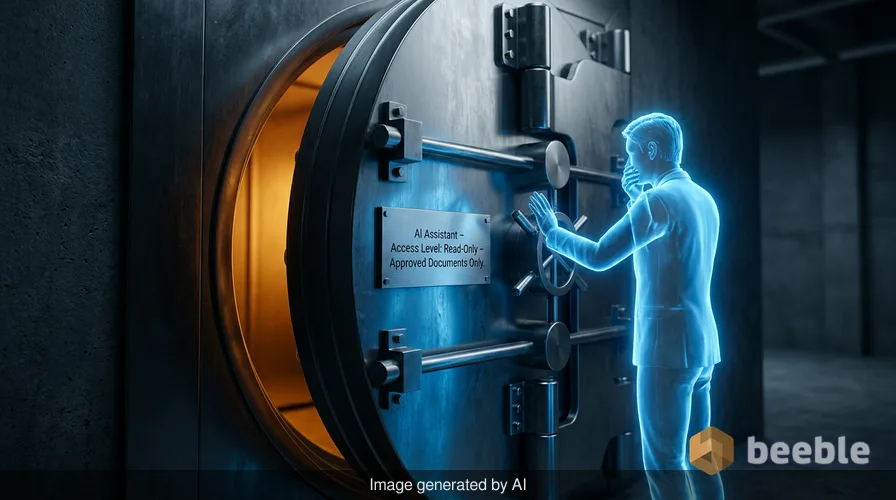
While the global tech narrative paints artificial intelligence as an unstoppable force ready to manage every cent in your savings account, the reality inside the boardrooms of Gulf banks is much more cautious. Executives are not asking how fast they can plug in a chatbot. They are asking how they can stop that chatbot from reading things it has no business seeing. For the average customer, this distinction is the difference between a faster mortgage approval and a catastrophic leak of personal financial history.
In many parts of the world, banks treat AI like a tireless intern. This intern is fast, never sleeps, and can read thousands of pages of documents in seconds. However, the problem with this intern is that it has a perfect memory and an occasional tendency to talk to strangers. In the banking world, where trust is the primary product, a talkative AI is a liability that no regional institution is willing to accept.
The high price of digital trust
Financial institutions in the Gulf are currently at a crossroads. On one side is the pressure to modernize and compete with global fintech giants. On the other side is a strict regulatory environment that treats data privacy as a foundational right. Najla Ibrahim Al-Mutawa, Executive Vice President of Strategy and Business Development at QNB, makes it clear that efficiency is no longer the only metric for success.
For a bank like QNB, the question is whether generative AI can be deployed in a way that protects trust and meets regulatory expectations. This is a pragmatic shift in tone. In previous years, the conversation focused on the magic of the technology. Now, the focus is on the plumbing. Banks are realizing that before they can use the brain of an AI, they must first build a cage for its eyes.
This caution is not just corporate bureaucracy. It is a response to how generative AI actually works. These systems learn by processing vast amounts of information. If a bank staff member uploads a confidential loan agreement to a standard AI tool to summarize it, that data could theoretically become part of the system's training set. This creates a risk that the AI might later reveal sensitive details to someone else.
How to teach a machine to keep a secret
To solve this, a new category of technology is emerging in the region. Companies are building filters that sit between the bank and the AI. Sami Mian, CEO of Blade Labs, notes that most banks are comfortable with the AI systems and the cloud providers themselves. The anxiety lies in the specific data those systems can access.
Blade Labs has introduced a platform called ZeroH Disclosure. Practically speaking, this tool acts as a digital bouncer. When a bank document is sent to an AI, the platform automatically scans it for sensitive information like names, account numbers, or proprietary trade secrets. It masks or removes this data before the AI ever sees it.
What makes this approach different is the audit trail. In the past, banks relied on staff to manually redact documents. This was slow and prone to human error. Automation allows the bank to keep a record of exactly what was shared and why. This level of control is essential for compliance departments that must prove to regulators that customer privacy was never at risk. This technology makes it possible for banks to use the "brain" of a large language model without ever giving it the actual identity of the person it is helping.
The human factor in Shariah compliance
This debate over control is particularly relevant in the world of Islamic finance. In this sector, product approvals are not just about math. They require the approval of legal teams, compliance officers, and Shariah scholars. It is a process that relies heavily on human judgment and the interpretation of complex standards.
Blade Labs is developing an AI assistant called Ask Ali specifically for this purpose. Unlike a general-purpose chatbot, this tool is trained on specific Shariah standards. It helps professionals navigate thousands of pages of religious and legal rulings. However, the developers are clear that the AI is an assistant, not a decision-maker.
This "human in the loop" model is a response to the opaque nature of many AI systems. If a bank uses an AI to decide if a product is Shariah-compliant and the AI gets it wrong, the bank faces more than just a financial loss. It faces a crisis of faith with its customers. By using AI to do the heavy lifting of research while leaving the final word to human scholars, banks maintain the decentralized oversight that Islamic finance requires.
Why your bank statement stays off the cloud
Regulators in the Gulf are currently strengthening rules around data sovereignty. This means that for many banks, customer data cannot simply be sent to a server in another country for processing. This creates a physical barrier to AI adoption.
Najla Ibrahim Al-Mutawa points out that banks are becoming much more selective about which tasks they give to AI. They categorize tasks into risk levels. A low-risk task might be summarizing a public press release. A high-risk task involves customer data or financial crime controls. For these high-risk areas, the safeguards must be much stronger.
The bottom line is that the institutions that solve these privacy puzzles first will have a massive competitive advantage. If a bank can prove to its customers and its regulators that it has absolute control over its AI, it can move faster. It can offer personalized loans in minutes rather than days. It can detect fraud with greater accuracy. The banks that cannot prove this control will remain stuck in a cycle of endless pilot programs and internal approvals.
What this means for your financial life
For the average consumer, this back-end struggle over data control has several tangible effects. First, you should expect to see more AI-driven features in your banking app, but they will likely be focused on customer service and basic information first. Banks are testing the waters with low-risk interactions before they let AI touch your actual transaction history.
Second, the move toward automated disclosure controls means your data is actually becoming safer. In the old system, a human bank clerk might have seen your entire file while processing a request. In the new AI-augmented system, the goal is to show the machine only the fragments of data it needs to perform a specific task. This reduces the number of eyes that ever see your full financial picture.
Finally, this trend suggests that the "human element" in banking is not going away. Whether it is a Shariah scholar or a loan officer, humans are being positioned as the final layer of accountability. The AI is the engine, but the bank is keeping its hands firmly on the steering wheel.
Summary for the everyday user
| Feature | Traditional Banking | AI-Augmented Banking (New Model) |
|---|---|---|
| Data Access | Staff may see full customer profiles | AI sees only masked, relevant data fragments |
| Processing Speed | Manual review takes days or weeks | Near-instant analysis and summarization |
| Oversight | Human-led manual audits | Automated audit trails with human final approval |
| Risk Management | Relies on individual staff compliance | Centralized software filters and bouncers |
| Complexity | Limited by human reading speed | Can cross-reference thousands of documents |
Looking at the big picture, the Gulf banking sector is proving that the race to adopt AI is not just about who has the fastest computer. It is about who has the best locks. As these banks implement tools like ZeroH Disclosure, they are building a framework where efficiency does not come at the cost of privacy. For the consumer, this means a future where banking is faster and more intuitive, but where your personal details remain your own.
Ultimately, the success of AI in this region will be measured by its invisibility. If the technology works correctly, you will never know it is there. You will only notice that your bank understands your needs better and protects your identity more fiercely than it did before.
Sources: QNB Strategy Reports, Blade Labs Technical Documentation, Gulf Regulatory Authority AI Governance Guidelines.



See you on the other side.
Our end-to-end encrypted email and cloud storage solution provides the most powerful means of secure data exchange, ensuring the safety and privacy of your data.
/ Create a free account
