


Europe is Finally Moving Out of the Silicon Valley Landlord’s Basement

The Heavy Weight of the Digital Status Quo
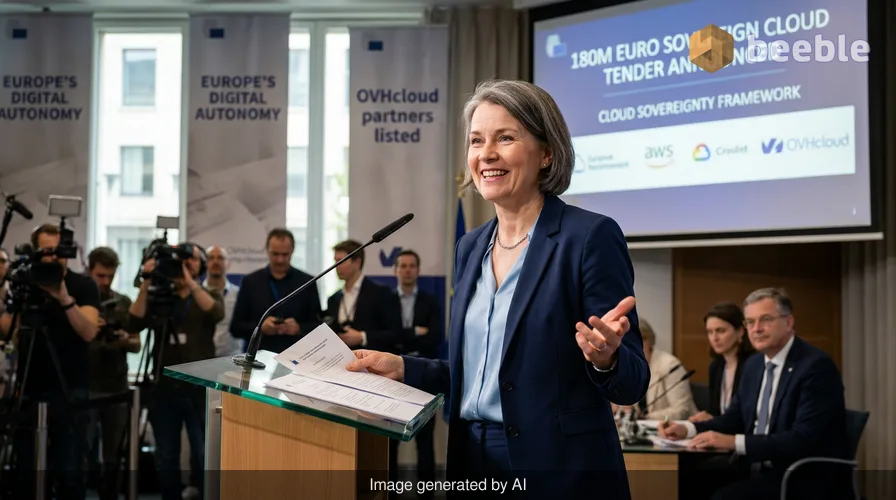
Roughly 72% of the European cloud market is currently controlled by just three American companies. For years, the digital infrastructure of the European Union—the servers that hold everything from tax records to healthcare data— has effectively lived in a rented space owned by Silicon Valley. While this arrangement provided undeniable convenience and cutting-edge tools, it created a systemic dependency that left European regulators uneasy. On Friday, the European Commission took a tangible step toward changing that dynamic by awarding a 180 million euro ($212 million) contract to four homegrown providers: Post Telecom, StackIT, Scaleway, and Proximus.
Looking at the big picture, 180 million euros over six years is a relatively small sum in the world of high-stakes computing, where players like Amazon and Microsoft spend billions every quarter on data centers. However, this isn’t just about the money; it is about foundational architecture. By choosing local partners, the EU is attempting to build a digital fortress—a sovereign space where European laws on privacy and data protection aren’t just suggestions, but the hard-coded reality of the hardware itself. For the average user, this marks the beginning of a shift from a global 'one-size-fits-all' internet toward a more regionalized, resilient ecosystem.
Behind the Jargon: What is a Sovereign Cloud?
To understand why this contract matters, we have to look under the hood at how modern governments function. In simple terms, a 'cloud' is just someone else’s computer. When the EU Commission uses a cloud service, it is entrusting its most sensitive operations—policy drafts, internal communications, and citizen data—to those remote computers. The problem arises when those computers are owned by entities subject to non-European laws, such as the U.S. Cloud Act, which could theoretically allow foreign intelligence services to access data stored on American-owned servers, even if those servers are physically located in Paris or Berlin.
This is where the Cloud Sovereignty Framework comes in. To win this tender, the four selected providers had to prove that non-EU entities have limited control over their operations. It’s a bit like a city deciding to build its own water treatment plant rather than buying water from a neighbor; it might be more expensive or complex to set up, but you never have to worry about the neighbor turning off the tap or changing the chemical balance without your permission. This push for sovereignty is an attempt to ensure that Europe’s digital backbone remains under European jurisdiction, regardless of shifting global politics.
The Players on the Field
The selection of these four companies reflects a diverse cross-section of the European tech landscape. Each brings a different flavor of expertise to the table, and their consortia include some of the most disruptive names in regional tech.
- StackIT (Germany): Owned by the Schwarz Group (the retail giant behind Lidl), StackIT represents a new breed of industrial cloud. They built their infrastructure to handle the massive, complex logistics of one of the world's largest retailers, making them a robust choice for government-scale operations.
- Scaleway (France): A subsidiary of Iliad, Scaleway has long been the 'cool kid' of European cloud services, focusing on developer-friendly tools and high-performance hardware. They have been vocal critics of the dominance of US hyperscalers for years.
- Post Telecom (Luxembourg): In a clever strategic move, they have partnered with OVHcloud and CleverCloud. OVHcloud is arguably Europe’s biggest challenger to the American giants, known for its transparent pricing and resilient data center designs.
- Proximus (Belgium): This consortium is perhaps the most interesting because it includes Mistral AI—the French artificial intelligence darling—and S3NS, a joint venture between Thales and Google Cloud.
Curiously, the presence of S3NS shows that the EU isn't completely cutting ties with American technology. Instead, they are looking for a middle ground where Google’s high-end software can run on infrastructure controlled and operated by European firms like Thales. It’s an acknowledgment that while Europe wants independence, it still values the scalable innovation that Silicon Valley pioneered.
Why This Matters for the Everyday Citizen
At first glance, a government cloud contract feels like something that only affects bureaucrats in Brussels. Practically speaking, however, the ripple effects will eventually reach your smartphone and your bank account. When a massive entity like the European Commission commits to local providers, it creates a 'gravity well' for the entire industry. It provides these European companies with the steady, long-term revenue they need to invest in better hardware and more user-friendly software.
Historically, European tech startups have struggled to compete with American giants because they lacked the massive scale of the US market. By acting as a 'foundation customer,' the EU is effectively subsidizing the growth of a local ecosystem. In the long run, this means more choices for European businesses and consumers. If you are a small business owner in Milan or a developer in Warsaw, you might soon find that local cloud options are just as powerful and streamlined as their American counterparts, but with the added peace of into-account benefit of being fully compliant with local privacy laws without any legal gymnastics.
Comparing the Cloud Landscape
| Feature | US Hyperscalers (AWS/Azure/Google) | EU Sovereign Cloud (Scaleway/StackIT/OVH) |
|---|---|---|
| Market Dominance | Massive (approx. 70% share) | Emerging (growing but smaller) |
| Legal Jurisdiction | Subject to US Cloud Act | Strictly EU/GDPR Jurisdiction |
| Innovation Speed | Unprecedented, high-velocity | Steady, focused on security/privacy |
| Cost Structure | Often opaque (hidden egress fees) | Generally more transparent/fixed |
| Data Sovereignty | Geographically dispersed | Localized, high-level control |
The Skeptic’s Corner: Will it Actually Work?
As a professional observer of these trends, it is worth maintaining a healthy level of skepticism. We have seen 'sovereign' projects fail before due to bloated bureaucracy or a lack of technical polish. The 180 million euro figure, while a significant commitment, is still a drop in the digital ocean. For context, Microsoft’s capital expenditure on data centers is expected to exceed $50 billion this year alone.
Furthermore, there is the 'convenience gap.' American cloud providers offer thousands of interconnected tools—from AI-driven analytics to intuitive database management—that have been refined over decades. Moving to a sovereign European cloud can sometimes feel like moving from a luxury SUV to a sturdy, dependable tractor. It does the job, and it’s arguably safer, but the ride might not be as smooth. The success of this initiative depends entirely on whether these four providers can bridge that gap and offer a user experience that doesn't feel like a compromise.
Looking Ahead: The Future of the European Web
Ultimately, this contract is a signal of a shifting global mood. The era of the borderless, unregulated internet is closing, replaced by a more fragmented 'splinternet' where data residency and national security are the top priorities. This isn't necessarily a bad thing. In the same way that a healthy garden needs diverse species to be resilient against pests, the global tech ecosystem needs more than just three or four dominant players to remain healthy and innovative.
What this means is that we are likely to see a cyclical return to localized services. Just as we’ve seen a rise in 'farm-to-table' food, we are entering the era of 'server-to-screen' data. You might soon notice that the apps you use or the companies you work for are beginning to highlight where their data is stored as a competitive advantage. Sovereignty is becoming a feature, not just a legal requirement.
As a final thought, I encourage you to observe your own digital habits. Most of us don't think twice about where our photos, emails, or bank details 'live.' But as these sovereign infrastructures mature, we may all have to make a choice between the absolute convenience of global giants and the security of local alternatives. For the European Commission, that choice has already been made. They are betting 180 million euros that the future of Europe’s digital life belongs in European hands.
Sources:
- European Commission Official Statement regarding Cloud Sovereignty Framework awards.
- Public statements from CEOs of OVHcloud and Scaleway via X (formerly Twitter).
- Market analysis reports on EU cloud market share (2024-2025).
- Technical specifications of the EU Cloud Sovereignty Framework tender (October 2025).



See you on the other side.
Our end-to-end encrypted email and cloud storage solution provides the most powerful means of secure data exchange, ensuring the safety and privacy of your data.
/ Create a free account
