


Forget the Shiny Gadgets—The Most Important Tech of 2026 is Actually Invisible

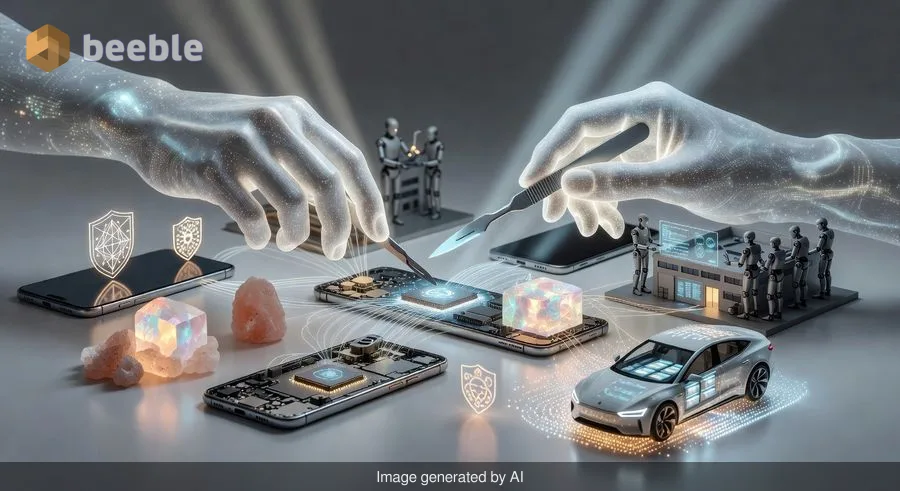
When was the last time a piece of technology genuinely changed how you spent your Tuesday afternoon? We often wait for the 'big bang' moment—a flying car in the driveway or a holographic phone—but the reality of innovation is usually much quieter. Looking at the big picture, the most profound changes in 2026 aren't happening on the surface of our screens. They are happening in the chemistry of our batteries, the logic of our software, and the very fabric of how our data moves across the globe.
Historically, we have measured progress by how much faster a processor can crunch numbers or how many megapixels we can cram into a camera. However, we have reached a point of diminishing returns in the 'specs' race. Today, the focus has shifted toward making technology more resilient, decentralized, and, most importantly, helpful without being intrusive. Behind the jargon of the industry lies a simple truth: we are moving from an era of tools we have to manage to an era of systems that manage themselves on our behalf.
1. The Rise of the Autonomous Agent
For the average user, Generative AI has felt like a very smart, albeit occasionally hallucinating, encyclopedia. But in 2026, we are seeing the transition from 'Chatbots' to 'Agents.' To put it another way, if the AI of 2023 was a library, the AI of 2026 is a tireless intern. These agents don't just answer your questions; they execute tasks.
Instead of you spending forty minutes navigating three different travel websites to book a flight, an autonomous agent understands your budget, your preference for window seats, and your calendar. It then goes out and does the legwork. Under the hood, this is made possible by large action models (LAMs) that can navigate user interfaces just like a human would. The bottom line for the consumer is a massive reclaiming of personal time. We are finally moving away from 'app fatigue' toward a unified, natural language interface that actually gets things done.
2. Sodium-Ion Batteries: The End of the Lithium Monopoly
Energy is the invisible backbone of modern life, and for decades, we’ve been tethered to the volatility of lithium prices. Curiously, the solution to cheaper electric vehicles and longer-lasting home storage wasn't a rare earth metal, but something found in common table salt. Sodium-ion batteries have finally hit the mainstream market this year.
From a consumer standpoint, this is foundational for the democratization of green energy. Sodium-ion cells are cheaper to produce, safer under high temperatures, and more resilient in cold weather. While they aren't quite as energy-dense as the high-end lithium batteries used in long-range performance cars, they are perfect for the 'city car' and home power walls. This shift is a systemic change that will likely lower the entry price of an EV by thousands of dollars, making sustainable transport a practical choice for the many, not just the few.
3. Spatial Computing Finds Its 'iPhone Moment'
After years of bulky headsets being relegated to enthusiasts and gamers, spatial computing has become streamlined. We’ve stopped talking about 'Virtual Reality' as an escape from the world and started using 'Mixed Reality' to enhance it. This isn't about living in a digital pod; it’s about having a digital layer over your physical reality that provides useful, real-time data.
In everyday life, this might mean a repair technician seeing a digital overlay of an engine's internals while they work, or a home cook seeing a timer floating directly over the pot they are stirring. The hardware has become robust and lightweight enough that wearing it for an hour doesn't feel like a chore. The tech has moved from being a spectacle to being a transparent tool for productivity.
4. Edge AI and the Privacy Pivot
For a long time, the price of using 'smart' tech was a slow leak of personal privacy. Every request you made to a voice assistant was sent to a massive server farm, processed, and stored. However, the latest generation of microchips—the digital crude oil of our age—now features dedicated AI cores powerful enough to do the thinking locally.
This is known as Edge AI. Essentially, your phone or smart home hub can now understand your voice and process your images without ever sending that data to the cloud. For the user, this means two things: lightning-fast response times because there's no round-trip to a server, and the peace of mind that your private conversations stay within your four walls. It is a shifting of power back to the individual.
5. Personalized Medicine via CRISPR 2.0
We are witnessing a quiet revolution in how we treat chronic illness. The promise of gene editing has moved from the laboratory to the pharmacy. In 2026, personalized medicine has become more tangible through the use of refined CRISPR technologies that can target specific genetic markers for conditions like high cholesterol or certain types of hereditary blindness.
Instead of a 'one-size-fits-all' pill that manages symptoms, doctors are beginning to offer treatments that address the underlying genetic cause. While this sounds like science fiction, it is becoming a routine part of specialized healthcare. It represents a transition from reactive medicine—fixing things when they break—to proactive, systemic health management.
6. The 6G Foundation and the Death of Dead Zones
While 5G was about speed, the early deployments of 6G infrastructure are about ubiquity. The most disruptive aspect of current connectivity isn't how fast you can download a movie, but the fact that you can do it anywhere. Through an interconnected web of high-altitude platforms and low-earth orbit satellites, 'no signal' is becoming a relic of the past.
For the consumer, this means the 'connected' world finally includes rural and remote areas. Whether you are hiking in a national park or living in a small farming community, the digital divide is narrowing. This has massive implications for remote work and emergency services, effectively making the globe a single, low-latency network.
7. Humanoid Robotics in the Supply Chain
If you’ve noticed that shipping costs have stabilized despite inflation, you might have a robot to thank. Humanoid robots are no longer just YouTube stars performing backflips; they are now a common sight in logistics centers. These machines are designed to operate in spaces built for humans, moving boxes and sorting inventory with a precision that was previously impossible.
This isn't about replacing people as much as it is about filling the labor gaps in heavy, repetitive industrial work. Looking at the big picture, this makes our global supply chains more resilient to shocks. When a system is automated at the foundational level, it can scale more easily to meet demand, which ultimately keeps the price of your online orders from skyrocketing during peak seasons.
8. Post-Quantum Cryptography
Quantum computing is often discussed as a looming threat to digital security—a 'doomsday clock' for your passwords. In response, the industry has rolled out post-quantum cryptography (PQC) standards across banking and communication apps this year. It is a classic example of invisible innovation.
You won't see a new icon on your phone, and your banking app will look the same, but the math protecting your life savings has been completely rewritten. Developers have implemented algorithms that even a quantum computer would find impossible to crack. It’s a transparent layer of protection that ensures our financial systems remain robust in the face of unprecedented computing power.
9. The Circular Tech Economy
We are finally seeing a retreat from the 'disposable' culture that defined the last two decades of tech. Driven by both regulation and consumer demand, major manufacturers have embraced modularity. The latest flagship phones of 2026 are designed to be opened, with batteries and screens that can be replaced in minutes using standard tools.
This is a user-friendly shift that saves money and reduces e-waste. Instead of buying a new $1,000 device because your battery has degraded, you spend $50 on a fresh cell. It’s a return to a more pragmatic way of owning technology, where longevity is a feature rather than an afterthought.
10. Decoupled Software: The End of Ecosystem Lock-in
Historically, tech giants have tried to keep you trapped in their 'walled gardens.' If you had one brand’s phone, you needed their watch, their cloud, and their messaging service. Thanks to new interoperability standards, those walls are crumbling. In 2026, your devices talk to each other regardless of the logo on the back.
This decentralization allows consumers to pick the best tool for the job. You can use a high-end camera from one company with a tablet from another and a cloud service from a third, and they all sync seamlessly. This transparency in how data moves between platforms creates a more competitive market, forcing companies to win your business through quality rather than entrapment.
What This Means for You
Zooming out, the overarching theme of these innovations is a move toward maturity. We are no longer in the 'wild west' phase of the digital revolution where everything is new, shiny, and broken. Instead, we are entering a phase of refinement. Technology is becoming a more intuitive partner in our daily lives.
Practically speaking, you should expect your next few years of tech purchases to be less about 'more' and more about 'better.' Your devices will last longer, protect your data more fiercely, and require less of your active attention. The real innovation isn't the gadget you're holding; it's the fact that you're finally spending less time thinking about the gadget and more time living your life.
As you navigate this shifting landscape, observe your own digital habits. Are you still fighting with your software, or is it starting to anticipate your needs? The goal of all this complex engineering is, ironically, to make your interaction with the digital world as simple and human as possible.
Sources:
- International Energy Agency (IEA) Report on Sodium-Ion Commercialization 2026.
- World Economic Forum: The State of Autonomous AI Agents.
- National Institute of Standards and Technology (NIST): Finalized Post-Quantum Cryptography Standards.
- Gartner Top Strategic Technology Trends for 2026.



See you on the other side.
Our end-to-end encrypted email and cloud storage solution provides the most powerful means of secure data exchange, ensuring the safety and privacy of your data.
/ Create a free account
