


Is Anthropic's Custom Chip Push the Start of an AI Hardware Arms Race?

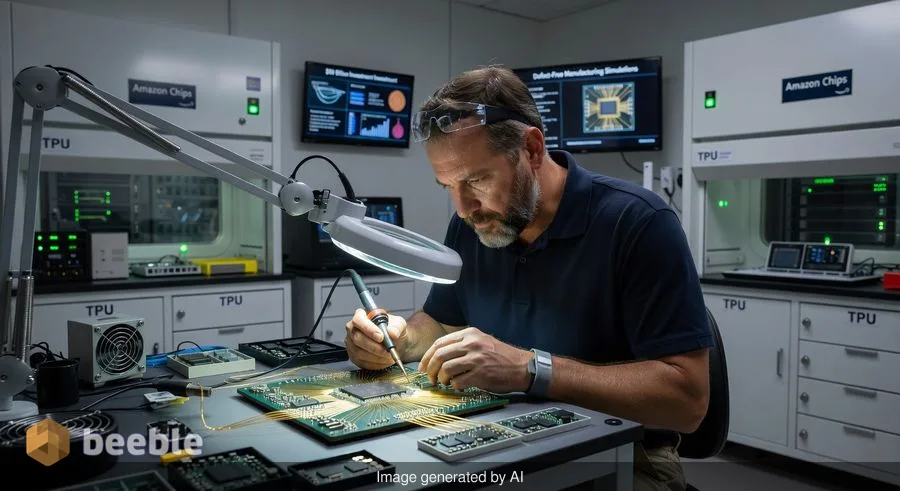
The Chip Crunch Hitting AI's Fast Lane
Your smartphone's AI assistant, the chatbot helping with homework, or the recommendation engine on your streaming app—all powered by specialized computer chips called GPUs or TPUs. These are the digital crude oil of the AI world. Now, Anthropic, the company behind the popular Claude AI, is quietly exploring whether to design its own version. Sources familiar with the matter say the San Francisco startup is in early talks, driven by a global shortage of these high-demand processors. No firm commitment yet, and they might stick to buying from suppliers like Google and Amazon. But the move signals deeper troubles in the supply chain that could ripple to your daily tech.
Anthropic's spokesperson declined to comment, keeping details opaque. This isn't wild speculation; it's a pragmatic response to exploding demand. Claude's revenue run-rate just topped $30 billion in 2026, up from $9 billion late last year. That's like a small country’s GDP, all fueled by AI services hungry for more computing muscle.
Tracing the Shortage Back to the Source
Follow the materials: it starts with raw silicon wafers in factories, etched into intricate circuits via photolithography—a process akin to printing microscopic cityscapes on glass. Advanced AI chips demand the latest nodes, like 3nm or smaller, where billions of transistors fit into a fingernail-sized chip. Factories from TSMC in Taiwan to Intel in the U.S. can't keep up. Nvidia dominates 80-90% of the AI chip market, per recent industry reports, creating bottlenecks.
Anthropic relies on Google's TPUs and Amazon's Trainium chips today. Earlier this week, they inked a long-term deal with Google and Broadcom—the team behind TPU designs—plus a $50 billion pledge to U.S. computing infrastructure. Smart hedging. But as demand surges, even these giants face delays. Designing custom silicon costs around $500 million upfront, per industry estimates, covering engineers, prototypes, and flawless manufacturing yields. It's a high-stakes bet, like commissioning a custom engine for a race car when suppliers are backlogged.
Why Big AI Players Are Going Custom
Anthropic isn't alone. Meta has been crafting its MTIA chips since 2023 to train Llama models. OpenAI, despite Microsoft backing, is reportedly scouting its own designs. These labs need chips optimized for their specific AI workloads—say, efficient matrix math for language models—rather than general-purpose GPUs.
Behind the jargon, what this means is control. Off-the-shelf chips are versatile but pricey at scale; Nvidia's H100s can cost $30,000-$40,000 each. Custom designs promise 20-50% efficiency gains, slashing electricity bills and speeding training. For Anthropic, with Claude powering enterprise tools and consumer apps, this could mean faster updates or lower costs passed to users. Conversely, it risks tying them to one manufacturer, amplifying supply risks from geopolitical tensions or factory fires.
| Player | Current Custom Efforts | Key Partners/Status |
|---|---|---|
| Anthropic | Early exploration | Google TPUs, Amazon chips; Broadcom deal signed |
| Meta | MTIA chips in production | In-house fabs planned |
| OpenAI | Discussions ongoing | Relies on Nvidia via Microsoft |
| TPUs (v5 now) | Supplies Anthropic |
This table highlights the interconnected race. Practically speaking, it's heavy industry meeting software dreams.
The Real Cost of AI's Hardware Hunger
Zooming out, these moves expose AI's foundational weakness: hardware dependency. Training a model like Claude 3.5 Opus might require 100,000+ chips running for months, guzzling megawatts—equivalent to a town's power needs. Shortages already delay projects; custom chips could ease that but take 2-3 years to mature.
From a consumer standpoint, expect indirect hits. AI features in apps get pricier to develop, nudging subscription fees up—think Claude's enterprise plans or integrated tools in Google Workspace. Your electric bill? Data centers worldwide consume 2-3% of global electricity, projected to hit 10% by 2030 if unchecked. Custom chips aim for resilience, but upfront costs mean investors pour billions into fabs, diverting capital from consumer gadgets.
Curiously, this echoes the smartphone era. Apple ditched Intel for its M-series chips in 2020, boosting battery life and performance. Anthropic might pull a similar pivot, but at industry scale.
What Happens If They Pull the Trigger?
Suppose Anthropic commits. They'd assemble a team of chip architects—rare talent poached from Nvidia or AMD—iterating designs via simulations before tape-out to TSMC. First chips might arrive in 2028, optimized for Claude's needs like sparse attention mechanisms.
On the market side, this fragments supply. More players mean diversified options, potentially stabilizing prices long-term. But short-term? Volatility as Nvidia's monopoly erodes. For you, it could mean smoother AI experiences: snappier voice assistants, more accurate image generators, without constant "servers busy" errors.
Mild skepticism here: corporate PR frames this as innovation, but it's largely survival. Anthropic's $30 billion run-rate sounds impressive—until you factor hyperscaler deals and venture cash. Success hinges on execution amid talent wars and U.S.-China chip tensions.
Everyday Ripples from Silicon Decisions
In everyday life, this underscores AI's invisible backbone. That quick recipe suggestion or job-matching algorithm? It traces to chips in distant server farms. If Anthropic succeeds, expect more robust, scalable AI—perhaps cheaper Claude Pro tiers or embedded smarts in cars and fridges.
The bottom line: custom chips democratize power but amplify risks. Budget hawks watch for price hikes in AI services; privacy fans note less reliance on a few vendors reduces single points of failure.
Ultimately, pause next time Claude drafts your email. Appreciate the silicon symphony underneath, and consider how these boardroom bets shape your digital world. Shift your lens: from passive user to informed observer of the hardware fueling it all.



See you on the other side.
Our end-to-end encrypted email and cloud storage solution provides the most powerful means of secure data exchange, ensuring the safety and privacy of your data.
/ Create a free account
