


South Africa is Betting Big on AI to Break Its Reliance on Global Tech Giants

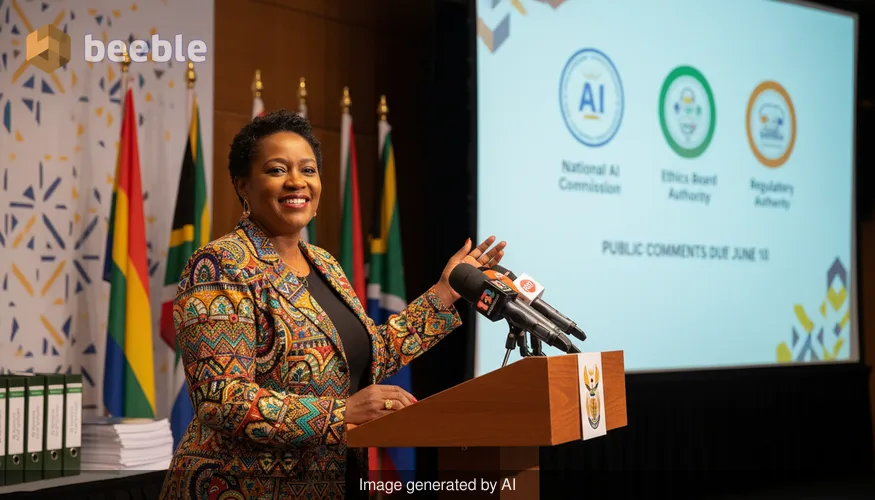
While the prevailing narrative suggests that government regulation is the natural enemy of innovation, South Africa’s newly unveiled draft AI policy argues the exact opposite. In the fast-moving world of machine learning and automation, a lack of clear rules doesn't create a 'wild west' of creativity; it usually just creates a vacuum that is quickly filled by dominant foreign players. By proposing a sweeping framework of new institutions and financial incentives, the Department of Communications and Digital Technologies is attempting to build a domestic safety net and a launchpad at the same time.
For the average user, policy documents often feel like a dense fog of legalese. However, looking at the big picture, this draft is less about restricting what computers can do and more about ensuring that the benefits of the AI revolution don't bypass the local economy. It represents a foundational shift in how the country views its digital future—not as a passive recipient of Silicon Valley’s latest tools, but as an active participant in the global tech race.
The New Architects of the Digital Frontier
Under the hood of this policy is a plan to create three major bodies: a National AI Commission, an AI Ethics Board, and an AI Regulatory Authority. If we think of AI as a tireless intern—capable of processing mountains of data in seconds but lacking human judgment—these new institutions are the supervisors. Their job is to ensure that this 'intern' doesn't accidentally (or intentionally) cause harm, leak sensitive data, or perpetuate biases.
The Regulatory Authority, in particular, is designed to provide a mechanism for redress. In everyday life, this means if an AI-driven loan application or a hiring algorithm unfairly discriminates against you, there is a specific government body tasked with investigating and providing compensation. It is an attempt to make an often opaque technology more transparent and accountable to the public.
Carrots for the Local Startup Scene
On the market side, the government is aware that South African startups often struggle to compete with the sheer financial gravity of global tech giants. To level the playing field, the draft policy proposes a suite of incentives including tax breaks, grants, and subsidies. The goal is to foster a scalable ecosystem where a developer in Johannesburg or Cape Town can build a robust AI solution without needing to move their operations to London or San Francisco to find support.
| Proposed Incentive | Target Audience | Primary Goal |
|---|---|---|
| Tax Breaks | Established Private Sector | Encourage R&D investment |
| Direct Grants | Early-stage Startups | Lower the barrier to entry |
| Subsidies | Small & Micro Enterprises | Support adoption of AI tools |
| Infrastructure Access | Researchers & Academics | Provide high-end computing power |
This isn't just about throwing money at the problem. It is about creating a systemic environment where local innovation is financially viable. For the consumer, this could eventually lead to more localized apps and services—AI that understands South African languages, cultural nuances, and specific economic challenges better than a generic model trained elsewhere.
The Supercomputing Sovereignty Play
Perhaps the most disruptive part of the proposal is the focus on hardware. Currently, most AI development relies on massive server farms owned by a handful of companies in the U.S. and China. South Africa’s policy identifies this as a strategic vulnerability. Curiously, the document explicitly mentions the need to reduce dependence on these two superpowers to avoid being caught in their ongoing geopolitical crossfire.
To put it another way, if data is the digital crude oil of the 21st century, supercomputing infrastructure is the refinery. If you don't own the refinery, you don't control the final product. By investing in local supercomputing hubs and forming regional partnerships, South Africa aims to ensure that sensitive national data stays within its borders and under its jurisdiction. This is a resilient move designed to protect data privacy at a national scale, ensuring that the country’s digital backbone isn't subject to the whims of foreign trade wars.
What This Means for You
Practically speaking, the impact of this policy won't be felt overnight, but it sets the stage for a more secure digital life. From a consumer standpoint, the focus on ethics and regulation means your personal data is less likely to be treated as a free-for-all commodity. You can expect more rigorous standards regarding how companies use your information to train their models.
For the workforce, the policy hints at a future where AI is an interconnected tool rather than a replacement. By incentivizing local businesses to adopt these technologies, the government is betting that South Africans will become the ones managing the AI, rather than being managed by it. Ultimately, this draft is an invitation for the public to weigh in on how they want their digital society to be governed. The deadline for public comment on June 10 is a rare opportunity for citizens to help shape the rules of the game before the technology becomes even more deeply embedded in our daily routines.
Looking ahead, the success of this policy will depend on execution. While the vision is overarching and ambitious, the transition from a draft document to a functioning regulatory environment is often volatile. For now, the takeaway is clear: South Africa is no longer content to sit on the sidelines of the AI era. It is building its own stadium.
Sources
- Department of Communications and Digital Technologies (DCDT) Official Policy Draft
- South African Government National AI Policy Framework
- Industry Analysis on African Digital Infrastructure and Data Sovereignty



See you on the other side.
Our end-to-end encrypted email and cloud storage solution provides the most powerful means of secure data exchange, ensuring the safety and privacy of your data.
/ Create a free account
