


The $16,000 Humanoid is Here and Investors Are Paying a 600% Premium for It

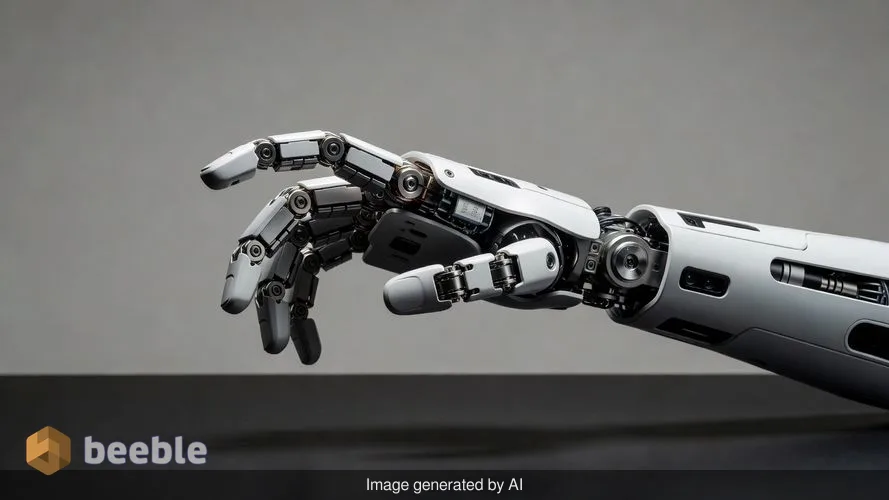
A single share of Unitree stock cost 150.8 yuan on the morning of its debut. By the time the closing bell rang in Shanghai, that same sliver of ownership was worth nearly five times as much. This price action follows a wave of capital moving from traditional tech sectors into the physical world of robotics. The money flowing into these shares originates with retail investors who see these machines as the next logical step for artificial intelligence. To understand why a company that makes dancing robot dogs is suddenly worth billions, one must follow the trail from the stock exchange back to the factory floors of Hangzhou.
The logistics of a viral debut
Unitree is currently the most prolific maker of humanoid robots on the planet. The company gained its reputation through video clips of its robots performing backflips and playing table tennis. While these videos look like entertainment, they are demonstrations of complex motor control and balance. The market responded to these demos with intense demand. During the initial public offering, non-professional investors asked for thousands of times more shares than were available. This scarcity drove the price from 150.8 yuan to a peak of 1,100 yuan in a few hours of trading.
Behind the ticker symbol is a manufacturing operation that relies on a specific local advantage. Unitree operates in Hangzhou, a city with an established network of component suppliers. This proximity to gear makers, motor manufacturers, and sensor labs allows the company to build robots at a speed that western competitors struggle to match. Looking at the big picture, this is a story about the cost of hardware. While a high-end humanoid from a US firm might cost six figures, Unitree offers its G1 model for roughly $16,000. This price point changes the robot from a laboratory curiosity into a practical tool for businesses and researchers.
How Hangzhou keeps the price tag low
Most people assume that advanced robots are expensive because the technology is new. In reality, the cost usually comes from the supply chain. A robot is a collection of joints, and each joint requires a specialized motor called an actuator. Unitree produces these actuators in-house or sources them from neighbors in the same industrial district. This avoids the shipping delays and import taxes that inflate prices for companies in North America or Europe.
Under the hood, the G1 humanoid uses a simplified design compared to the hydraulic giants of the past decade. It is entirely electric. Electric motors are easier to mass-produce and maintain than complex fluid-based systems. This shift toward all-electric hardware is the primary reason Unitree is profitable while other robotics startups remain in the research phase. The company moves a high volume of units. By selling thousands of smaller robot dogs, like the Go2, they fund the development of their larger, more complex humanoids. This business model is similar to how a car manufacturer uses high-volume sedan sales to pay for the development of an experimental electric supercar.
The rise of physical artificial intelligence
Investors are not just buying into hardware. They are betting on the concept of physical AI. For the average user, AI is something that happens on a screen or in a chat box. Physical AI is different. It is the process of giving an AI model a body so it can learn about the world through trial and error. When a Unitree robot attempts to walk across a pile of gravel, it collects data on friction, balance, and gravity. This data goes back into the software model to make the next generation of robots smarter.
Essentially, these robots act as data-gathering tools for the digital world. The stock market is acting as a high-frequency mood ring for this technology. The 600% jump in share price suggests that investors believe the data gathered by these robots is more valuable than the robots themselves. As these machines enter more homes and factories, they will create a feedback loop. More robots mean more data, which leads to better AI, which then makes the robots more useful to the consumer. The global market for these machines could reach $38 billion by 2035 according to data from Goldman Sachs.
A crowded field of metal and silicon
Unitree is not the only player in this race, but it is one of the few that is publicly traded. Other major companies like Tesla and Xiaomi have their own robotics divisions, but these are small parts of much larger businesses. When you buy a share of a car company, you are mostly betting on vehicles. When you buy a share of Unitree, you are betting purely on the future of mobile machines. This purity is what attracted so many retail investors to the Shanghai debut.
Historically, the robotics industry was limited to static arms in car factories. These machines were fast but dumb. They stayed in one place and repeated the same motion for years. The new wave of robotics, led by companies like Unitree and UBTECH, focuses on mobility. These robots have legs and wheels that allow them to navigate environments designed for humans. Some models can even rollerblade or vault over obstacles. This versatility is the reason why national governments now view robotics as a foundational industry for the next century.
The friction of global trade
Despite the excitement in the markets, there is significant tension regarding where these robots come from. The US government recently placed Unitree on a list of companies with ties to the Chinese defense sector. Unitree maintains that its products are for civilian use, but the dual-use nature of the technology causes concern. A robot that can carry a delivery box can also carry other payloads.
From a consumer standpoint, this means your choice of robot might soon depend on your geography. Just as the world has seen a split in the market for 5G equipment and electric vehicles, we are likely to see a split in the robotics market. Some regions may favor domestic brands for security reasons, while others will choose the most affordable option regardless of origin. For now, the cost advantage lies heavily with the manufacturers in Hangzhou.
What this means for your daily life
Ultimately, the surge in Unitree’s stock is a signal that the era of laboratory robotics is ending. We are entering the era of the mass-produced machine. You should not expect a robot to be doing your laundry next week, but you might see them appearing in more commercial settings soon. They are becoming the invisible backbone of logistics and security.
For the average person, the most tangible impact will be the normalization of these machines in public spaces. As the price continues to drop toward the level of a high-end laptop or a small car, more small businesses will experiment with them. The stock market debut proves that there is enough capital and interest to move these machines out of viral videos and onto the sidewalk. You should watch how these companies handle data and privacy as they become more common. The real value of a robot is not its ability to do a backflip, but the information it gathers while it is standing still.
Sources: Shanghai Stock Exchange Market Data, Unitree Official Investor Relations, Goldman Sachs Research, US Department of Defense Official Statements.



See you on the other side.
Our end-to-end encrypted email and cloud storage solution provides the most powerful means of secure data exchange, ensuring the safety and privacy of your data.
/ Create a free account
