


The AI Blitz: How Automated Exploitation Breached 600 Firewalls in Weeks

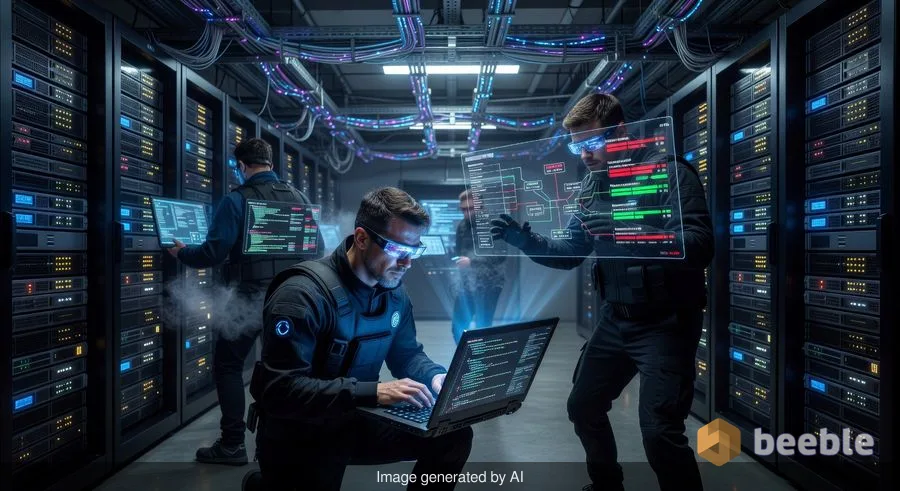
In the early weeks of 2026, a silent alarm went off across the cybersecurity industry. It wasn't the typical slow-burn infiltration of a single high-value target. Instead, it was a rapid-fire, automated campaign that dismantled the perimeters of over 600 organizations in less than a month. The culprit wasn't a massive team of human operators, but a sophisticated suite of AI-driven agents capable of identifying and weaponizing vulnerabilities at a speed that renders traditional defense cycles obsolete.
This incident marks a turning point in the arms race between attackers and defenders. For years, security experts warned that Large Language Models (LLMs) and autonomous agents would eventually move from writing phishing emails to writing functional, multi-stage exploits. That day has arrived. By leveraging AI to automate the reconnaissance and exploitation phases, hackers have effectively compressed months of manual labor into days of automated processing.
The Anatomy of an AI-Driven Breach
Traditional cyberattacks usually follow a predictable pattern: reconnaissance, vulnerability scanning, exploit development, and delivery. In a manual setting, a human researcher might spend days analyzing a firewall’s firmware to find a memory corruption bug. Once found, they must carefully craft a payload that bypasses security features like Address Space Layout Randomization (ASLR).
In this recent campaign, the attackers utilized "Autonomous Cyber Agents" (ACAs). These agents are fed vast amounts of documentation, firmware binaries, and previous exploit code. When pointed at a target, the AI doesn't just run a pre-written script; it "reasons" through the responses it receives. If a specific packet is dropped, the AI analyzes the firewall's rejection logic and instantly generates a mutated version of the packet to test the next layer of defense.
This iterative process allows the AI to discover "N-day" vulnerabilities—flaws that are known but perhaps unpatched in specific configurations—and even "Zero-day" vulnerabilities in real-time. The scale of 600 breaches in such a short window was only possible because the AI could manage thousands of simultaneous sessions, adapting its strategy for each specific network environment without human intervention.
Why Firewalls Became the Primary Target
It may seem counterintuitive that the very device designed to protect the network was the one compromised. However, firewalls are the ultimate prize for an attacker. As the gatekeeper of the network, a compromised firewall provides a persistent foothold, allowing attackers to intercept traffic, disable logging, and move laterally into more sensitive zones like data centers or executive workstations.
Many of the targeted firewalls shared a common vulnerability in their management interfaces or VPN concentrators. While vendors often release patches for these flaws, the "window of exposure"—the time between a patch being released and a company applying it—is where the AI thrives. The AI agents were programmed to scan the entire IPv4 space for specific hardware signatures and immediately apply the exploit before IT teams could schedule their maintenance windows.
Speed vs. Precision: The AI Advantage
The following table illustrates the stark difference between traditional manual exploitation and the new AI-accelerated model observed in this campaign:
| Feature | Traditional Manual Attack | AI-Driven Automated Attack |
|---|---|---|
| Reconnaissance | Manual port scanning & OS fingerprinting | High-speed, multi-threaded AI analysis |
| Exploit Dev | Days or weeks of debugging | Minutes (using automated fuzzing) |
| Adaptability | Requires human intervention to pivot | Real-time adaptation to defensive responses |
| Scale | Limited by the number of human hackers | Limited only by compute power |
| Success Rate | High for specific targets | High across a broad range of targets |
The Shift to Behavioral Defense
This wave of breaches has proven that signature-based defense is no longer sufficient. If an AI can generate a unique exploit for every single target, there will never be a "signature" for a firewall to recognize. The industry is now being forced to move toward a "Zero Trust" architecture and behavioral heuristics.
Instead of looking for a known malicious file, modern defenses must look for anomalous behavior. For example, if a firewall suddenly begins communicating with an unknown IP address in a foreign jurisdiction or starts encrypted exfiltration of its own configuration files, the system must be able to self-isolate. In this new landscape, we are fighting AI with AI; only an automated defense system can react fast enough to block an automated attacker.
Practical Takeaways: How to Protect Your Perimeter
While the threat of AI-driven attacks is daunting, it does not mean that defense is impossible. It simply means that the margin for error has disappeared. Organizations must tighten their security posture by focusing on the following areas:
- Automate Patch Management: You can no longer afford to wait weeks to patch edge devices. Use automated tools to deploy critical security updates to firewalls within 24 hours of release.
- Disable Management Interfaces: Ensure that firewall management consoles are never exposed to the public internet. Use out-of-band management or restricted VPN access only.
- Implement Geo-Blocking: While not a silver bullet, blocking traffic from regions where you do not do business can reduce the noise and make it harder for automated scanners to find you.
- Monitor for Anomalous Egress: Set up alerts for any unusual outbound traffic originating from the firewall itself. This is often the first sign of a management-plane compromise.
- Adopt AI-Enhanced Monitoring: Invest in security platforms that use machine learning to detect pattern shifts in network traffic, rather than relying solely on static rules.
Looking Ahead
The breach of 600 firewalls is a wake-up call. It demonstrates that the "democratization" of AI has provided mid-level threat actors with the capabilities previously reserved for nation-state hackers. As we move further into 2026, the focus will shift from preventing the initial breach to ensuring resilience. The goal is no longer just to keep the attackers out, but to ensure that when the AI inevitably finds a crack in the armor, the damage is contained and the recovery is instantaneous.
Sources
- Cybersecurity & Infrastructure Security Agency (CISA) - Alerts on Automated Exploitation
- Gartner Research - The Evolution of AI in Threat Actor TTPs (2025-2026)
- IEEE Xplore - Autonomous Agents in Vulnerability Research
- Vendor Security Advisories (Fortinet, Palo Alto Networks, Cisco) - Q1 2026 Incident Reports



See you on the other side.
Our end-to-end encrypted email and cloud storage solution provides the most powerful means of secure data exchange, ensuring the safety and privacy of your data.
/ Create a free account
