


The Attention Economy on Trial: Inside the Landmark Case Against Meta and YouTube

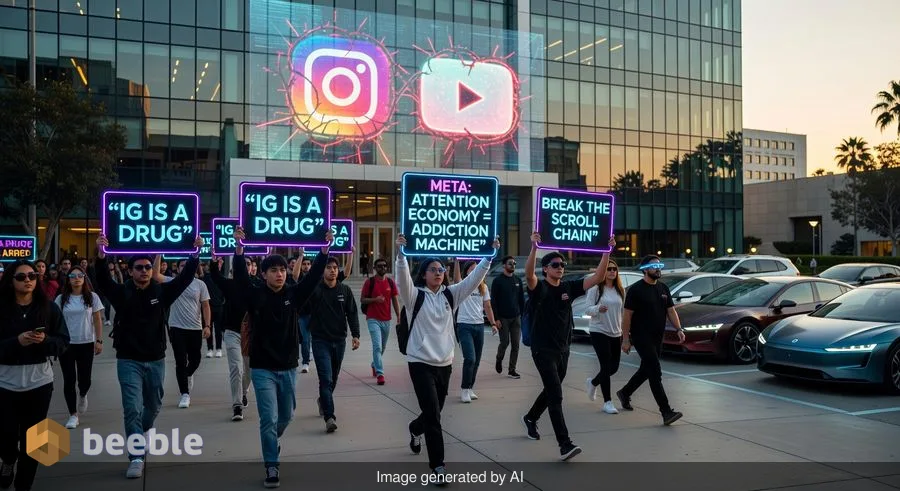
In a Los Angeles courtroom that has become the epicenter of a global debate, the first-ever jury trial regarding social media addiction has reached its final stage. After six weeks of grueling testimony, the fate of how Big Tech designs its products now rests in the hands of twelve citizens. The case, centered on a 20-year-old woman identified as KGM, seeks to hold Meta and YouTube legally responsible for what her lawyers describe as “predatory” design choices that prioritize engagement over the mental health of minors.
This trial is widely considered a bellwether for the tech industry. For years, social media companies have operated under the protection of various legal shields, but this case targets the very architecture of their platforms. The core question is whether features like infinite scroll, push notifications, and algorithmic recommendations are neutral tools or carefully engineered delivery systems for a digital dependency.
The Plaintiff’s Argument: Engineering a Crisis
Mark Lanier, the lead attorney for the plaintiff, didn't mince words during his closing arguments. He framed the rise of Meta and YouTube not as a triumph of connectivity, but as a calculated conquest of human attention. “How did they become such behemoths?” Lanier asked the jury. “It’s the attention economy. They’re making money off capturing your attention.”
The plaintiff’s side argued that Instagram and YouTube were designed using principles borrowed from the gambling industry. By utilizing variable reward schedules—the same psychological mechanism that makes slot machines addictive—these platforms ensure that users, particularly those with developing brains, find it nearly impossible to put their phones down. The case presented evidence that these companies were aware of the negative impact on teen mental health but chose to prioritize growth metrics to satisfy shareholders.
The Defense: Tools for Connection
Lawyers representing Meta and YouTube maintained a consistent defense: their products are safe for the vast majority of users and provide immense value through community and education. They argued that blaming a platform for a user’s mental health struggles is an oversimplification of complex psychological issues.
During his testimony, Meta CEO Mark Zuckerberg defended the company’s safety investments, pointing to the hundreds of tools Instagram has introduced to help parents manage their children’s screen time. The defense’s narrative is one of personal and parental responsibility. They contend that while some individuals may struggle with over-usage, the platforms themselves are not inherently defective products. They argued that the "addiction" label is a rhetorical device rather than a clinical reality in the context of software.
High-Profile Testimony and Whistleblower Insights
The trial saw an unprecedented parade of tech royalty. Alongside Zuckerberg, Instagram head Adam Mosseri and YouTube’s VP of Engineering Cristos Goodrow faced intense questioning regarding internal research. Jurors were shown internal documents—some previously leaked by whistleblowers—that suggested the companies knew their algorithms could lead users down "rabbit holes" of harmful content.
Perhaps the most emotional testimony came from KGM herself. Now 20, she detailed a decade of struggle with body dysmorphia and depression, which her therapist testified was exacerbated by the constant stream of curated perfection and algorithmic reinforcement she encountered on Instagram. This human element provided a stark contrast to the technical and financial data presented by the defense.
Understanding the "Slot Machine" Analogy
To explain the complexity of algorithmic addiction to the jury, expert witnesses used the analogy of the “digital slot machine.” When a user pulls down to refresh a feed, they are engaging in a behavior known as a variable ratio reinforcement. Sometimes you see something great (a “win”), and sometimes you don’t. Because the reward is unpredictable, the brain releases more dopamine in anticipation, creating a powerful urge to keep checking.
This design choice is at the heart of the legal battle. The plaintiffs argue that while a physical slot machine is regulated and restricted to adults in specific venues, these digital versions are in the pockets of children 24/7, with no meaningful oversight.
Potential Outcomes and Industry Impact
If the jury finds Meta and YouTube liable, the repercussions will be felt far beyond the walls of the Los Angeles Superior Court. A verdict for the plaintiff could trigger a wave of similar litigation across the country and force tech companies to fundamentally redesign their interfaces. We might see the end of the infinite scroll or a mandatory “hard stop” for minor accounts after a certain period of usage.
Conversely, a victory for the tech giants would reinforce the current status quo, placing the burden of safety almost entirely on parents and individual users. Regardless of the outcome, the trial has already succeeded in bringing internal corporate discussions about user harm into the public record.
Practical Takeaways: Protecting Digital Well-being
While the legal system deliberates, users and parents do not have to wait for a verdict to take action. Here are immediate steps to mitigate the addictive qualities of social media:
- Disable Non-Human Notifications: Turn off alerts for likes, comments, and follows. Only allow notifications for direct messages from real people to break the constant dopamine loop.
- Use Grayscale Mode: Most smartphones allow you to turn the screen black and white. This makes the colorful icons and vibrant feeds significantly less stimulating to the brain.
- Set Hard Boundaries: Use built-in system tools (like iOS Screen Time or Android Digital Wellbeing) to set app limits that require a passcode to bypass, rather than relying on willpower alone.
- Audit Your Feed: Periodically unfollow accounts that trigger feelings of inadequacy or anxiety. The algorithm can only feed you what you interact with.
Sources
- NBC News: Coverage of closing arguments in LA Superior Court.
- Courtroom View Network (CVN): Trial transcripts and witness testimony summaries.
- Journal of Adolescent Health: Research on social media usage and dopamine response.
- Internal Meta Documents (The Facebook Files): Contextual background on internal safety research.



See you on the other side.
Our end-to-end encrypted email and cloud storage solution provides the most powerful means of secure data exchange, ensuring the safety and privacy of your data.
/ Create a free account
