


The Autonomous Commute: Inside China’s First Integrated Robot Metro Cluster

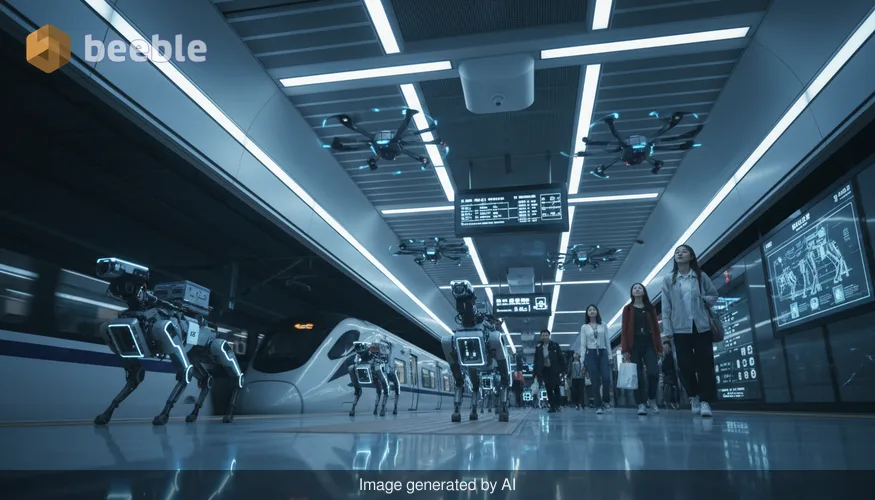
As the morning rush hour peaks at the Hefei Metro in China’s Anhui Province, the rhythmic clacking of turnstiles and the hum of arriving trains are joined by a new, mechanical cadence. Navigating through the sea of commuters is a four-legged machine—a robot dog—moving with a precision that suggests it knows the station’s layout better than any local. Above, a small drone glides near the high ceilings, its sensors scanning electrical conduits and structural joints.
This isn't a scene from a sci-fi film; it is the reality of China’s first "full-space robot cluster" deployed in a major transit hub. Designed to support human staff during the country's most grueling travel periods, these machines represent a fundamental shift in how we maintain and secure public infrastructure. By integrating ground-based quadrupeds with aerial drones and rail-mounted sensors, Hefei is testing a blueprint for the future of global urban transit.
The Full-Space Philosophy: Ground, Air, and Rail
The term "full-space" refers to a comprehensive surveillance and maintenance ecosystem where no corner of the station is left unmonitored. Traditionally, metro inspections are labor-intensive, often requiring technicians to walk miles of track or climb scaffolding during the few hours the system is powered down at night.
The robot cluster changes this dynamic by dividing the station into three operational zones:
- The Ground Level: Autonomous quadruped robots (robot dogs) patrol concourses and platforms. Unlike wheeled robots, these can navigate stairs, step over obstacles, and access cramped equipment rooms.
- The Aerial Zone: Automated drones monitor high-altitude equipment, such as overhead power lines and ventilation systems, identifying hotspots or frayed wires that are invisible to the naked eye.
- The Infrastructure Layer: Fixed sensors and rail-crawling robots monitor the tracks and tunnels, providing real-time data on rail integrity and temperature fluctuations.
By synchronizing these units, the station creates a digital twin of its environment, allowing operators to spot a potential equipment failure or a safety hazard before it impacts service.
Why Robot Dogs are Leading the Pack
While drones handle the heights, the quadruped robots are the workhorses of the station floor. These machines are equipped with 3D LiDAR (Light Detection and Ranging) and high-definition thermal cameras. During the busy Spring Festival travel rush, they serve two primary purposes: safety and efficiency.
From a safety perspective, the robots act as mobile fire detectors. Their thermal sensors can pick up the signature of an overheating battery or a short-circuiting electrical panel long before smoke appears. From an efficiency standpoint, they perform routine checks that would take a human hours to complete. A robot dog can scan hundreds of electrical switches in a fraction of the time, logged with a digital timestamp and a high-resolution photo for the maintenance database.
Crucially, these robots are designed to interact safely with the public. They use sophisticated obstacle-avoidance algorithms to navigate around erratic foot traffic, ensuring that even in a crowded station, the machine remains a helper rather than a hindrance.
The AI Brain Behind the Cluster
A collection of robots is just a group of machines; a "cluster" is a coordinated system. The true innovation in Hefei is the centralized AI command center that manages these assets. This system uses a unified communication protocol, allowing the drone to "talk" to the robot dog.
For example, if a drone detects an unusual heat signature in an overhead cable, it can signal a ground robot to move to the area to provide a different viewing angle or to block off the section for passenger safety. This level of autonomy reduces the cognitive load on human dispatchers, who only need to intervene when the AI flags a high-priority anomaly.
Practical Implications for Global Transit
While the technology is currently centered in China, the success of the Hefei pilot program offers several takeaways for transit authorities worldwide. The transition to robotic clusters isn't just about replacing labor; it’s about enhancing the reliability of aging infrastructure.
Key Benefits of Robot Clusters:
- Predictive Maintenance: Moving from a "fix it when it breaks" model to a "fix it before it fails" model.
- Enhanced Safety: Reducing the need for human workers to enter high-voltage areas or dark tunnels.
- 24/7 Monitoring: Unlike human shifts, robots can provide continuous coverage during peak travel windows without fatigue.
- Data Accuracy: Digital logs provide an objective, unalterable record of station health over time.
Challenges and the Path Forward
Despite the impressive display in Hefei, challenges remain. Public perception is a significant hurdle; not every commuter is comfortable sharing a platform with a mechanical dog. There are also concerns regarding data privacy and the security of the wireless networks that control these machines. If a robot cluster can be hacked, it becomes a liability rather than an asset.
Furthermore, the initial capital expenditure for such a system is high. For cities with older metro systems, the cost of retrofitting stations with the necessary 5G or 6G connectivity to support a robot cluster may be prohibitive in the short term.
What’s Next for Commuters?
As we look toward the late 2020s, the "Hefei Model" is likely to expand. We can expect to see similar deployments in Singapore, Tokyo, and eventually major European hubs. The goal is a "dark station" capability—the ability for a metro system to perform deep-level maintenance and security sweeps entirely autonomously during overnight hours.
For the average traveler, the future of train travel might be less about the robots themselves and more about what they provide: a commute that is rarely delayed, consistently safe, and managed with a level of precision that only a machine can maintain.



See you on the other side.
Our end-to-end encrypted email and cloud storage solution provides the most powerful means of secure data exchange, ensuring the safety and privacy of your data.
/ Create a free account
