


The search for an AI-free internet is becoming a premium product

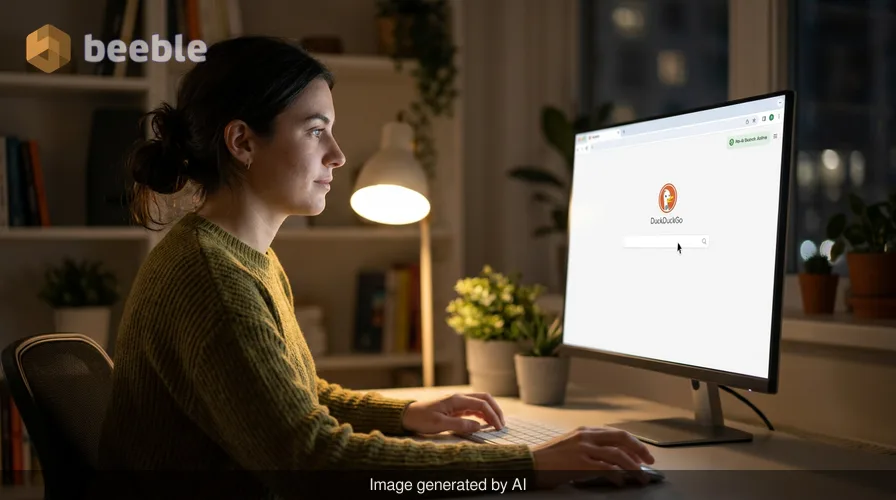
Visits to DuckDuckGo’s AI-free search page tripled on May 28, 2026. This surge followed Google’s announcement of an AI-led search overhaul that removes traditional results in favor of generated summaries. For years, the tech industry operated on the assumption that more features equal more value. Now, a growing segment of the market is willing to pay or switch platforms specifically to have features removed.
DuckDuckGo launched its No-AI Search extensions for Chrome and Firefox on June 1. This tool sets the user's default search engine to a specific subdomain that bypasses the company's own recent innovations. It strips away AI Assist summaries, AI-generated image results, and chatbot integrations. The product provides the index and the interface of the old internet. This move marks a shift in how privacy-focused companies view user agency in the age of generative models.
DuckDuckGo turns back the clock to 2022
The new extension is a response to what DuckDuckGo CEO Gabriel Weinberg calls force-feeding. Google recently updated its search box to prioritize AI agents and conversational summaries. This change makes it difficult for users to find the original source of information. DuckDuckGo’s internal data shows that its No-AI search page traffic is currently 84% above its normal baseline. US app installs for the company jumped 18.1% in late May.
Users who install the No-AI extension get a search experience that resembles the web before the generative AI boom. It removes the AI summaries that appear at the top of results. It also disables the sidebars that prompt users to chat with a bot. For users who want a middle ground, the company offers its Privacy Essentials extension. This version allows for granular consent. Granular consent is a privacy principle where a user chooses exactly which data processing activities they allow rather than accepting an all-or-nothing bundle. In this context, it allows a user to keep tracker blocking while toggling individual AI features on or off.
The tension between private chatbots and clean search
DuckDuckGo occupies a complex position in this new market. Earlier in 2024, the company launched Duck.ai. This platform allows users to chat privately with models like GPT-4o mini, Claude 4.5 Haiku, and Meta’s Llama 4 Scout. The service is pseudonymous. Pseudonymous data is information that does not identify a specific person without the use of additional information. DuckDuckGo strips personal identifiers before sending queries to these third-party models. This ensures that the AI providers see the questions but do not know who is asking them.
Despite building a robust AI infrastructure, the company is now marketing a way to ignore it. The extension listing states that AI should be optional. This philosophy acknowledges that while some users want private access to GPT-5.2 or Claude Opus, others view these tools as an intrusion. By offering a No-AI search subdomain, the company treats its search index like a sealed envelope. The content remains intact and private, free from the interpretation of a machine learning model. This approach views the searcher as the primary investigator rather than a passive recipient of an AI-generated answer.
Brave sells the right to be left alone
Brave is taking the anti-AI trend a step further by charging for it. In April, the company launched Brave Origin. This version of the browser costs $59.99 as a one-time purchase. It removes the Leo AI assistant, the crypto wallet, the VPN, and all telemetry. Telemetry is the automatic collection and transmission of data from remote sources for monitoring and analysis. While Brave is known for privacy, the standard browser still includes these features to generate revenue.
Brave Origin is a product where the user pays to eliminate the company's revenue-generating tools. This model addresses a fundamental problem in modern software: if a product is free, the company must find other ways to monetize the user. By paying the $60 fee, users compensate Brave for the lost opportunity to sell subscriptions or collect anonymous usage statistics. The Linux version is free because the open-source community often creates these stripped-down versions through manual configuration. For Windows, Mac, and mobile users, the fee buys a simplified digital environment.
Mozilla bets on the off switch
Mozilla is preparing its own response through Project Nova. This is the first major redesign of the Firefox browser since 2021. The most significant feature is not an AI integration, but a single settings toggle. This switch will disable every current and future AI feature with one click. Mozilla is framing this as a competitive advantage based on user control.
Unlike Google, which has integrated AI into its core search results without a clear opt-out, Mozilla plans to keep its AI tools off by default or easily removable. This respects the principle of privacy by design. Privacy by design is a framework that requires privacy to be taken into account throughout the entire engineering process. In this case, the design choice is to assume the user does not want AI processing their data until they explicitly ask for it. Mozilla still offers built-in VPNs and summarization tools, but they exist as secondary options rather than mandatory components of the browser.
Why opting out is the new privacy frontier
The trend toward No-AI products suggests that the regulatory landscape is shifting. Many users view AI summaries as an intrusive layer between them and the information they seek. In a tech-legal context, these features often operate on a basis of legitimate interest. Legitimate interest is a legal justification under the GDPR that allows companies to process data if they have a valid business reason that does not override the user's rights. However, when AI summaries are wrong or hide original sources, that justification becomes precarious.
DuckDuckGo, Brave, and Mozilla are treating AI as a potential liability for certain users. By providing clear opt-out buttons, they act as digital witness protection programs for people who want to minimize their digital footprint. These tools represent a move away from the forced adoption of new technology. They suggest that the most sophisticated software in 2026 is the software that knows when to stay out of the way.
Actionable steps to reclaim your search results
If you want to reduce the presence of AI in your daily browsing, you have several concrete options. These steps allow you to regain control over how your information is presented.
- Install the DuckDuckGo No-AI Search extension on Chrome or Firefox to bypass AI-generated summaries and image results by default.
- Use the
noai.duckduckgo.comsubdomain directly for searches if you do not want to install a permanent extension. - Audit your browser settings for AI toggles. Brave users can disable Leo AI in the settings menu, and Firefox users should look for the Project Nova update later this year.
- Evaluate paid alternatives like Brave Origin if you want a browser that is stripped of all telemetry and secondary features.
- Review the privacy policy of any AI chatbot you use to ensure they offer pseudonymous processing and do not use your data to train future models.
Sources:
- GDPR Article 25 (Data protection by design and by default)
- GDPR Article 6 (Lawfulness of processing / Legitimate Interest)
- DuckDuckGo Corporate Blog (June 2026 Announcements)
- Brave Software Product Specifications (Brave Origin)
Disclaimer: This article is for informational and journalistic purposes only and does not constitute formal legal advice.



See you on the other side.
Our end-to-end encrypted email and cloud storage solution provides the most powerful means of secure data exchange, ensuring the safety and privacy of your data.
/ Create a free account
